
- Home
- Company
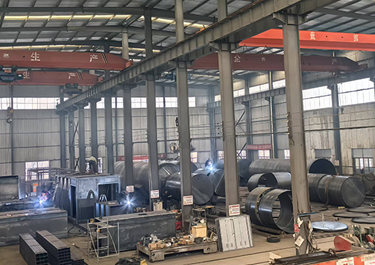 Our FactoryWe have a team of over 30 talented mobile fuel station R&D experts, as well as a 50,000-square-meter advanced modern intelligent manufacturing plant.
 - Mobile Fuel Station
- Storage Tank
- Blog
- Contacts
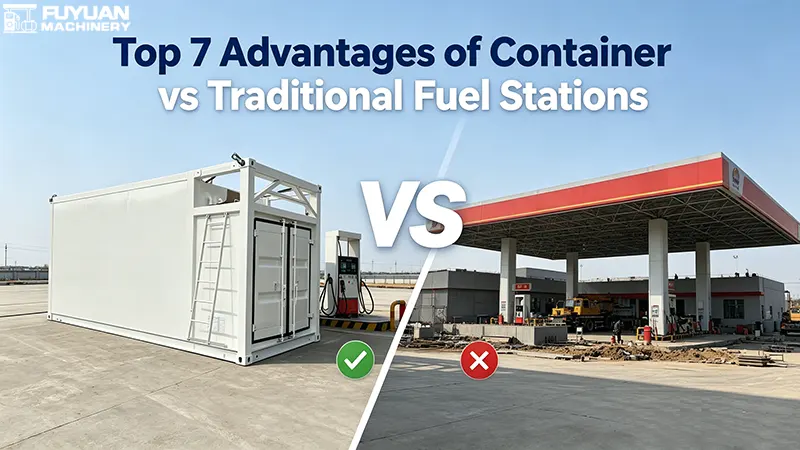
Top 7 Advantages of Container Gas Station vs Traditional Fixed Fuel Stations
When a project requires on-site fuel supply, the decision between a containerized mobile fuel station and a permanent fixed fuel station is one of the most significant capital decisions a project manager will make. The wrong choice adds cost, delays, and operational risk.
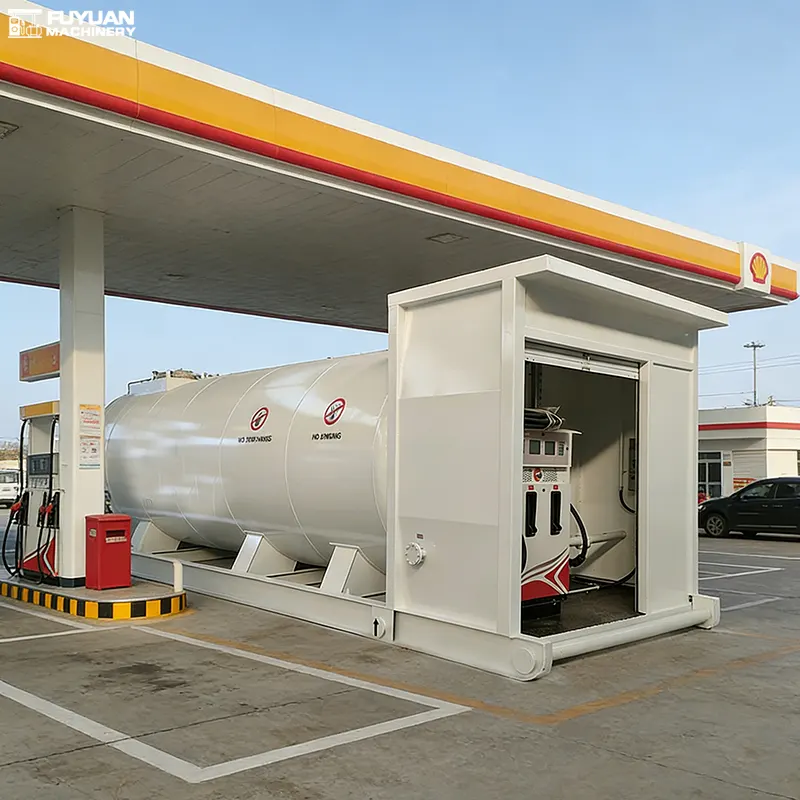
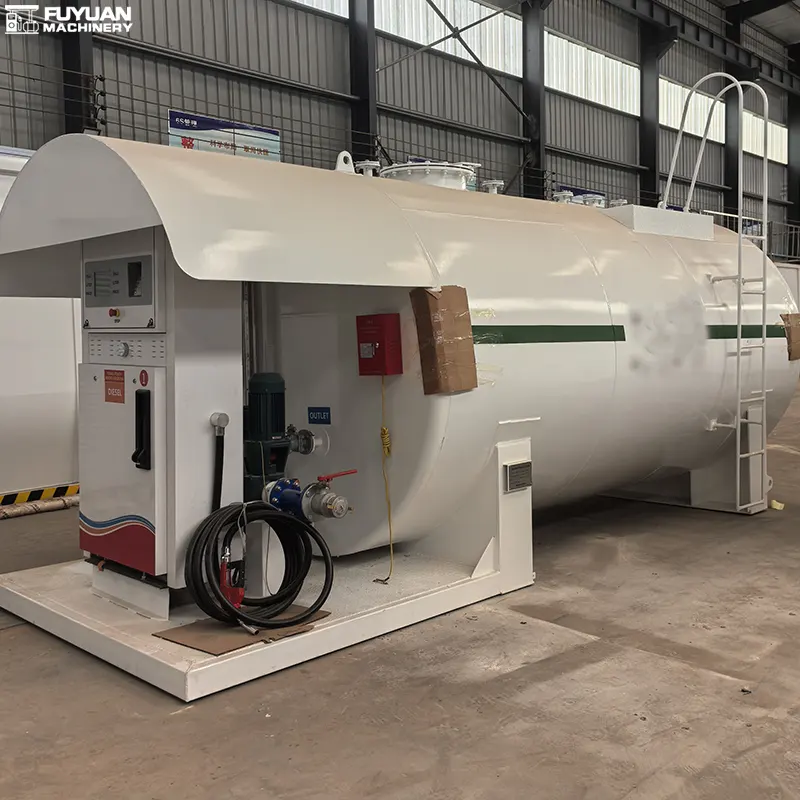
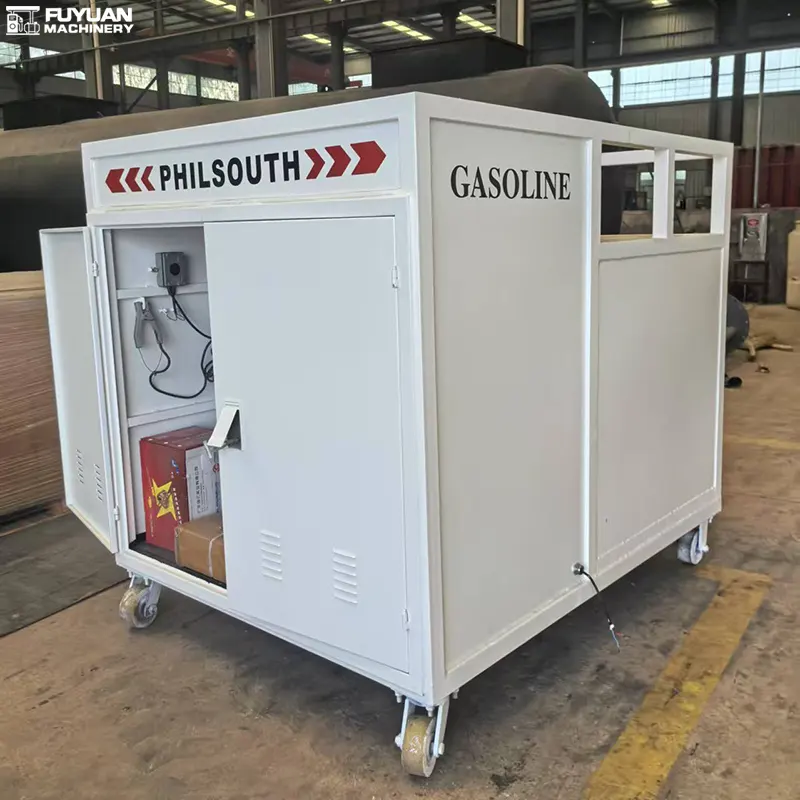
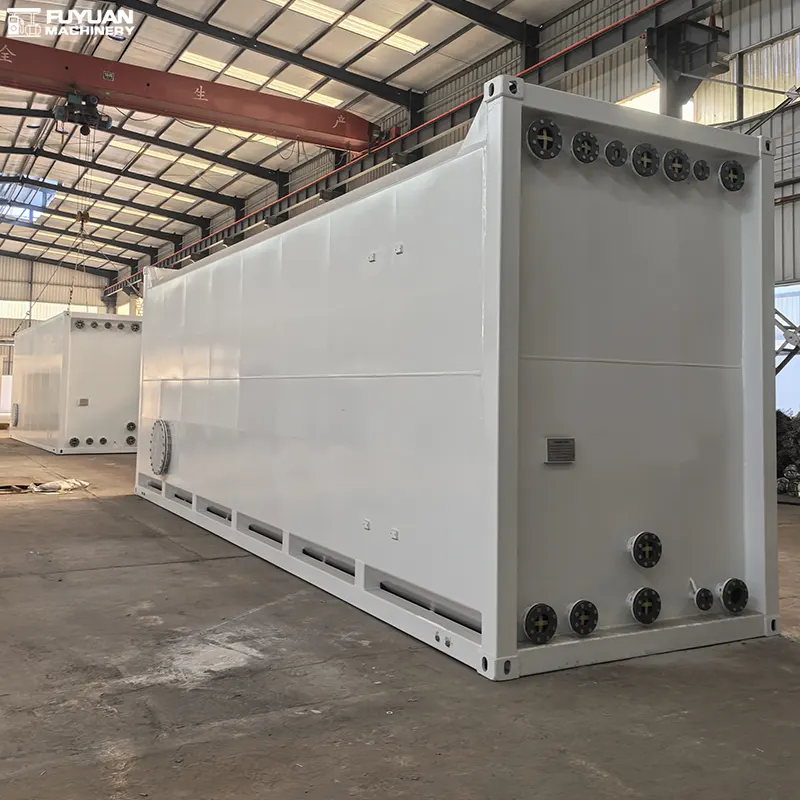
Containerized fuel stations—self-contained fuel storage and dispensing systems built inside standard ISO shipping containers—are transforming how businesses manage fuel. Unlike traditional fixed stations that require months of construction and millions in capital, containerized units arrive as a single unit, require no civil construction, and can be commissioned within hours of delivery.
Here are the top 7 advantages of container gas stations over traditional fixed fuel stations.
1. Dramatically Lower Capital Investment
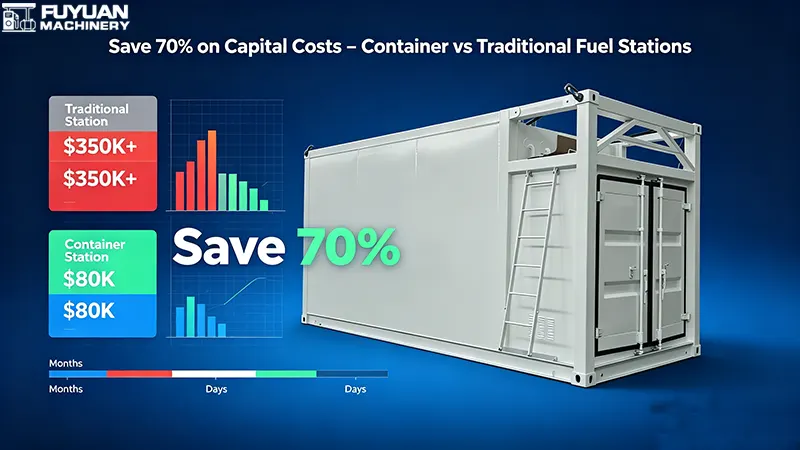
The most immediate and compelling advantage is cost. Traditional fuel stations require extensive civil engineering—excavation, underground tank installation, concrete bunds, drainage systems, canopies, and permanent electrical installations. These civil elements alone typically add $80,000–$250,000 on top of equipment costs.
The numbers speak for themselves:
| Cost Category | Container Station | Traditional Station |
| Capital cost (10,000L system) | $35,000 – $80,000 | $120,000 – $350,000+ |
| Land requirement | 30–50 sqm | Hundreds to thousands of sqm |
| Civil works | None (concrete pad optional) | Significant (foundations, drainage, bund) |
In China, a containerized or skid-mounted station typically runs RMB 500,000–2 million, while a conventional station can reach RMB 5–10 million. Traditional station construction often costs around RMB 20 million, while containerized solutions cost just 30%–40% of that amount.
For a 3–5 year project lifecycle, the total cost of a permanent station—including construction, decommissioning, and site remediation—is typically 3–5x higher than an equivalent mobile station.
2. Rapid Deployment—From Months to Days
In project-driven industries, time is money. Traditional fixed stations require:
- Design and planning: 4–8 weeks
- Permitting and approvals: months
- Construction: 6–12 months or longer
A containerized fuel station, by contrast, arrives factory-built and ready to operate. Installation takes just 1–3 days, and some units can be operational within hours of delivery. Factory-built modules can be put into service within hours, not months.
This speed is the defining advantage over permanent infrastructure, which requires excavation, permitting, and weeks of construction. Projects cannot wait 12–16 weeks for a permanent station.
3. Full Mobility and Redeployability
A traditional fuel station is permanently fixed to its location. When a project ends, the infrastructure has zero residual value—decommissioning, tank removal, and site remediation are net costs.
Containerized stations are fully relocatable. They can be moved by crane or forklift to the next project site. The unit retains its value and is redeployable.
This mobility allows businesses to:
- Follow projects as they move from site to site
- Respond to changing market conditions without stranded assets
- Test new markets with minimal investment risk
As one industry observer notes, containerized fuel retail facilities are "flexible and relatively cheap to deploy and redeploy".
4. Minimal Land Footprint
Traditional fuel stations require substantial land—often several hundred to thousands of square meters. In metropolitan areas like Beijing or Shanghai, station construction can reach tens of millions of RMB just for land acquisition.
Containerized stations occupy only 30 to 50 square meters—about the size of a convenience store. A standard container footprint holds dispensers, tanks, and smart management systems all in one compact unit.
This small footprint makes containerized stations suitable for:
- Sites with limited land
- Logistics parks and industrial zones
- enterprise internal fueling
- Urban areas where land is scarce and expensive
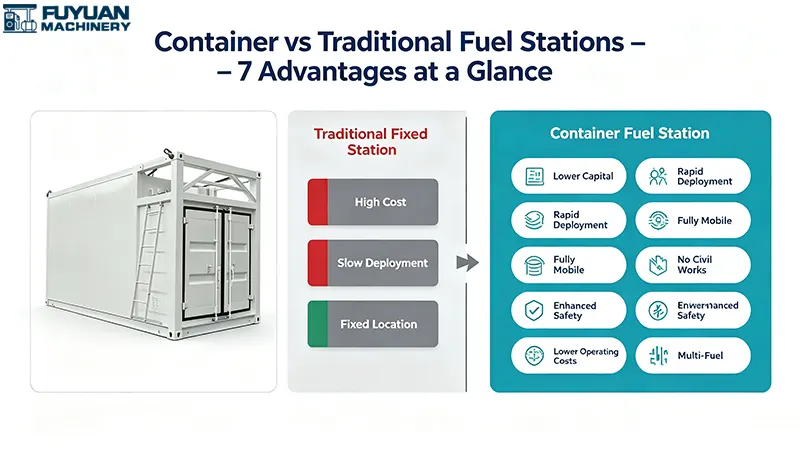
5. Superior Safety and Environmental Compliance
Modern containerized fuel stations are engineered with safety as a priority. They incorporate:
- Barrier explosion-proof technology that prevents explosions caused by open flames, static electricity, and lightning strikes
- Double-wall or self-bunded tank designs that prevent oil leaks and meet environmental requirements
- Integrated bunding and leak detection systems
- Explosion-proof, leak-proof construction
Traditional stations, with their underground tanks and complex piping, present greater environmental risks and are more difficult to monitor for leaks. Containerized units offer enhanced safety features as standard, making them compliant with strict environmental and safety regulations.
Regulatory attention on emissions and fuel quality is elevating the importance of compliant dispensing and storage systems. Containerized stations meet this challenge with integrated monitoring, filtration, and metering accuracy.
6. Lower Operating Costs and Wholesale Fuel Pricing
Beyond the initial capital savings, containerized stations deliver ongoing operational advantages.
- Staffing: A traditional station requires many workers to operate. A containerized station typically needs only 2–4 employees. With smart management systems enabling remote monitoring and automated settlement, staffing costs can be further optimized.
- Fuel pricing: Businesses can purchase fuel at wholesale prices through containerized stations, saving on the wholesale-retail price difference. Traditional stations pass high overhead costs—land, buildings, utilities, large staff—on to consumers in the form of higher fuel prices.
- Maintenance: Containerized units are generally cheaper to maintain. Their modular design simplifies inspection and repair.
- Digital management: Features like "one vehicle, one card," real-time data uploads, and remote monitoring enable precise fuel consumption control, eliminating waste and theft. One public transport company reduced fuel management losses by 95% after implementation, saving nearly RMB 1 million annually.
7. Scalable Capacity and Multi-Fuel Versatility
Traditional stations are built for a fixed capacity and a defined operational life. Changing capacity or adding fuel types requires major construction.
Containerized stations offer scalable capacity options. Capacities range from 10 m³ to 70 m³ or more, and units can be added or removed as demand changes.
Modern containerized systems also support multiple fuel types:
- Diesel and gasoline
- Jet fuel
- AdBlue / DEF
- Biofuels and blended fuels
- Emerging alternatives like hydrogen-compatible storage
As the sector adapts to an increasingly complex energy mix, containerized platforms are incorporating battery charging capabilities and alternative fuel compatibility.
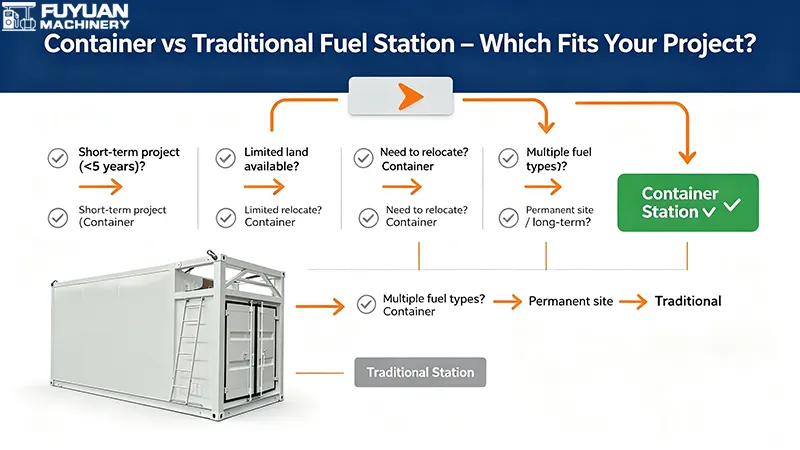
Summary Comparison
| Advantage | Container Station | Traditional Station |
| Capital cost | $35K–$80K (10,000L) | $120K–$350K+ |
| Installation time | 1–3 days | 4–16 weeks+ |
| Land required | 30–50 sqm | Hundreds to thousands sqm |
| Relocatable | Yes — fully redeployable | No — zero residual value |
| Civil works | None required | Significant |
| Staff required | 2–4 employees | Many workers |
| Fuel pricing | Wholesale | Retail + overhead |
| Multi-fuel | Yes — diesel, gasoline, jet, AdBlue, biofuels | Limited |
| TCO over 3–5 years | 1x baseline | 3–5x higher |
Conclusion
Containerized fuel stations are not just a temporary solution—they represent a fundamental shift in how fuel infrastructure is deployed. By combining lower capital costs, rapid deployment, full mobility, minimal footprint, enhanced safety, lower operating costs, and scalable versatility, they deliver value that traditional fixed stations simply cannot match.
For mining operations, construction sites, logistics fleets, agricultural operations, military deployments, and emergency response, containerized stations provide fuel where it's needed, when it's needed—at a cost that makes economic sense.
As industrial projects continue expanding globally, containerized fuel infrastructure is becoming an essential component of operational efficiency.
Looking for a containerized fuel station for your operation? Fuyuan Machinery manufactures high-quality containerized and skid-mounted fuel stations certified to UL, ATEX, IECEx, CE, ASME, and NFPA standards. Contact us today for a customized solution tailored to your specific requirements.
Written by
TAI'AN FUYUAN MACHINERY EQUIPMENT CO., LTD.
Editor Yuan
www.mobile-fuel-stations.com
WhatsApp:+86 182 6667 0999
Email:yuanyuzhu6@gmail.com

Leading Chinese Manufacturer & Exporter of mobile fuel stations and skid-mounted fuel stations.