- Home
- Company
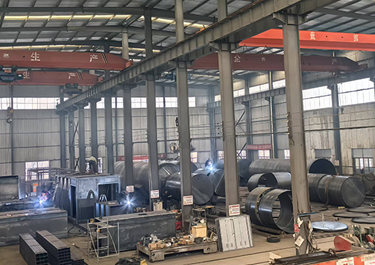 Our FactoryWe have a team of over 30 talented mobile fuel station R&D experts, as well as a 50,000-square-meter advanced modern intelligent manufacturing plant.
 - Mobile Fuel Station
- Storage Tank
- Blog
- Contacts
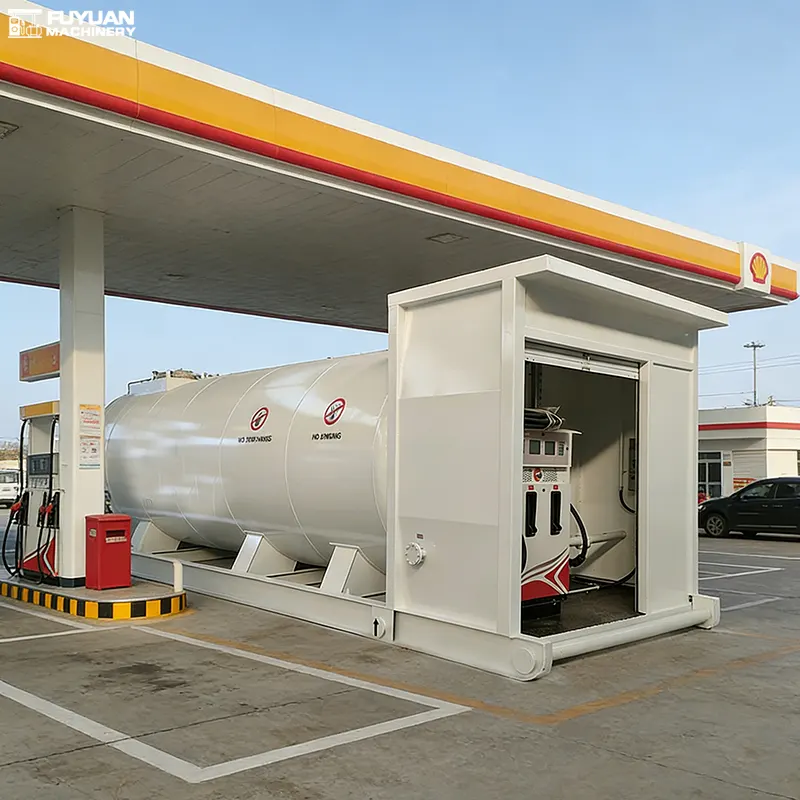
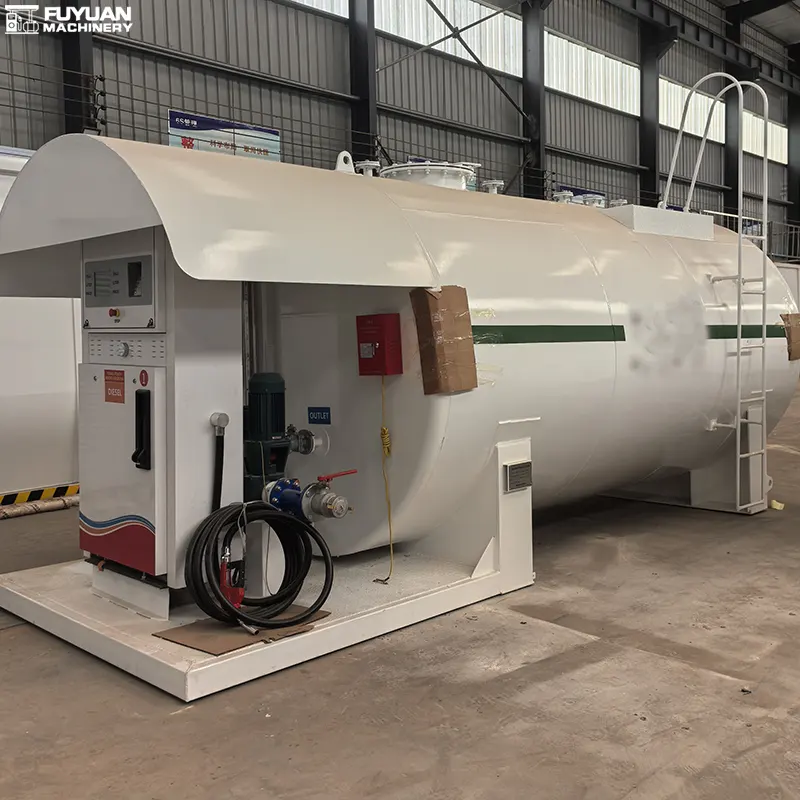
Top 5 Safety Standards for Mobile Fuel Stations You Must Know in 2026
You have selected the site, sized the tank, and chosen a supplier. The mobile fuel station is on its way. But there is one question that can shut down your entire operation before a single drop of fuel is dispensed:
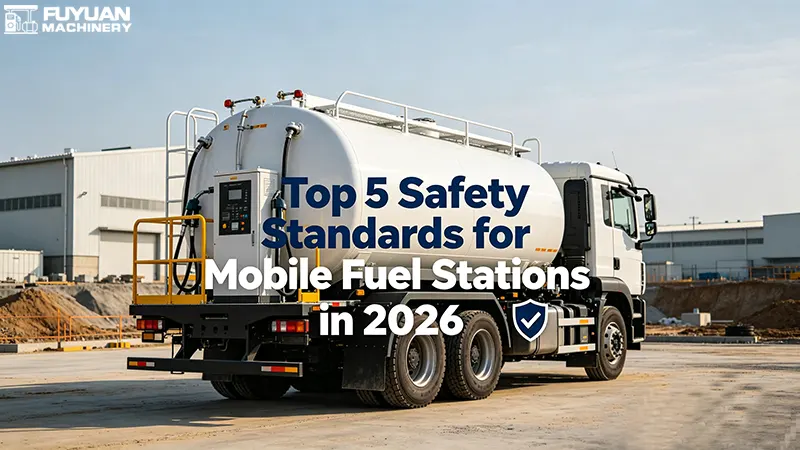
Does your equipment meet the safety standards required by your jurisdiction?
In 2026, regulatory compliance is non-negotiable. Mobile fuel stations may be temporary, but the safety requirements governing them are not. Local fire marshals, building officials, and environmental agencies enforce these standards—and they will inspect before granting approval to operate.
Here are the top 5 safety standards every mobile fuel station must meet in 2026.
1. NFPA 30A – Code for Motor Fuel Dispensing Facilities and Repair Garages
NFPA 30A is the cornerstone of fire safety for any facility that dispenses motor fuel. Published by the National Fire Protection Association, it governs fire and explosion safety at retail service stations, fleet fueling centers, and—critically—mobile fueling operations.
The code specifically applies to "motor fuel dispensing at farms and isolated construction sites, and on-demand mobile fueling". A dedicated chapter (Chapter 14) was added in recent editions to address on-demand mobile fueling specifically.
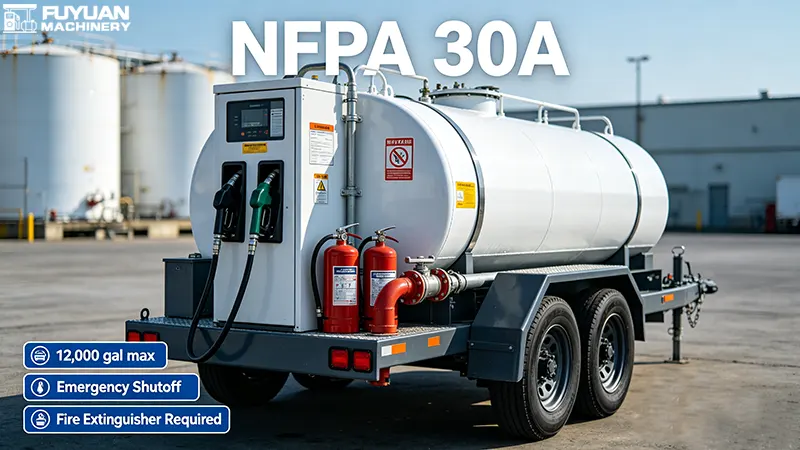
Key NFPA 30A requirements for mobile fuel stations:
| Requirement | Detail |
| Tank capacity limits | Maximum 12,000 gallons per individual tank; 48,000 gallons aggregate per site |
| Dispenser location | Minimum 10 feet from building openings to prevent vapor hazards |
| Emergency disconnects | At least one emergency shutoff device within 20–100 feet of each dispenser |
| Fire extinguishers | Minimum 3A:20BC rated extinguisher for Class B (flammable liquids) and Class C (electrical) hazards |
NFPA 30A covers fuel dispensers, hoses, nozzles, piping, emergency shutoffs, canopy protection, and delivery procedures. It does not cover bulk storage terminals unless they include motor fuel dispensing—that is governed by NFPA 30.
What this means for you: If your mobile fuel station dispenses fuel into vehicle tanks anywhere in North America (and in many jurisdictions globally that adopt NFPA standards), NFPA 30A is the baseline standard you must meet.
2. UL 142 – Steel Aboveground Tanks for Flammable and Combustible Liquids
Your fuel storage tank is the heart of the mobile station—and it must be built to a recognized safety standard. UL 142 is the internationally recognized standard for steel aboveground tanks for flammable and combustible liquids.
UL 142 covers steel primary, secondary, and diked-type atmospheric storage tanks intended for noncorrosive, stable flammable and combustible liquids. The standard includes rigorous requirements for:
- Construction – Tank materials, joints, connections, fittings, manholes, fill/drain/gauge openings, and painting
- Performance testing – Leakage, hydrostatic strength, top loading, buoyancy, and lift lug tests
- Production line testing – 100% of production tanks must be tested for leakage
NFPA 30 explicitly requires atmospheric storage tanks to be designed and constructed in accordance with UL 142 (among other recognized standards). The International Fire Code likewise requires tanks to be designed, constructed, and installed in accordance with NFPA 30.
What this means for you: A UL 142 listing on your tank is not a "nice to have"—it is a requirement for code compliance in most jurisdictions. If your supplier calls their tanks "fuel-grade" but cannot produce a UL listing, you risk the same fate as the Caribbean integrator who faced an 11-week construction delay because his tanks failed inspection.
3. ATEX – European Directive for Equipment in Explosive Atmospheres
If you are deploying a mobile fuel station in Europe—or selling to European markets—ATEX certification is mandatory. ATEX is the European Union directive governing equipment used in potentially explosive atmospheres.
ATEX certification means equipment has been fully tested and approved to be safe for use in hazardous/explosive environments. All electrical equipment in the fueling area—pumps, dispensers, control panels, automation systems—must be ATEX certified.
What ATEX covers in a mobile fuel station:
- Explosion-proof pumps – ATEX-certified pumps designed to prevent ignition
- Electrical components – All wiring, switches, and control systems
- Zone classification – Equipment must be rated for the specific hazardous zone (e.g., Zone 1 or Zone 2) where it is installed
Many manufacturers now offer ATEX-certified mobile fuel stations as standard. Some also provide ATEX-certified accessories such as explosion-proof tablets for mobile workers in hazardous areas.
What this means for you: If your project is in the EU, or if you are sourcing equipment that may eventually be deployed in the EU, ATEX certification is legally required. Non-compliance can result in rejected equipment, fines, and project delays.
4. IECEx – International Certification for Explosive Atmospheres
IECEx is the global certification system for equipment used in explosive atmospheres. While ATEX is the legal requirement for Europe, IECEx is a voluntary but globally accepted certification that facilitates international trade and deployment.
Both ATEX and IECEx align with the same technical standards (IEC-EN 60079), so the safety requirements are essentially identical. The critical difference: IECEx never allows self-certification—every product must be certified by an approved body. This makes IECEx a more rigorous and internationally trusted mark.
Key IECEx applications for mobile fuel stations:
| Component | IECEx Requirement |
| Fuel transfer pumps | Must be IECEx certified for use in potentially explosive atmospheres |
| Explosion-proof skids | Dual-zone explosion-proof designs compliant with IECEx standards |
| Control systems | Factory-prefabricated IECEx-certified automation panels |
IECEx has wider global adoption than ATEX, facilitating the marketing and use of safe equipment across many countries. The IECEx certification segment is valued at approximately $1.8 billion and growing at 5–6% annually.
What this means for you: For international deployments—especially in regions without their own rigorous certification systems—IECEx provides a globally recognized mark of safety. Many buyers now specify IECEx certification alongside or instead of ATEX to ensure equipment meets international standards.
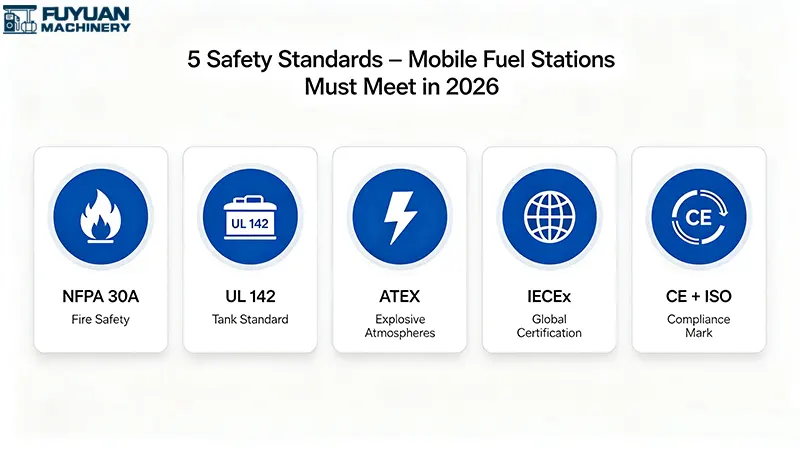
5. CE Marking + ISO 16923/16924:2026 (New for 2026)
CE Marking is the mandatory conformity mark for products sold in the European Economic Area. For mobile fuel stations, CE marking indicates compliance with EU safety, health, and environmental protection requirements.
But 2026 brings new ISO standards that every mobile fuel station operator should know:
ISO 16923:2026 – CNG Fuelling Stations
Published in January 2026, this standard specifies requirements for the design, construction, operation, maintenance, and inspection of stations for fuelling compressed natural gas (CNG) to vehicles. It covers both slow-fill and fast-fill stations, private and public access, and multi-fuel stations. Additional safety requirements apply for unodorized gas fuelling stations.
ISO 16924:2026 – LNG Fuelling Stations
Also published in January 2026, this standard covers stations for fuelling liquefied natural gas (LNG) to vehicles. It applies to fuelling stations with fixed LNG storage, mobile LNG storage, movable fuelling stations, and mobile fuelling stations. The standard covers all equipment from the LNG storage tank unloading connection up to the vehicle fuelling nozzle.
Both standards apply to multi-fuel stations that may include conventional liquid fuels alongside natural gas.
What this means for you: If your mobile fuel station handles CNG, LNG, or operates as a multi-fuel station, compliance with these new 2026 ISO standards is essential. They represent the latest international consensus on safety for alternative fuel infrastructure.
Choosing the Right Standards for Your Project
Not every standard applies to every project. Your certification requirements depend on:
| Factor | What to Consider |
| Deployment location | North America → NFPA 30A + UL 142; Europe → ATEX + CE; International → IECEx |
| Fuel type | Liquid fuels → NFPA 30A, UL 142; CNG/LNG → ISO 16923/16924:2026 |
| Market requirements | Some buyers specify IECEx for global consistency, regardless of location |
| Local AHJ | Always check with the Authority Having Jurisdiction—they may have additional requirements |
Red Flags to Watch For
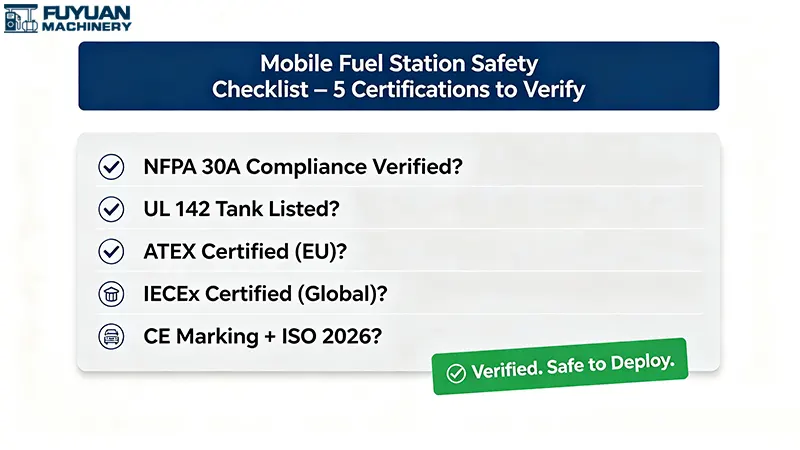
Before placing your order, verify that your supplier can provide:
- Documented NFPA 30A compliance (if applicable)
- UL 142 listing for the tank (or equivalent recognized standard)
- ATEX or IECEx certification for all electrical equipment
- CE Marking (if deploying in Europe)
- Compliance with ISO 16923:2026 or ISO 16924:2026 (if handling natural gas)
- Third-party inspection reports from recognized organizations (SGS, Bureau Veritas, TÜV)
If a supplier cannot provide documented certifications for every applicable standard, walk away. Compliance is mandatory regardless of how long the station remains on site.
Conclusion
In 2026, mobile fuel stations are no longer a regulatory gray area. NFPA 30A, UL 142, ATEX, IECEx, CE, and the new ISO 16923/16924:2026 standards provide a clear framework for safe design, construction, and operation.
The standards exist to protect your people, your equipment, and your project. Meeting them is not optional—it is the price of admission.
Choose a supplier who builds to these standards as a matter of course, not as an expensive afterthought. Your project timeline—and your peace of mind—depend on it.
Looking for a mobile fuel station that meets all applicable safety standards? Fuyuan Machinery manufactures containerized and skid-mounted fuel stations certified to UL, ATEX, IECEx, CE, ASME, and NFPA standards. Contact us today to discuss your project requirements.
Written by
TAI'AN FUYUAN MACHINERY EQUIPMENT CO., LTD.
Editor Yuan
www.mobile-fuel-stations.com
WhatsApp:+86 182 6667 0999
Email:yuanyuzhu6@gmail.com
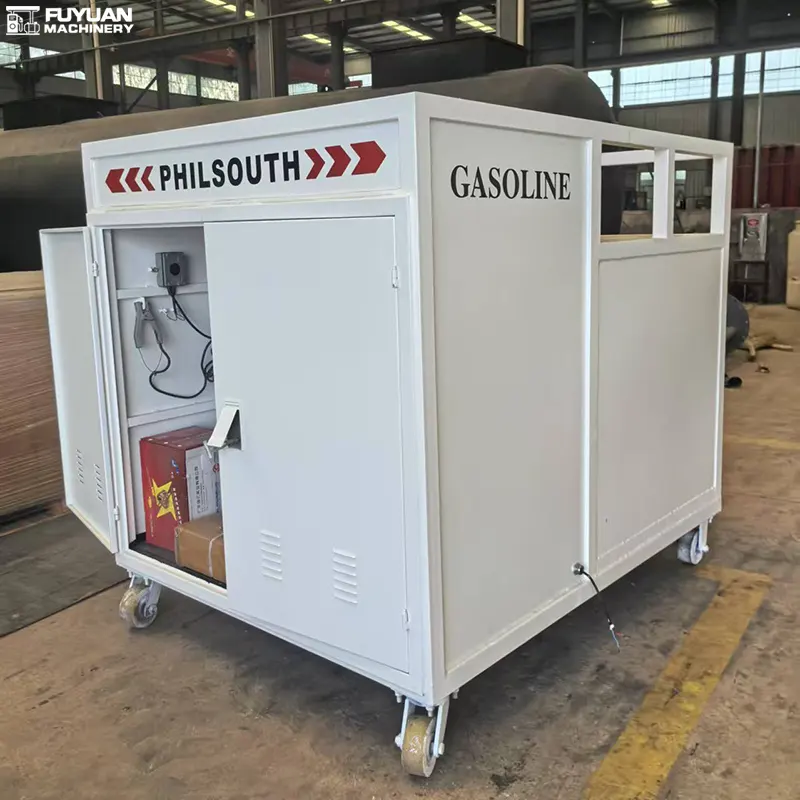
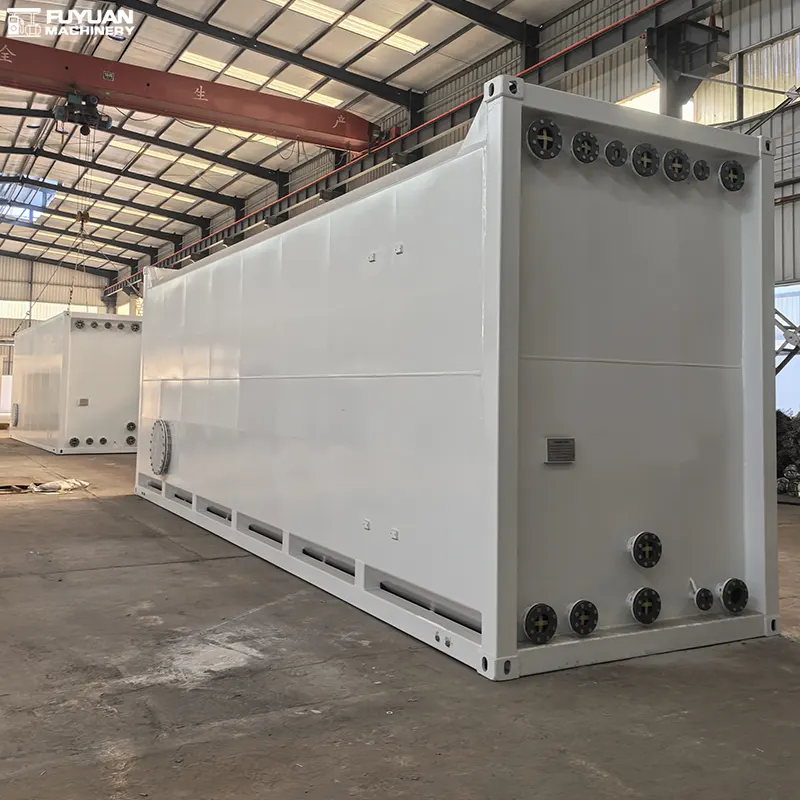

Leading Chinese Manufacturer & Exporter of mobile fuel stations and skid-mounted fuel stations.