
- Home
- Company
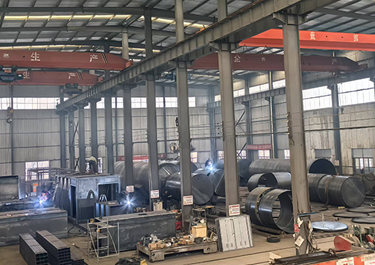 Our FactoryWe have a team of over 30 talented mobile fuel station R&D experts, as well as a 50,000-square-meter advanced modern intelligent manufacturing plant.
 - Mobile Fuel Station
- Storage Tank
- Blog
- Contacts
The 8 Major Reasons for Increased Metering Errors in Mobile Fuel Stations
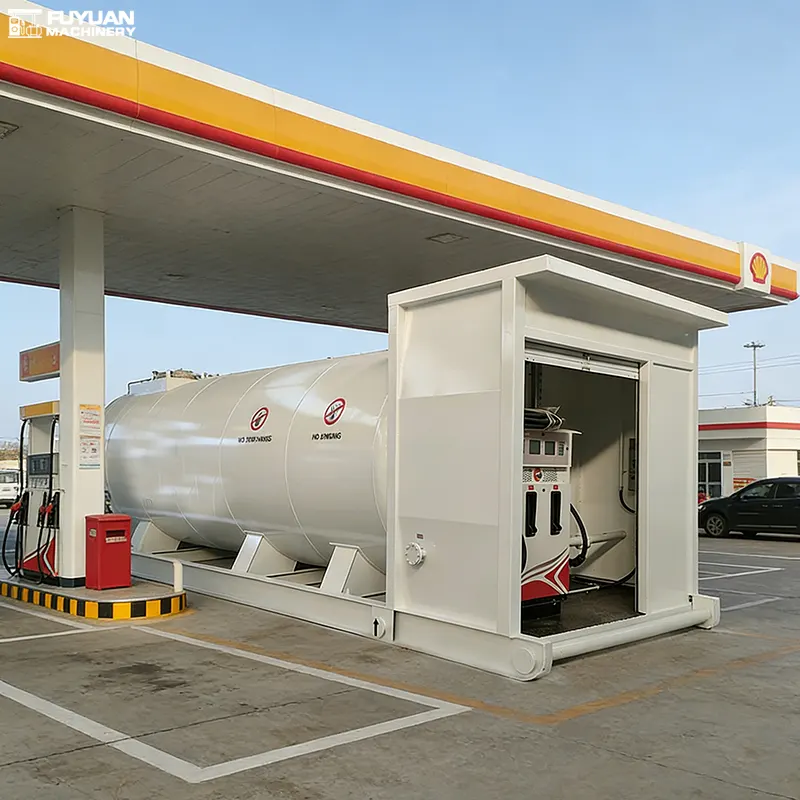
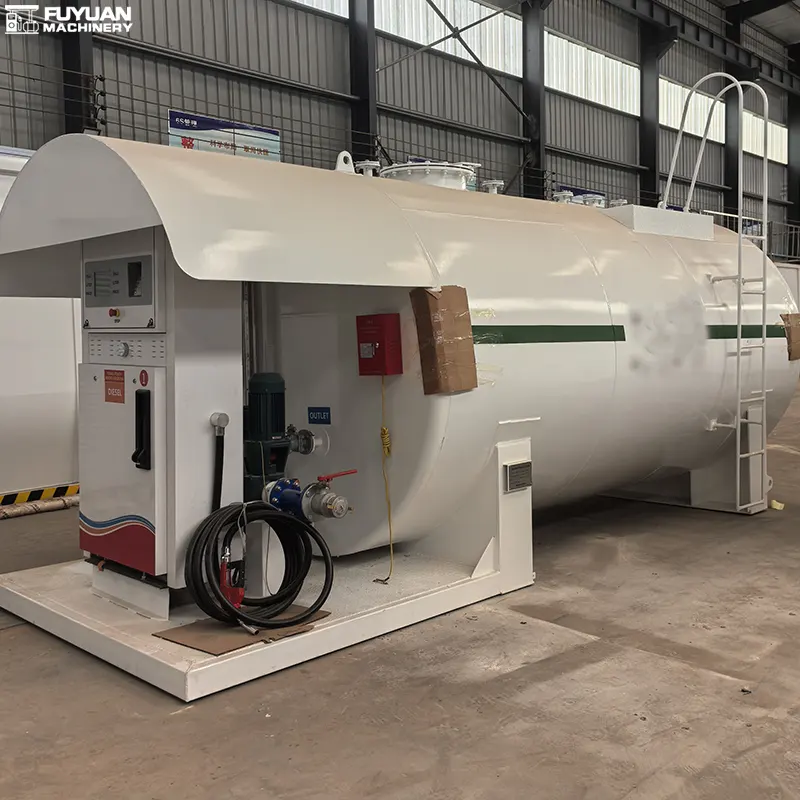
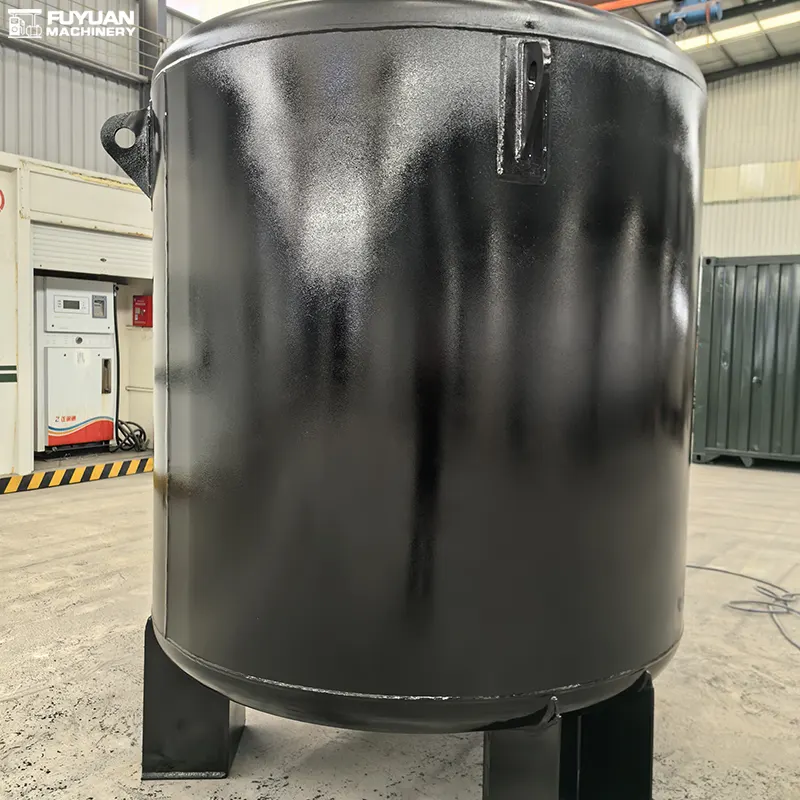
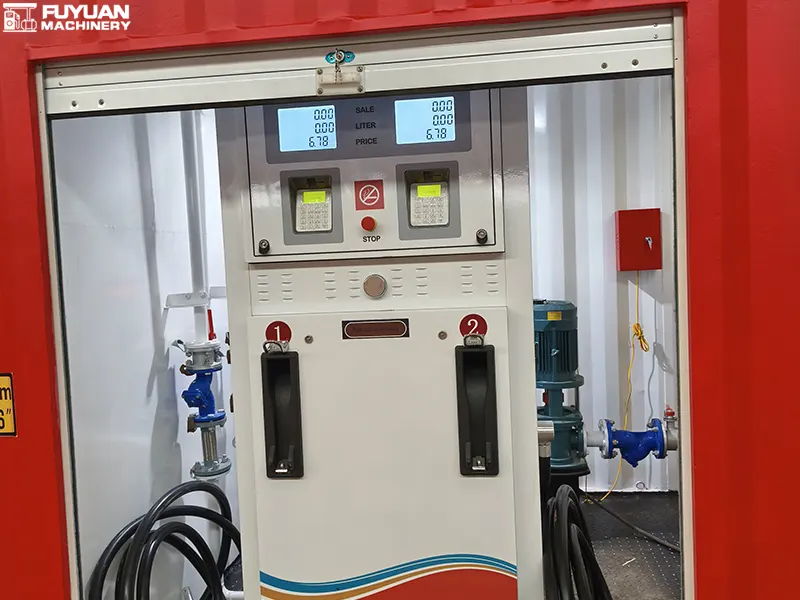
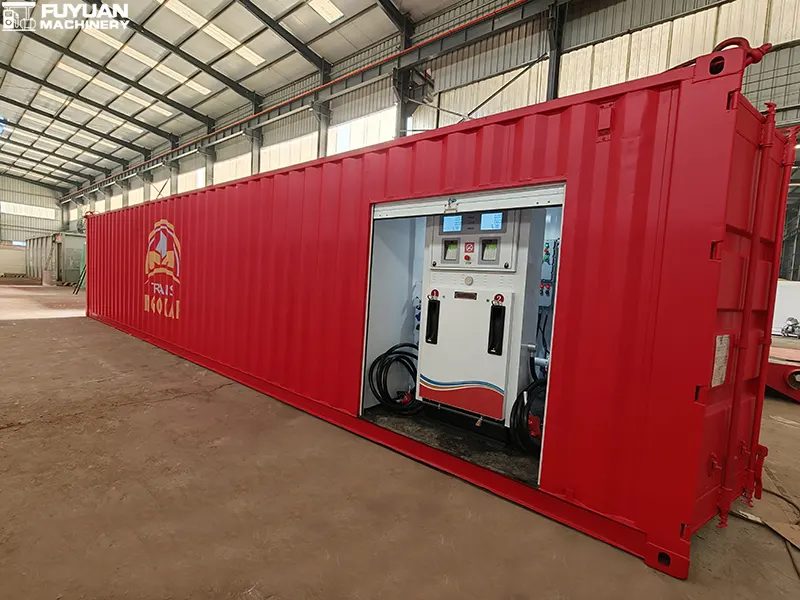
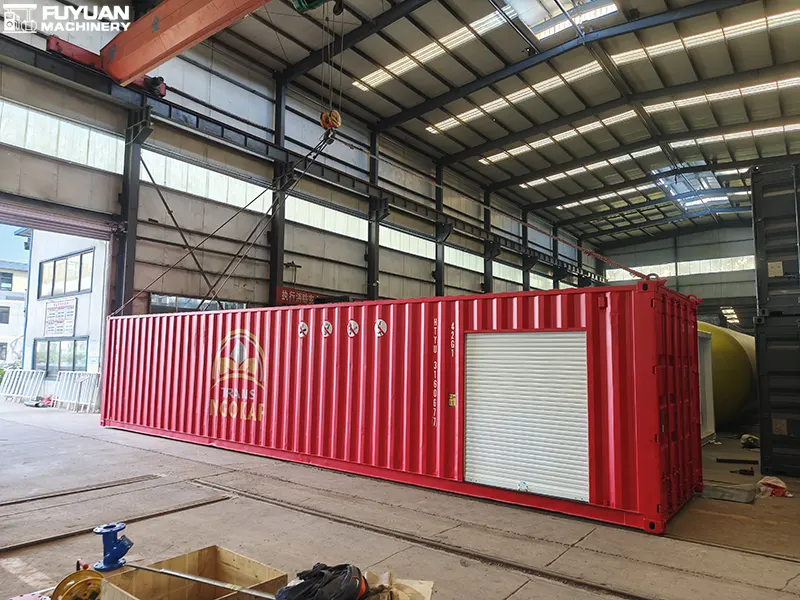
Mobile skid-mounted fuel stations offer advantages such as flexible deployment, convenient operation and maintenance, and wide adaptability, making them widely used in specialized fuel supply scenarios such as construction sites, logistics parks, and mining areas. Metering accuracy is crucial for the compliant operation of mobile gas stations, protecting the rights of both suppliers and consumers, and avoiding business disputes. According to relevant standards, the maximum allowable error for fuel metering equipment is ±0.3%, and the repeatability error must be ≤0.1%. Compared to traditional fixed gas stations, mobile gas station equipment operates under more complex conditions. It is constantly affected by factors such as displacement vibration, environmental temperature differences, open-air operation, frequent start-stop operations, and fluctuations in fuel quality. This can easily lead to wear and tear, parameter drift, and abnormal operating conditions in the core metering components, resulting in a gradual increase in metering errors. This not only causes fuel losses and operational losses for enterprises but also risks such as metering complaints and failure to pass compliance verification. To accurately identify metering inaccuracies, standardize equipment operation and maintenance management, and ensure accurate and compliant metering data, we will analyze and explain eight core reasons for increased metering errors in mobile gas stations, combining quantitative data and on-site operating conditions.
1. Internal Leakage Due to Wear of Core Components in Mobile Fuel Station Flow Meters
1.1. Clearance, Leakage, and Metering Error Comparison Table
| Piston and Cylinder Liner Single-Sided Clearance | Unit Single-Step Internal Leakage (L/min) | Overall Metering Error | Error Manifestation |
| New Product ≤0.02mm | 0.02~0.05 | Within ±0.15% (National Standard Qualified ≤±0.3%) | Metering Compliance |
| 0.03~0.05mm | 0.08~0.15 | -0.4%~-0.8% | Excessive Oil Flow, Insufficient Number of Flows |
| 0.06~0.10mm | 0.2~0.4 | -1.0%~-2.0% | Significant Oil Loss, Customer Complaints |
| >0.12mm | ≥0.55 | >-3.0% | Severe Internal Leakage, Operation Prohibited |
> Negative error meaning: The flow meter displays less oil than the actual amount dispensed (under-counting by the fuel dispenser, fuel shortage at the station).
1.2. Leakage Data under Flow Conditions
- Small flow rate (10L/min, for small truck refueling): The proportion of internal leakage increases in models with excessive wear, resulting in larger errors under the same clearance, generally rising by +0.3%~0.6%; for example, with a clearance of 0.08mm, the rated operating error is -1.5%, but the error can reach approximately -2.1% at small flow rates.
- Rated large flow rate (40~50L/min, for truck refueling): The oil flow rate suppresses internal leakage, narrowing the error by 0.4%~0.7% for the same specifications.
1.3. Wear and Tear Pattern Data Based on Usage Time
- New machines (0-12 months): Gap increases slowly, average annual error increase ≤0.2%;
- Under normal operating conditions (1-3 years): Average annual error increases by 0.3%-0.5%;
- Machines older than 3 years without maintenance, with impurities entering the gauge: Average annual error surges by 0.8%-1.2%, rapidly exceeding the national standard ±0.3% limit.
2. Mobile Fuel Station Sensor/Encoder Failure or Inaccuracy
2.1. Aging/Contamination of Photoelectric Components
- Symptoms: Decreased pulse amplitude, edge jitter, random pulse loss.
- Pulse Loss Rate and Error:
- 1-2 lost pulses/1000: +0.2% to +0.5%
- 3-5 lost pulses/1000: +0.6% to +1.2%
- >5 lost pulses/1000: > +1.5%
- Characteristics: Larger error at low flow rates (≤15 L/min), reaching 1.5 to 2 times that under the same operating conditions.
2.2. Encoder Grating Disc Wear/Cracks
- Symptoms: Intermittent pulses, count jumps, poor repeatability.
- Error Range: -1.0% to +2.0%.
- Typical Example: 100L refueling, display fluctuates between 98.5 and 102L, repeatability >0.5%.
2.3. Loose wiring/oxidation/shielding failure
- Symptoms: Pulse waveform distortion, false pulses, random over/undercounting.
- Error: ±0.5%~±1.5%, strong interference can reach ±2%~±3%.
- Poor grounding: Error increases by +0.3%~+0.8%.
2.4. Encoder and motherboard incompatibility/authentication failure
- Symptoms: Incorrect counting ratio, pulse equivalent drift
- Error: Fixed deviation +1.0%~+6.0% (tax control lock threshold is usually set to ±6%)
2.5. Temperature/pressure sensor drift
- Temperature sensor: Deviation ±2℃ → Volume compensation error ±0.24%; ±5℃ → ±0.6%
- Pressure sensor: Deviation >0.05MPa → Flow conversion error ±0.3%~±0.8%
3. Poor oil-gas separation, gas in oil
3.1. Error corresponding to mobile fuel station oil-gas separator failure
- Separator blockage/dirty filter element: Air content 2%~4% → Error +1.5%~+3.0%
- Exhaust pipe blockage/high resistance: Air content 1.5%~3% → Error +1.0%~+2.2%
- Bottom valve leakage/air intake: Air content 3%~8% → Error +3.0%~+5.5%
- Excessive pump pressure/cavitation: Air content 2%~5% → Error +2.0%~+4.0%
- Separator aging/internal leakage: Air content 1%~2.5% → Error +0.8%~+1.8%
3.2. Impact on repeatability and stability
- Air content > 0.5%: Repeatability deteriorates from ≤0.1% to 0.2%~0.5%.
- Gas content > 2%: Repeatability > 0.5%, direct failure in verification.
- Bubble fluctuation → Pulse jitter, frequent jumps, inconsistent flow, frequent disputes.
3.3. Quick Fault Diagnosis
- White discharge from fuel nozzle, excessive foam, accompanied by bubbles → Gas content ≥ 2% → Error ≥ +1%
- Frequent jumps at low flow rate, customer says "not enough" → Gas content 1%~3%
- High summer temperatures, frequent cavitation → Gas content easily exceeds 3%
4. Temperature compensation failure or incorrect setting
4.1. Table of Measurement Errors Caused by Temperature Sensor Measurement Deviation
| Temperature Measurement Deviation | Diesel Metering Error | Gasoline Metering Error | Operating Condition Description |
| ±1℃ | ±0.08% | ±0.12% | Error within acceptable range |
| ±2℃ | ±0.16% | ±0.24% | Near the upper limit of acceptable level |
| ±3℃ | ±0.24% | ±0.36% | Gasoline directly exceeds national standard limit |
| ±5℃ | ±0.40% | ±0.60% | All exceed standards, frequent complaints |
| ±10℃ | ±0.80% | ±1.20% | Serious measurement inaccuracy |
Error logic: Sensor measured oil temperature > Actual oil temperature → Overcompensation reduces volume, display shows less oil output; Measured oil temperature < Actual oil temperature → Undercompensation reduces volume, display shows more oil output.
4.2. Incorrect Compensation Coefficient Parameter Settings
- Diesel fuel incorrectly set to gasoline expansion coefficient of 1.2‰: In an environment with a temperature difference of 20℃, the error = 20 × (1.2‰ - 0.8‰) = +0.8%, far exceeding the national standard of ±0.3%.
- Gasoline fuel incorrectly set to diesel expansion coefficient of 0.8‰: In an environment with a temperature difference of 20℃, the error = 20 × (0.8‰ - 1.2‰) = -0.8%.
5. Pipeline Leaks, Gas Accumulation, or Improper Installation
- Minor leaks (joints/welds), internal leaks in the foot valve, resulting in reduced actual oil output.
- Inverted flow meter, insufficient straight pipe section, or close proximity of bends/valves cause turbulent flow and a surge in error.
6. Inaccurate Opening and Closing of Solenoid Valves, Overflow, or Delay
- Solenoid valves do not close tightly, operate slowly, and a small amount of oil continues to flow after the valve is closed.
- Preset refueling is prone to "overflow," and although the error may be small in a single instance, the cumulative effect is significant.
7. Failure to Reset Density/Parameters After Oil Change
- Significant density differences exist between different oil types (gasoline/diesel, different octane ratings).
- Density and pulse coefficients were not updated after oil changes, leading to persistent measurement errors.
8. Mainboard/Electrical Control System Failure, Expired or Incorrect Calibration
- Aging of the metering control mainboard, program abnormalities, parameter drift, and calculation/transmission errors.
- Exceeding the calibration period (≥6 months), improper calibration, and damaged seals lead to gradual accumulation of errors.
In summary, increased errors in mobile fuel station meters are not caused by a single factor, but rather by a combination of multiple issues, including mechanical hardware wear, abnormal electronic control signals, erratic oil and gas conditions, incorrect parameter configuration, and improper installation and maintenance. Among these, wear of core flow meter components, gas in the oil, and temperature compensation failure are the three most frequent and significantly impactful causes. Sensor inaccuracies, pipeline malfunctions, solenoid valve lag, mismatched oil parameters, and mainboard/electronic control system drift further exacerbate measurement deviations, causing the equipment to exceed the national standard measurement error range. Compared to fixed gas stations, the special operating environment of mobile equipment, such as vibration, outdoor temperature differences, and frequent start-stop, is the key reason why its measurement error is more likely to accumulate and exceed the tolerance faster.
Written by
TAI'AN FUYUAN MACHINERY EQUIPMENT CO., LTD.
Editor Yuan
www.mobile-fuel-stations.com
WhatsApp:+86 182 6667 0999
Email:yuanyuzhu6@gmail.com

Leading Chinese Manufacturer & Exporter of mobile fuel stations and skid-mounted fuel stations.