
- Home
- Company
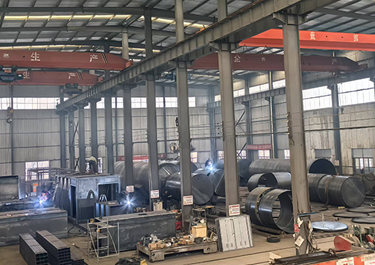 Our FactoryWe have a team of over 30 talented mobile fuel station R&D experts, as well as a 50,000-square-meter advanced modern intelligent manufacturing plant.
 - Mobile Fuel Station
- Storage Tank
- Blog
- Contacts
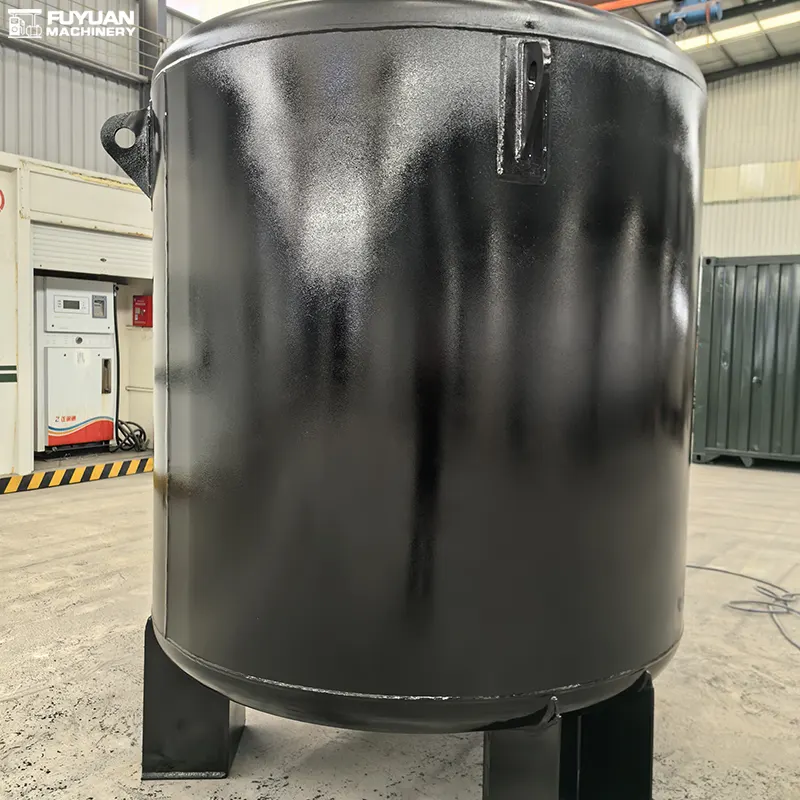
The 6 Key Precautions for Unloading Oil at Mobile Fuel Stations
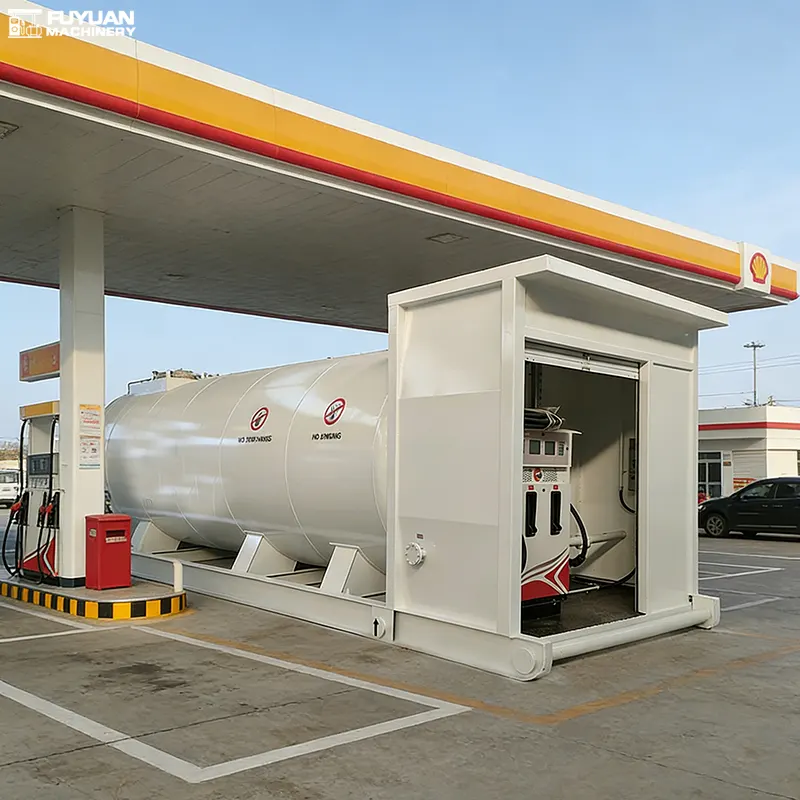
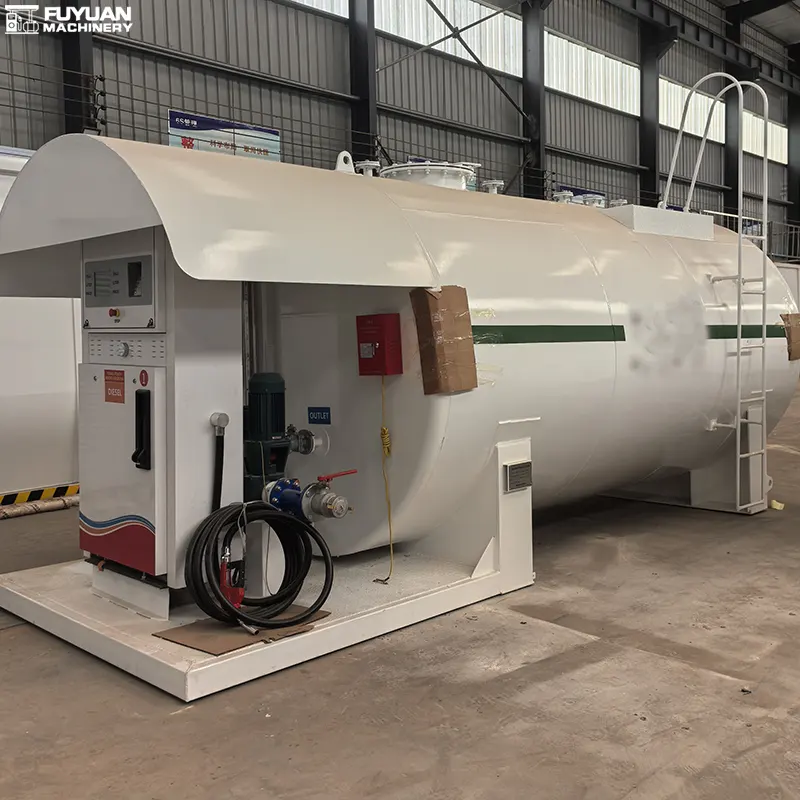
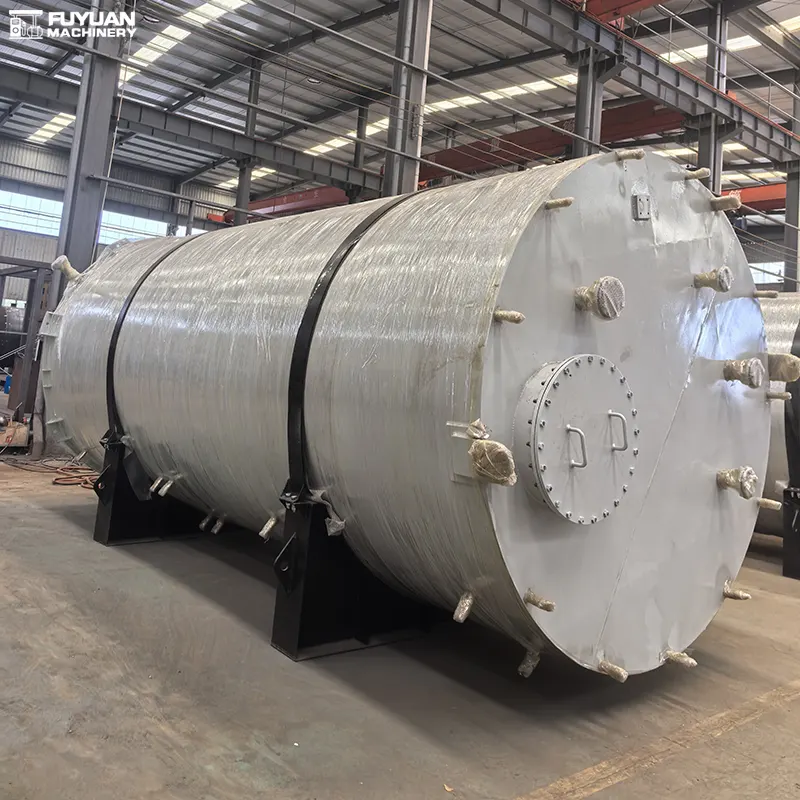
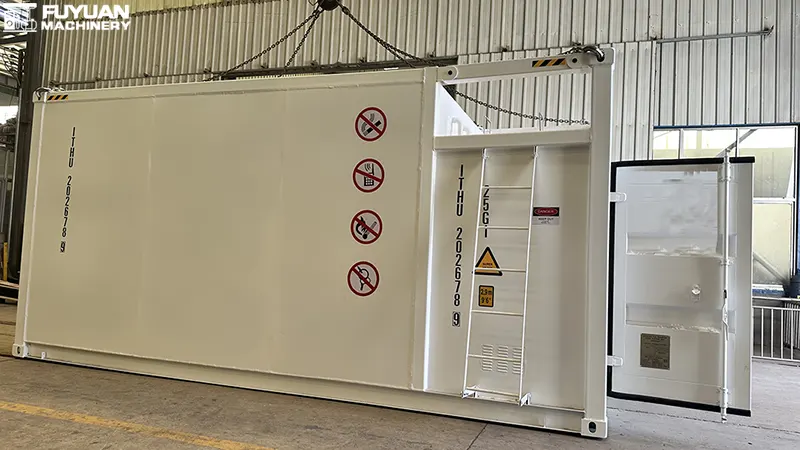
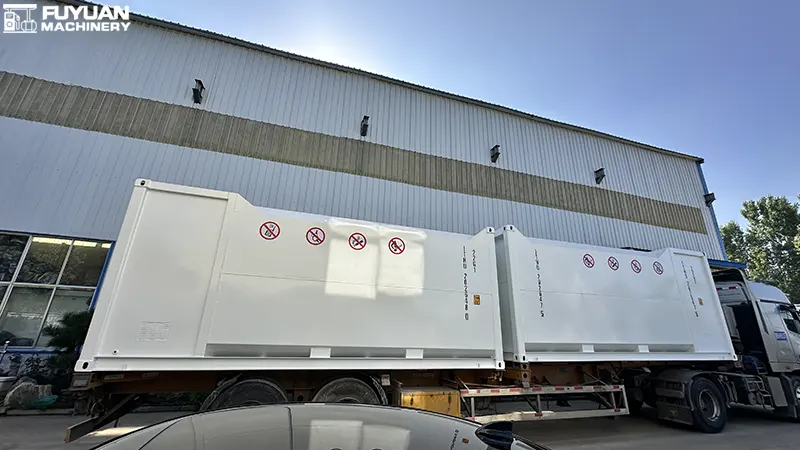
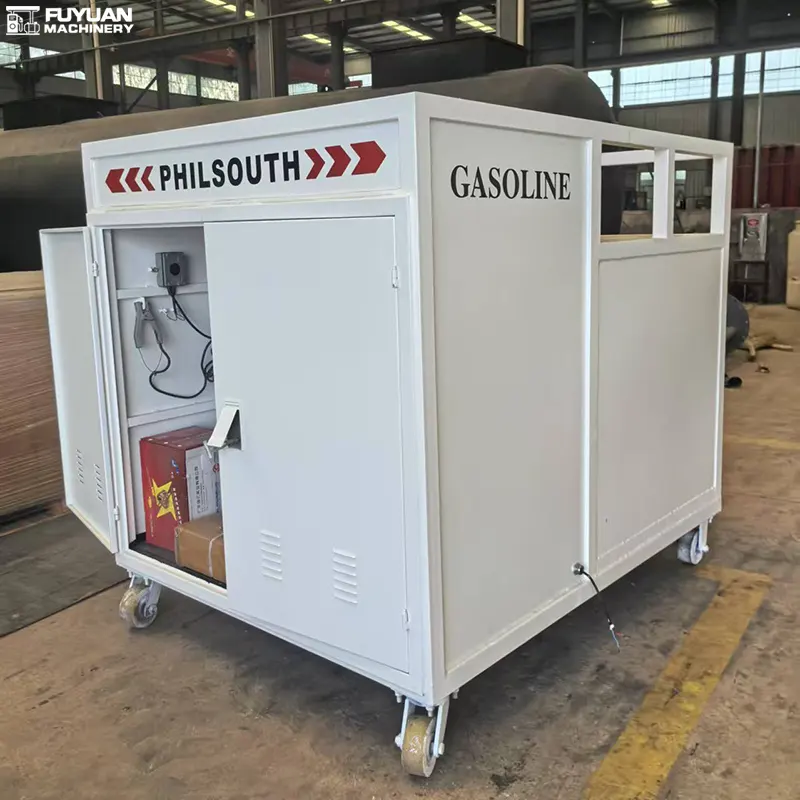
Fuyuan mobile skid-mounted fuel stations are integrated explosion-proof fuel supply systems. Unloading operations pose significant safety risks, including static electricity ignition, oil leakage, and oil/gas explosions. Strictly implementing unloading operation control is crucial for preventing accidents. Based on the AQ3010-2022 standard and considering Fuyuan's equipment structure and actual on-site operations, the following six key precautions for unloading operations are hereby specified. All operators must memorize and strictly adhere to them.
1. Preparations Before Unloading Oil at Mobile Fuel Stations
1.1. Demarcating the Warning Zone
The tanker truck should be parked within a 15-meter no-fire zone around the skid-mounted tank. Warning signs and isolation cones should be placed, and unauthorized personnel should be evacuated. Mobile phones, open flames, and metal striking are prohibited within the zone.
1.2. Securing the Tanker Truck
The vehicle should be turned off, the handbrake engaged, and front and rear wheels fitted with triangular blocks for anti-slip. The exhaust pipe's fireproof and flame-retardant cover should be checked for integrity.
1.3. Environmental Condition Confirmation
Unloading is prohibited during thunderstorms, winds of level 6 or above, and temperatures above 38℃; two 4kg dry powder fire extinguishers and fire-fighting sand should be readily available on site.
1.4. Double-Person Verification of Oil Information
Verify the waybill, seal, oil grade, and tank number; measure the current liquid level in the skid-mounted tank; calculate the remaining volume; ensure the liquid level does not exceed 90% of the tank capacity after unloading.
1.5. Wearing Personal Protective Equipment
Anti-static work clothes, anti-static shoes, oil-resistant gloves, and safety goggles.
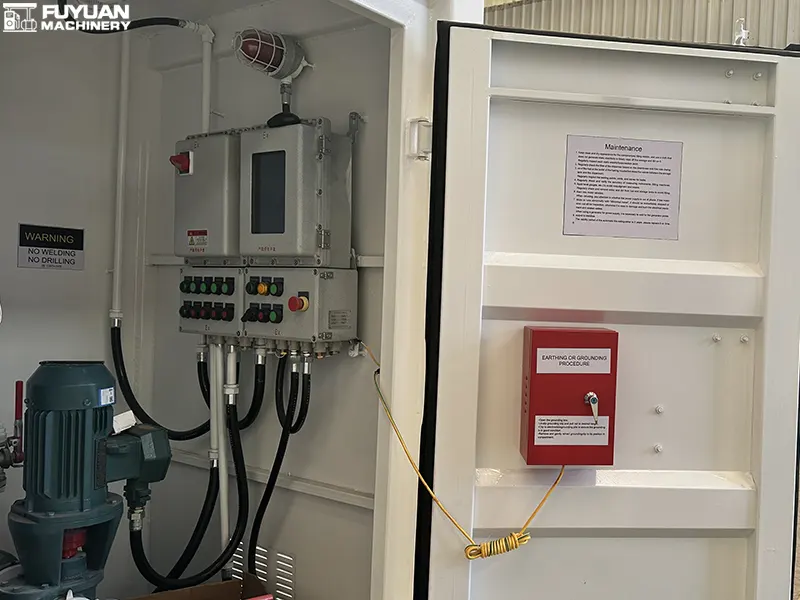
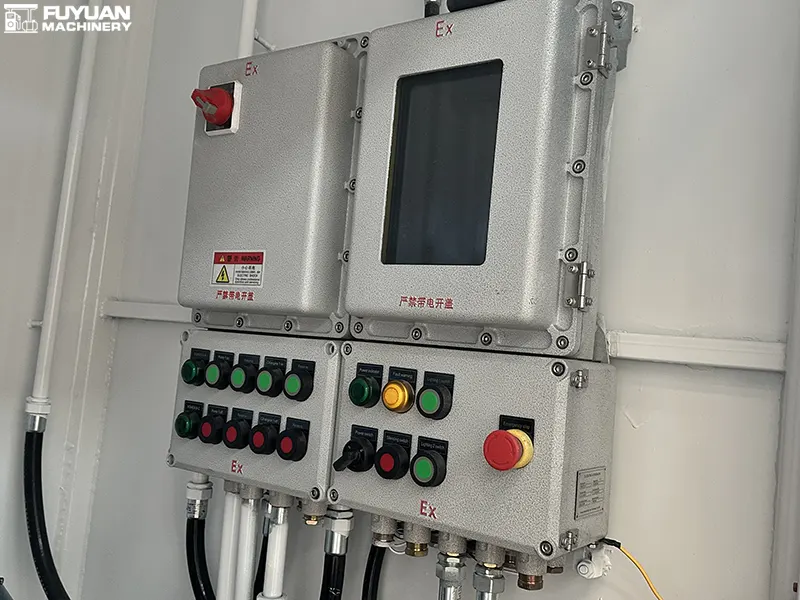
2. Real-Time Monitoring of the Unloading Process
2.1. Segmented Speed Control to Reduce Impact Leakage
Initially, before the liquid level reaches the pipe opening: flow velocity ≤ 0.71 m/s; after immersion, flow velocity ≤ 1.0 m/s. Do not open valves wide for rapid filling, as high pressure can easily breach the sealing joints.
2.2. Continuous Dual-Person Inspection:
Inspect joints, hoses, valves, and tank bottom every 5 minutes: check for oil stains, oil droplets, and unusual oil odors; one person monitors the liquid level, and the other watches the pipeline.
2.3. Abnormal Handling Procedure:
In case of leakage, immediately close the tank truck's outlet valve and the skid-loading tank's inlet valve, and stop unloading; keep the pipeline connected and allow it to depressurize for 5 minutes before disassembling and handling. Do not disassemble or install pipelines under pressure.
2.4. Control the Duration of Each Unloading Session:
Continuous unloading should not exceed 3 hours. Prolonged high-pressure oil transport can easily cause hose aging and leakage. If this time limit is exceeded, stop the machine for cooling.
3. Precautions for Oil Unloading Operation
3.1. Static Grounding and Flow Rate Control (Core of Anti-static)
- Operation Sequence: Ground first, then connect oil pipe; disconnect oil pipe first, then disconnect ground wire.
- Grounding Parameters: The static grounding clamp holds exposed metal; the total grounding resistance ≤ 4Ω; test once a year before thunderstorms; single clamp contact resistance < 100Ω.
- Stabilization Requirements: After the tanker engine is off, allow it to stand for ≥ 3 minutes before connecting pipelines; after unloading, allow it to stand for 5 minutes before opening the cap for metering.
- Flow Rate Standards (Mandatory):
- Oil pipe not submerged in liquid: Flow rate ≤ 0.71m/s
- Oil pipe submerged less than 300mm from the bottom of the tank: Flow rate ≤ 1.0m/s
- Oil Pipe Insertion Depth: The unloading pipe should be ≤ 300mm from the bottom of the tank; do not allow oil to splash into the tank while suspended.
3.2. Isolation of Fire Sources and On-site Warning (Fire Prevention and Explosion Prevention)
- Fire-restricted area radius: The unloading operation warning circle is ≥15m. Within the circle, mobile phones, open flames, metal striking, and non-explosion-proof electrical appliances are strictly prohibited.
- Vehicle requirements: Tanker trucks must be completely shut off, handbrake engaged, and wheel chocks tightened; exhaust pipe fireproof covers must be intact; starting or repairing vehicles in place is prohibited.
- Environmental restrictions: Unloading is prohibited during thunderstorms, winds exceeding level 6, or ambient temperatures >38℃.
- Spacing data: Skid-mounted tanks must be at least 18m away from open flames, at least 12m away from civil buildings, and at least 20m away from high-voltage cables.
- Firefighting equipment: The work area must be equipped with two 4kg dry powder fire extinguishers and one bucket of fire extinguishing sand, ≤3m away from the operation point.
3.3. Pre-unloading double verification and liquid level overflow prevention (preventing oil mixing and overflow)
- Five verification items: Lead seal, oil grade, waybill quantity, corresponding tank, and liquid level balance double-checked.
- Tank Capacity Safety Margin: After unloading, the liquid level in the tank must not exceed 90% of the total volume, with a 10% thermal expansion buffer space.
- Liquid Level Alarm: The high liquid level alarm threshold is set at 85% of the tank capacity. Upon alarm, the valve will be immediately shut off and the pump stopped.
- Metering Data: Measure the tank volume before unloading and remeasure after 5 minutes of settling. If the error exceeds ±0.3%, suspend operations and verify the pipeline.
- No Mixing: Gasoline and diesel must have separate pipelines and separate vapor recovery interfaces, with clear labeling.
3.4. Closed-Loop Vapor Recovery and Pipeline Sealing (VOC Control)
- Mandatory Process: Gasoline unloading must be done with a balanced closed-loop vapor recovery system; closed-loop recovery is recommended for diesel.
- Recovery Efficiency: Vapor recovery rate ≥85%, gas-liquid ratio controlled within the range of 1.0~1.2.
- Pipeline Standards: Nominal diameter of the main recovery pipe ≥100mm; self-closing quick-sealing joints are used.
- Leakage Control: No oil leakage or oil vapor escape from any joints; single unloading time ≤ 3 hours, stop the machine and cool for 30 minutes before continuing unloading if the time exceeds this limit.
- The skid-mounted refueling machine must be shut down throughout the entire operation, and all refueling operations within the station must cease.
3.5. Personnel Protection and Dual-Person Supervision (Operator Specifications)
- Personnel Configuration: Dual-person supervision throughout the entire process, one person operating and one person monitoring the liquid level and pipelines, must not leave their posts.
- Mandatory Labor Protection Standards:
- Anti-static work clothes, anti-static soft-soled shoes (no shoes with metal nails)
- Oil-resistant rubber gloves, safety goggles; wear a half-face gas mask when there is a large amount of volatiles.
- Prohibited Behaviors: No putting on or taking off clothing, combing hair, or violently colliding metal tools to generate static sparks.
- Qualification Requirements: Operators must be certified and receive monthly unloading safety training and quarterly emergency drills.
3.6. Post-Unloading Cleanup and Equipment Maintenance (Closed-Loop Cleanup)
- Pump Shutdown Sequence: First, close the tanker truck unloading valve → stop the pump → close the skid-mounted tank inlet valve. Do not allow the pump to idle for more than 30 seconds.
- Pipeline Operation: Drain residual oil from the pipeline before disassembling the joint. Immediately seal the unloading port and oil/gas inlet with the sealing cap.
- Oil Spill Handling: Clean up surface oil with absorbent pads within 5 minutes and drain it into the oil collection ditch; the volume of the emergency oil pool should be ≥ 1.5 times the capacity of a single tank.
- Equipment Inspection: Ensure the recovery pipeline, emergency shut-off valve, level probe, and electrostatic clamp are undamaged.
- Closed-Loop Record Keeping: Complete the unloading log, recording the oil type, tonnage, start and end times, grounding resistance, and any abnormalities. Retain the log for ≥ 1 year.
4. Key Summary Data Table
| Control Items | Standard Values | Violation Risks |
| Anti-static grounding resistance | ≤4Ω | Static accumulation flash explosion |
| Initial unloading flow rate | ≤0.71m/s | Oil splashing and electrostatic generation |
| Drain pipe height from tank bottom | ≤300mm | Static electricity generated by liquid surface splash |
| Tank safe loading limit | 90% volume | High temperature expansion causing tank overflow and leakage |
| Oil and gas recovery efficiency | ≥85% | Oil and gas accumulation and explosion |
| Operating warning radius | ≥15m | External ignition source igniting oil vapor |
| Maximum unloading time per cycle | ≤3h | Pump overheating and fire, pipeline aging and leakage |
| Post-unloading settling and metering time | 5min | Static electricity not dissipated and oil fire |
5. Methods to accelerate unloading efficiency
5.1. Match standard diameter oil pipes to reduce pipeline resistance
DN100 standard oil hoses should be used preferentially for liquid phase unloading pipes; DN80 thin pipes should not be used; thin pipes have high resistance and low flow rate.
Use the same specifications for both the oil/gas recovery pipe and the liquid phase pipe to avoid gas resistance causing a decrease in flow rate.
5.2. Regularly unclog and inspect pipelines to eliminate blockages.
Clean the pipeline filter screen monthly; impurities and blockages will significantly reduce flow. Perform pressure tests on hoses annually to prevent internal deformation and flow restriction due to narrowing.
5.3. Ensure the pipeline is straight and free of bends and compression throughout.
Excessive bending and compression of hoses will reduce the flow cross-section, reducing flow by more than 30%. Connect hoses naturally, avoiding sharp bends or being run over by vehicle wheels.
5.4. Compliant phased speed increase (strictly adhere to anti-static current speed control).
- Initially, when the liquid level is below the pipe opening: maintain a low speed of ≤0.71m/s (do not increase speed, prevent static electricity).
- When the liquid level is more than 30cm above the unloading pipe opening: can be stably opened to the compliant upper limit of 1.0m/s for full flow rate.
- Open the valve more fully after the liquid level rises, initially at low speed, then at full load in the middle and later stages, balancing safety and efficiency.
6. Key Safety Red Lines During Oil Unloading
- The flow rate must not exceed 1.0 m/s throughout the entire process, and must not exceed 0.71 m/s in the initial stage;
- The total loading volume must not exceed 90% of the tank volume;
- Static grounding and closed-loop oil and gas recovery processes must not be omitted;
- Operations are prohibited during thunderstorms, winds exceeding level 6, or temperatures exceeding 38°C. Unloading must not be rushed;
- Emergency shut-off devices at high liquid levels must not be removed or shielded for forced rapid unloading.
7. Conclusion
The overall unloading operation at mobile fuel stations adheres to six core principles: anti-static, fire and explosion prevention, spill prevention, oil mixing prevention, airtight sealing, and strict closing procedures. The entire process requires dual-person operation and compliant procedures to ensure safe and efficient unloading.
In summary, the unloading operation at Fuyuan mobile fuel stations must firmly grasp the six key points of anti-static, fire prevention, tank overflow prevention, airtight recovery, personnel protection, and closed-loop closing procedures, and implement strict standards such as dual-person monitoring, data control, and compliant flow rates throughout the entire process. Operators are strictly prohibited from simplifying procedures, illegally increasing speed, or disabling safety alarm devices; managers are required to conduct regular on-site inspections and organize practical drills. If any safety issues such as leakage or fire are caused by violating the above operating requirements, the responsible personnel will be held accountable in accordance with regulations to ensure the safe production and operation of the Fuyuan site.
Written by
TAI'AN FUYUAN MACHINERY EQUIPMENT CO., LTD.
Editor Yuan
www.mobile-fuel-stations.com
WhatsApp:+86 182 6667 0999
Email:yuanyuzhu6@gmail.com

Leading Chinese Manufacturer & Exporter of mobile fuel stations and skid-mounted fuel stations.