- Home
- Company
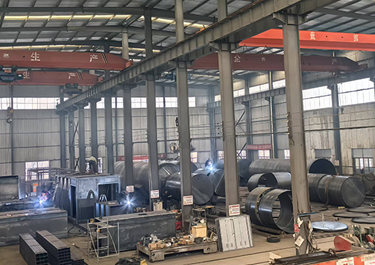 Our FactoryWe have a team of over 30 talented mobile fuel station R&D experts, as well as a 50,000-square-meter advanced modern intelligent manufacturing plant.
 - Mobile Fuel Station
- Storage Tank
- Blog
- Contacts
Container Fuel Station vs Skid Mounted: Which Portable System Fits Your Project?
Two quotes landed in your inbox on the same morning. One is for a 20ft container fuel station. The other is for a 30,000L skid mounted fuel station. Both store diesel and dispense fuel. Both cost roughly the same. Which one do you choose?
This confusion is more common than you might think. Suppliers often use "container fuel station" and "skid mounted fuel station" interchangeably. Some buyers search for one; others type the other. Some suppliers even list the same product under both names.
Yet the two formats differ significantly in structure, shipping, security, maintenance access, and total cost of ownership. This guide breaks down the differences side-by-side. By the end, you will know exactly which portable fueling system fits your project.
What Is a Container Fuel Station?
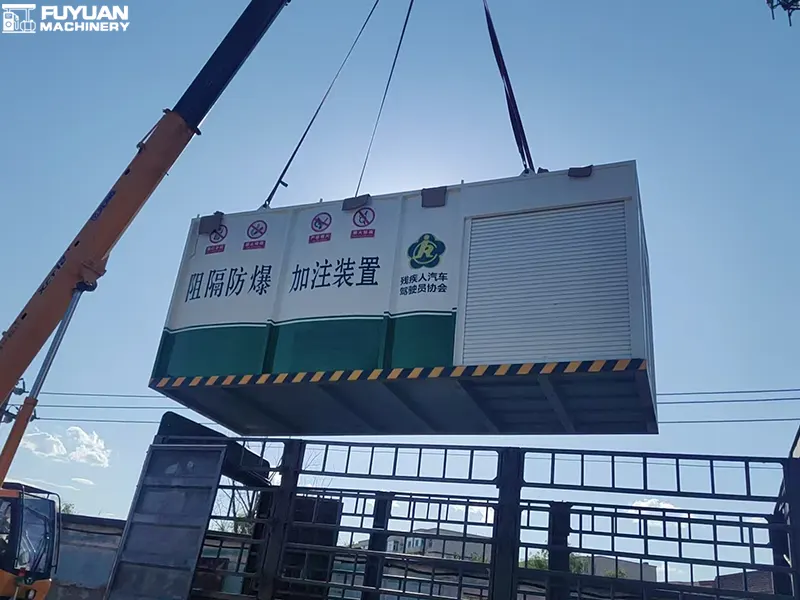
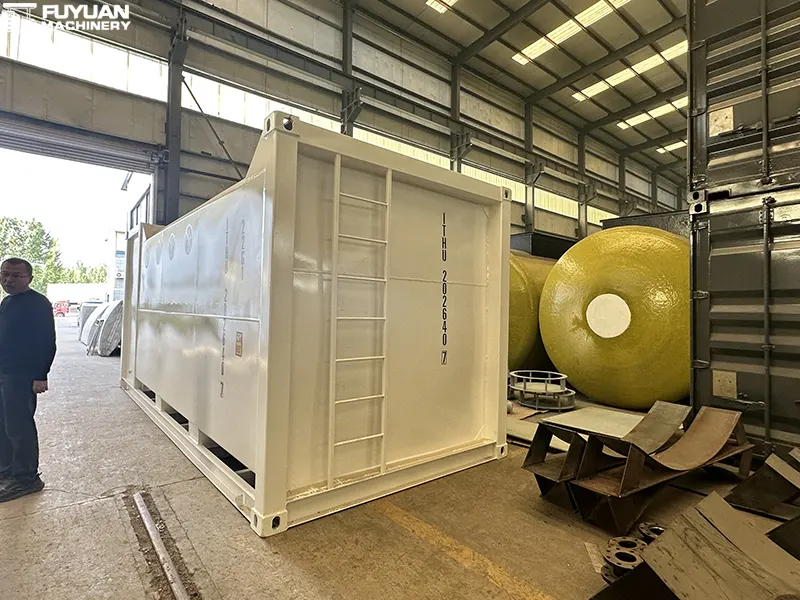
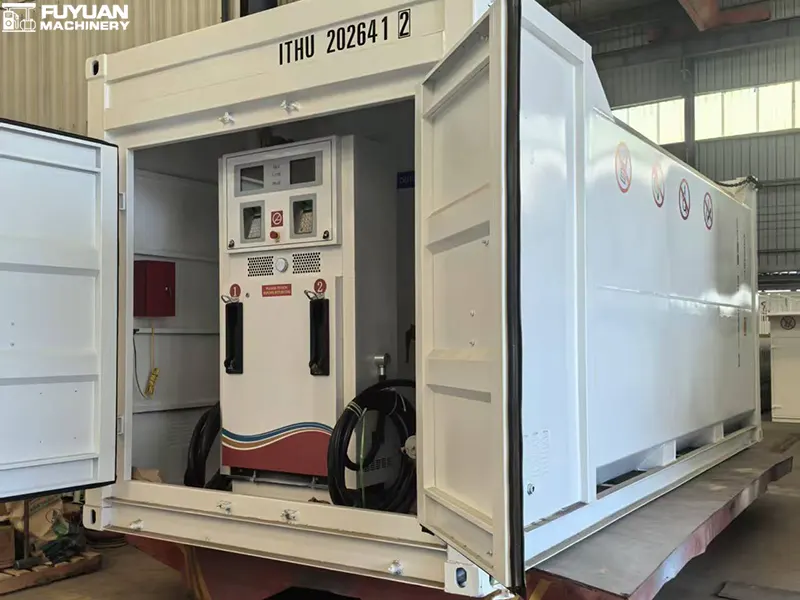
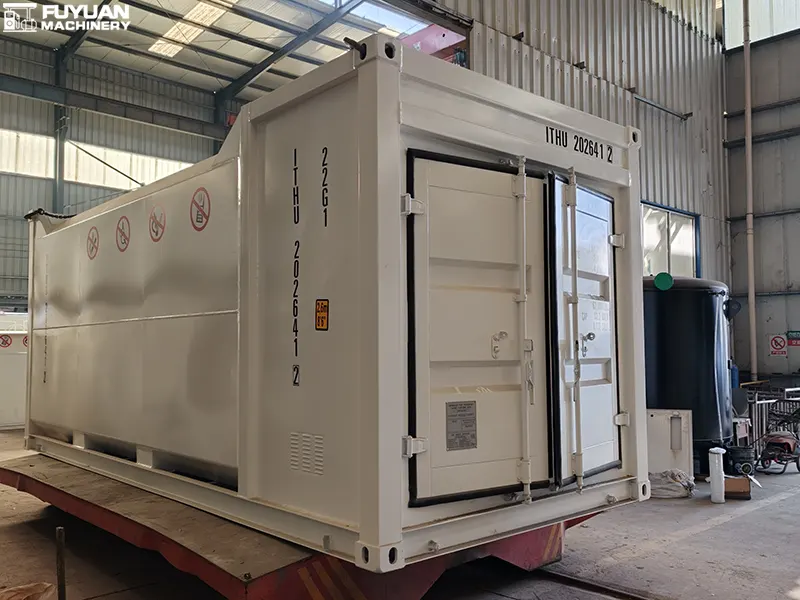
A container fuel station is a prefabricated fuel storage and dispensing system built inside a modified ISO shipping container. In other words, it converts a certified shipping box into a complete fueling unit.
The container is typically 10ft, 20ft, or 40ft long and houses one or more tanks, pumps, dispensers, safety equipment, and control systems. The container walls themselves provide secondary containment around the primary tank. Lockable doors protect the equipment. Ventilation, lighting, leak detection, and fire suppression are all integrated into the box.
Typical capacities range from about 10,000L to 60,000L for 20ft and 40ft units, with some smaller 10ft versions going as low as 5,000L. Tank configurations include single-product, dual-product, or multi-compartment designs.
Key certifications include a CSC plate for maritime transport, ISO container standards, and fuel-system approvals such as UL 142, NFPA 30A, ATEX, or IECEx, depending on the market.
What Is a Skid Mounted Fuel Station?
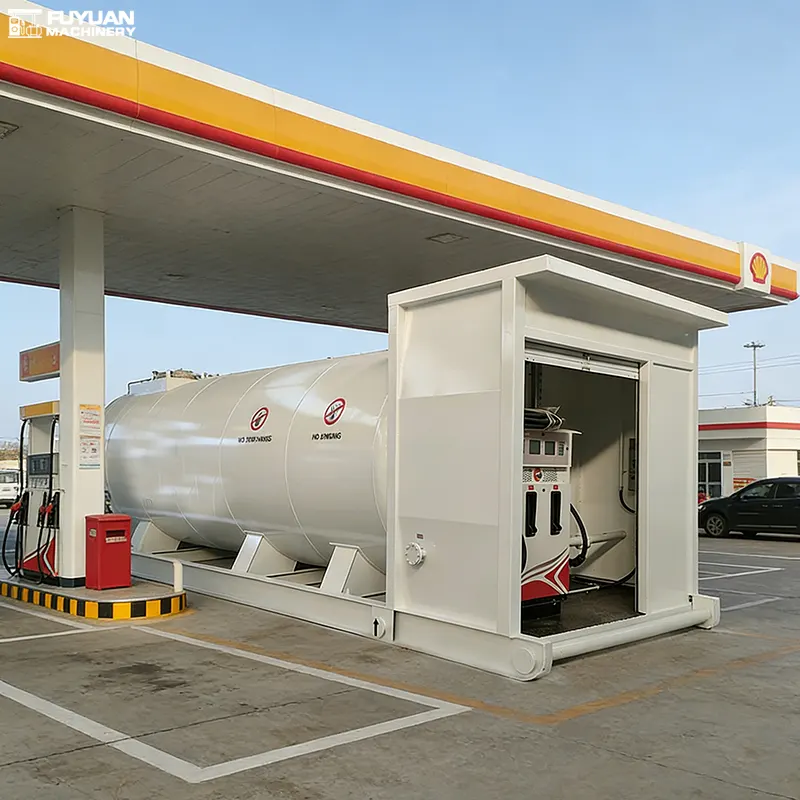
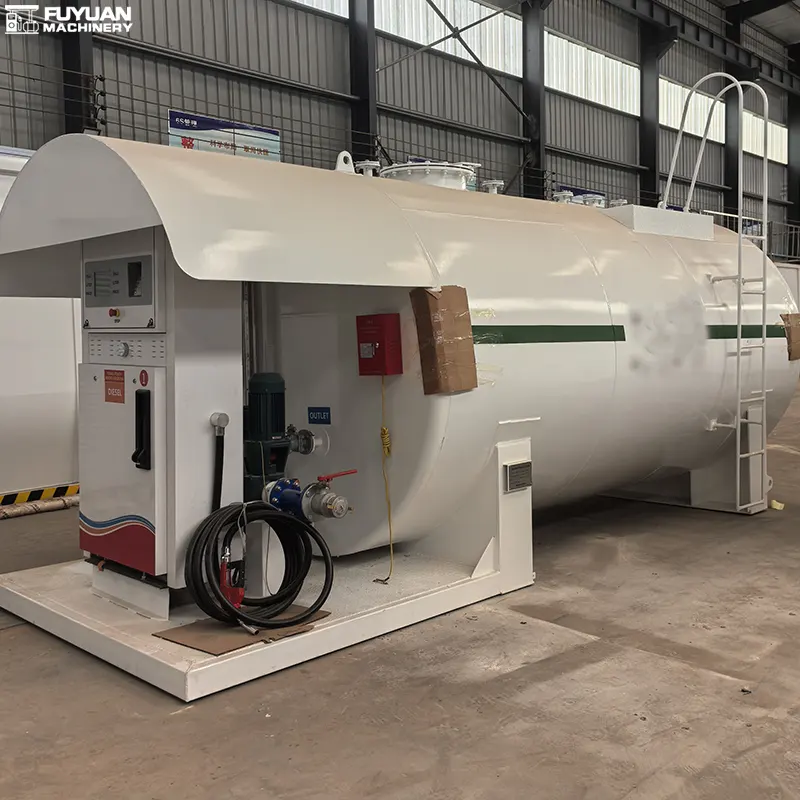
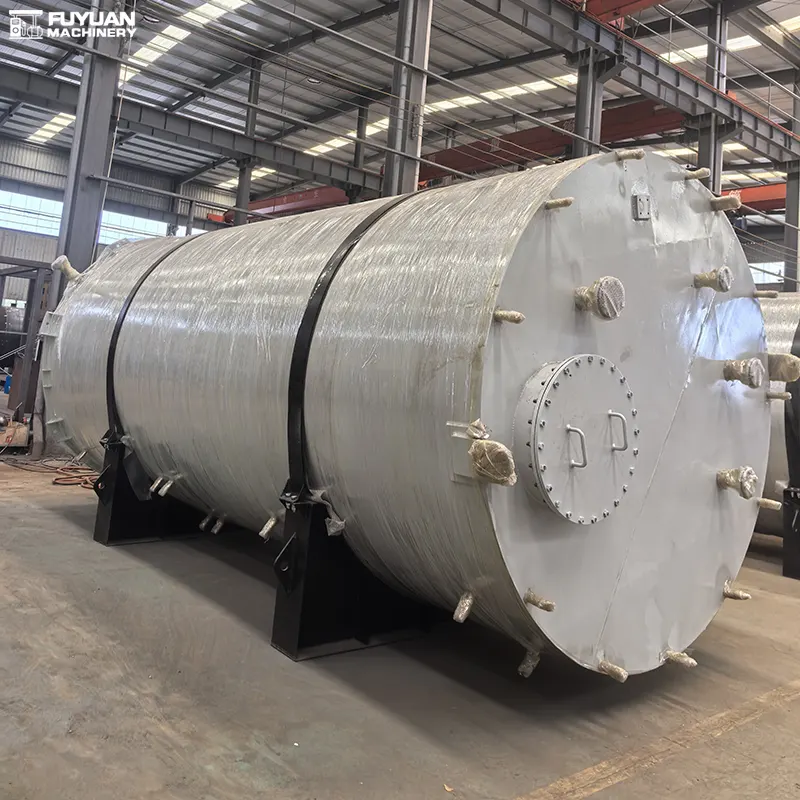
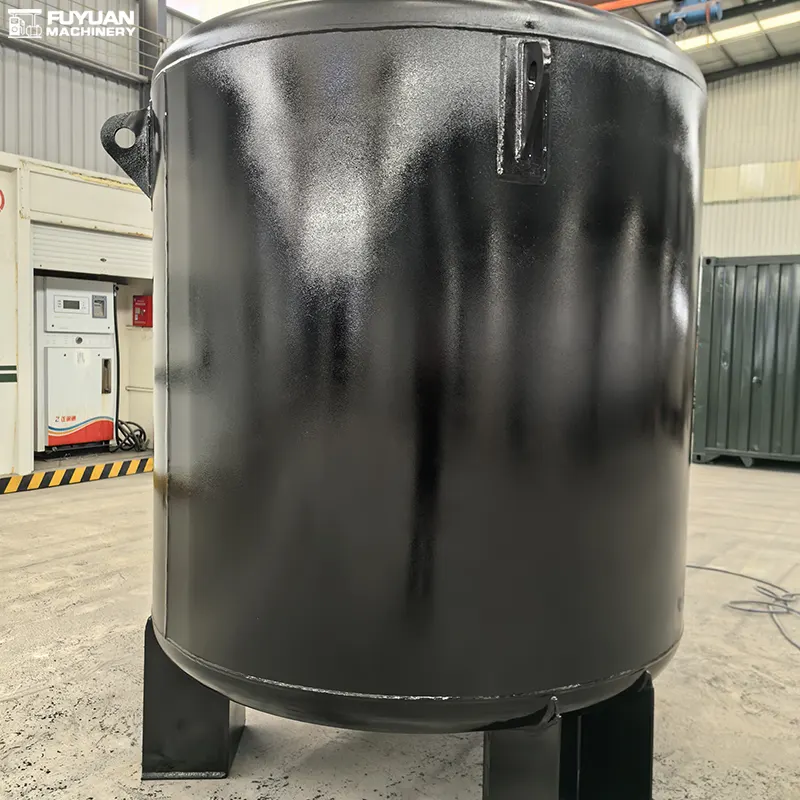
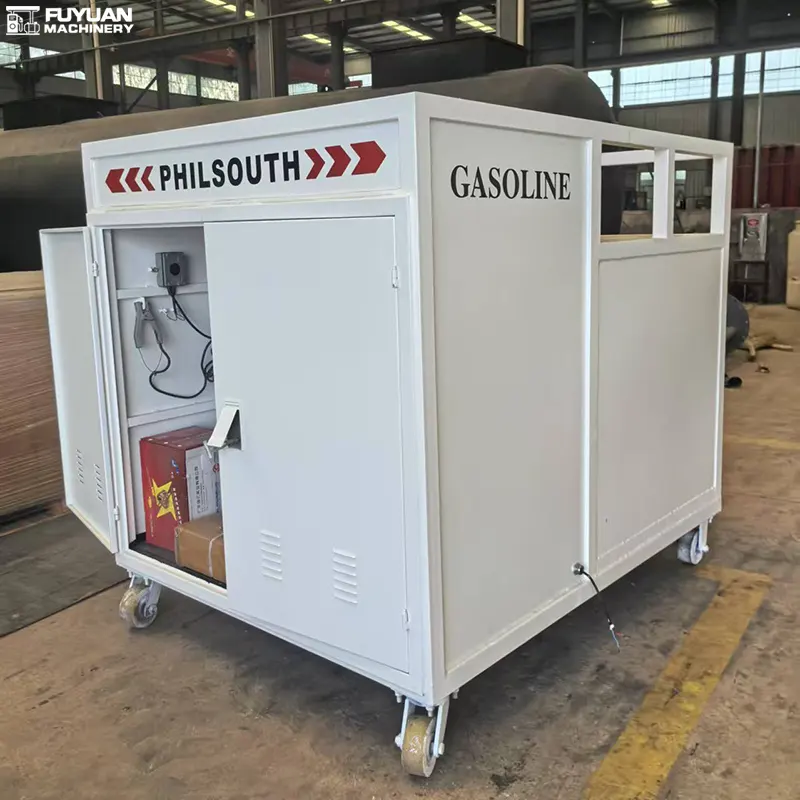
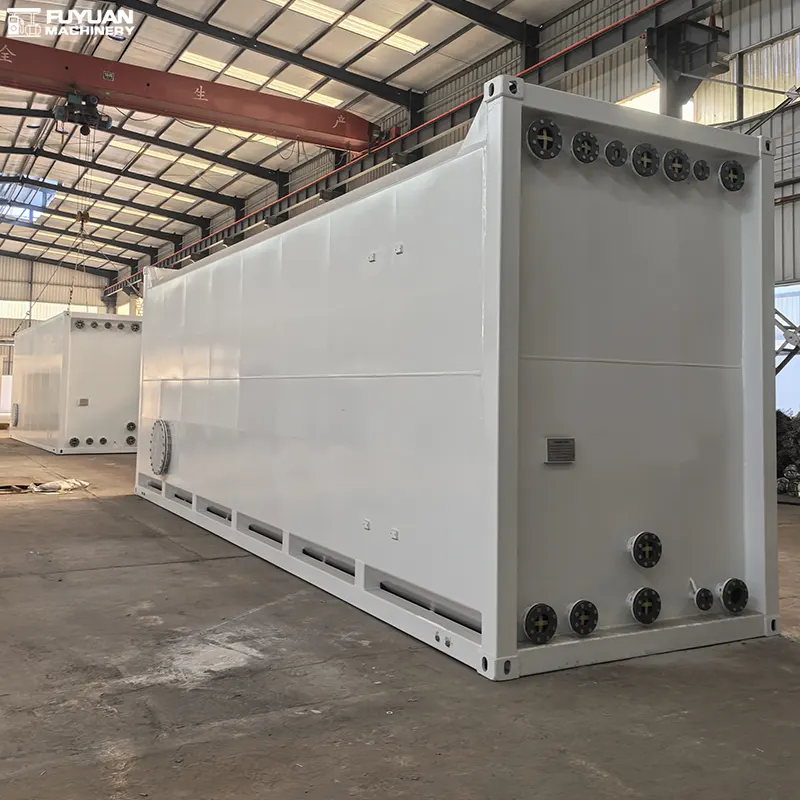
A skid mounted fuel station is a fuel system assembled on a structural steel skid or frame. The tank, pump, dispenser, piping, and safety equipment are mounted on a welded steel base designed for one-piece lifting and relocation.
Unlike a container station, a skid station does not come with a built-in enclosure unless one is added. Many units are open-frame, which makes every component visible and accessible. Others include a partial canopy or weather cover.
Capacities are highly flexible. Compact skids start around 1,000L, while large mining or depot skids can exceed 60,000L. Because the frame is custom-built, tank shape and equipment layout can be optimized for the project rather than constrained by container dimensions.
Certifications focus on the fuel system and frame rather than container shipping rules. Common approvals include UL, ATEX, IECEx, CE, ASME, and Chinese GB standards.
Side-by-Side Comparison
| Feature | Container Fuel Station | Skid Mounted Fuel Station |
| Enclosure | Built-in (container walls) | Open-frame; enclosure optional |
| Typical Capacity | 5,000L – 60,000L | 1,000L – 60,000L+ |
| Shipping | Standard ISO container shipping (CSC certified) | Break-bulk or flatbed; may incur out-of-gauge surcharges |
| Deployment Time | Under 2 hours with no civil works | Under 2 hours with no civil works |
| Security | Lockable doors, weatherproof, tamper-resistant | Open design; security measures must be added separately |
| Maintenance Access | Equipment inside container; access through doors | All components visible and accessible from outside |
| Customization | Constrained by container dimensions | Highly flexible; optimized for project needs |
| Certifications | CSC + UL/ATEX/IECEx/NFPA | UL/ATEX/IECEx/CE/ASME/GB |
| Typical Applications | Remote mines, long-duration projects, harsh environments | Temporary sites, constrained footprints, frequent relocation |
Key Decision Factors
1. Shipping and Logistics
If your project requires international shipping, the container fuel station has a clear advantage. Because the outer shell is a standard shipping container with a valid CSC Safety Approval plate, it can be shipped via standard container vessels as a "Shipper Owned Container" (SOC). This drastically reduces mobilization costs compared to break-bulk cargo.
Skid mounted units, by contrast, often require flatbed shipping or break-bulk cargo, which can incur out-of-gauge shipping surcharges. For projects in remote regions or across borders, these shipping cost differences can be substantial.
2. Site Conditions and Environment
Container fuel stations excel in harsh or exposed environments. The container provides built-in weather protection, lockable security, and integrated safety systems. They are the preferred choice for:
- Remote mining sites
- Long-duration construction projects
- Regions with extreme weather
- Sites requiring high security against tampering or theft
Skid mounted stations are ideal when:
- The site has a constrained footprint
- Equipment needs frequent relocation
- Component visibility and accessibility are priorities for maintenance
- The site is in a secure, controlled area where open-frame design poses no security risk
3. Cost Considerations
Skid mounted stations typically have a lower purchase price because there is no container enclosure, meaning lower material and labor costs. However, this saving may be offset by:
- Higher shipping costs (break-bulk vs. container shipping)
- Additional costs for adding enclosures, security, or weather protection
- Potentially higher insurance premiums for open-frame fuel storage
Container stations have a higher upfront cost but offer:
- Standardized shipping at lower rates
- Built-in security and weather protection
- Lower insurance costs due to enhanced safety features
Industry estimates suggest mobile fueling stations can reduce capital expenditure by 50-70% compared with permanent stations of similar capacity. Both formats deliver this benefit—the choice is about which trade-offs fit your specific project.
4. Capacity Flexibility
If you need highly customized capacity or unusual tank configurations, skid mounted offers more flexibility. The frame can be built to accommodate specific tank shapes and equipment layouts.
Container stations are limited by standard container dimensions. However, they offer predictable, standardized configurations that are easier to source, ship, and certify.
5. Compliance and Safety
Both formats must meet strict regulatory requirements. In the United States, motor fuel dispensing facilities fall under NFPA 30A. Temporary fueling stations must comply with secondary containment sizing, spill prevention, and fire safety regulations.
Container stations often have an edge in compliance documentation because the CSC certification and ISO container standards are internationally recognized. Skid mounted units require certifications focused on the fuel system itself.
Pro Tip: Match your tank capacity to at least three days of peak consumption, not average consumption. Projects with tight schedules cannot afford a fuel-out event on a Monday morning because the weekend delivery window was missed.
Which One Fits Your Project?
Choose a Container Fuel Station If:
- You need international shipping via standard container vessels
- The site is in a harsh or exposed environment
- Security and tamper-resistance are high priorities
- You want built-in weather protection without additional construction
- The project is long-term (months or years)
- You value standardized, predictable configurations
Choose a Skid Mounted Fuel Station If:
- The site has a constrained footprint
- You need frequent relocation of the fueling system
- Maintenance accessibility is a top priority
- You require highly customized capacity or configuration
- The site is in a secure, controlled area
- You want the lowest possible upfront equipment cost
- The project is short-term or temporary
Making the Final Decision
Both container fuel stations and skid mounted systems offer rapid deployment—often operational within two hours with no civil works required. Both eliminate the weeks of excavation, permitting, and construction required for permanent fueling infrastructure.
The right choice depends on your specific project duration, site conditions, shipping requirements, and budget priorities.
A practical approach: Start by mapping your project's critical requirements. Ask yourself:
- 1. Where is the equipment being shipped from, and how?
- 2. How long will the station remain at one location?
- 3. What are the site's weather and security conditions?
- 4. What is your maintenance capacity and access?
- 5. What certifications does your market require?
Once you have clear answers to these questions, the choice between container and skid mounted becomes obvious.
Need help selecting the right mobile fueling system for your project?* Contact Fuyuan Machinery for expert guidance and customized solutions tailored to your specific requirements.
Written by
TAI'AN FUYUAN MACHINERY EQUIPMENT CO., LTD.
Editor Yuan
www.mobile-fuel-stations.com
WhatsApp:+86 182 6667 0999
Email:yuanyuzhu6@gmail.com

Leading Chinese Manufacturer & Exporter of mobile fuel stations and skid-mounted fuel stations.