
- Home
- Company
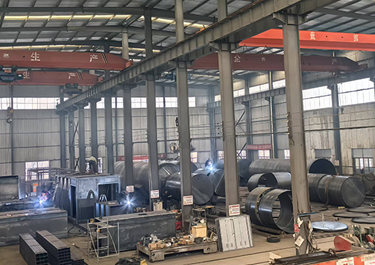 Our FactoryWe have a team of over 30 talented mobile fuel station R&D experts, as well as a 50,000-square-meter advanced modern intelligent manufacturing plant.
 - Mobile Fuel Station
- Storage Tank
- Blog
- Contacts
- Description
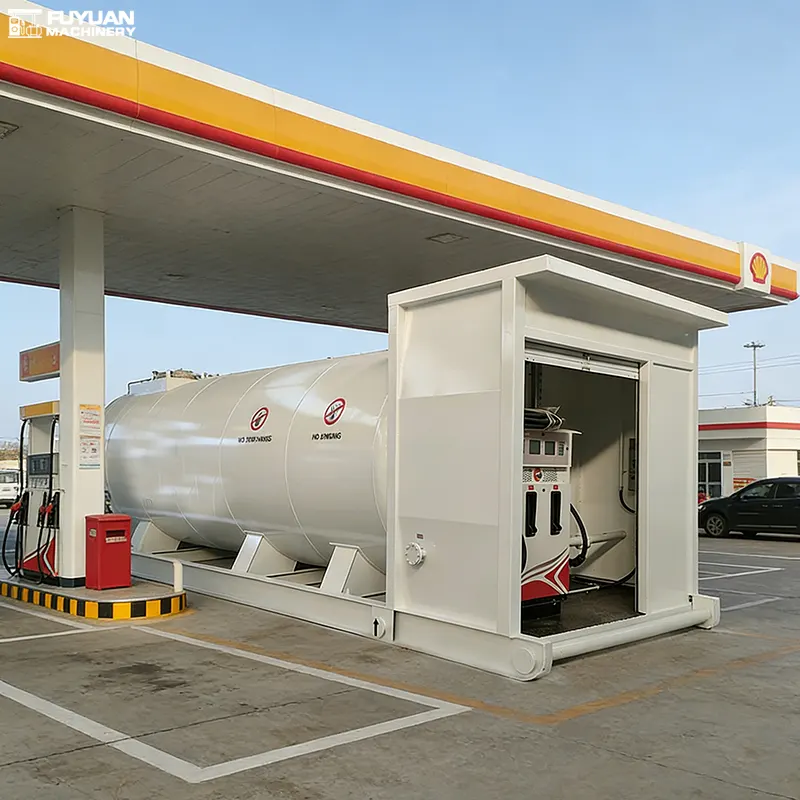
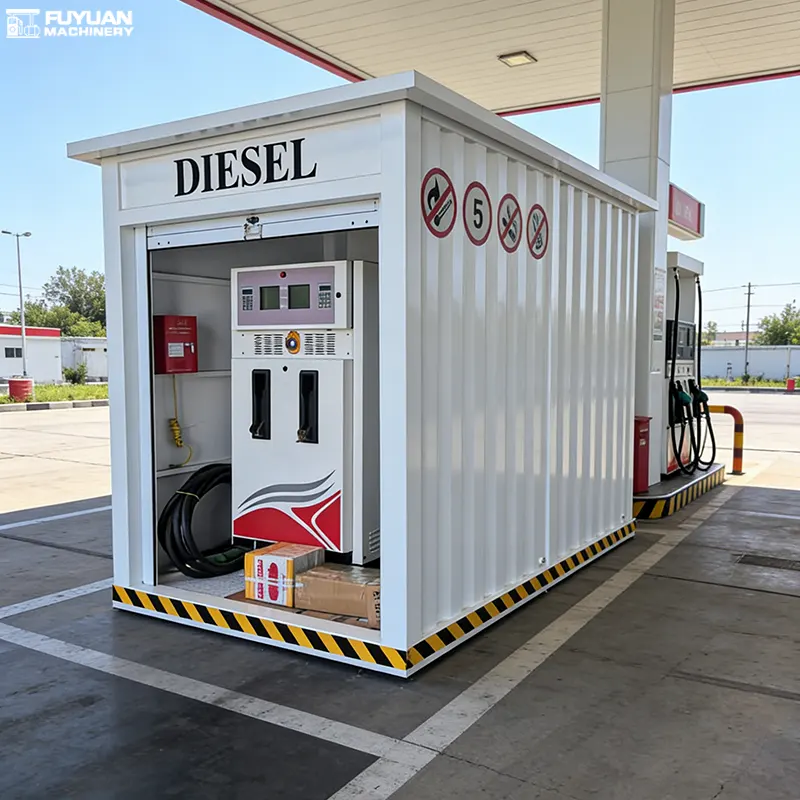
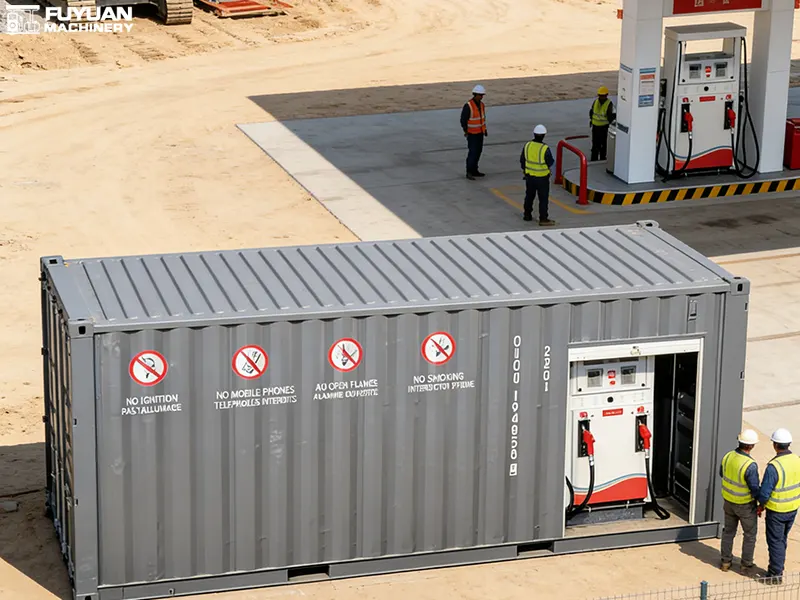
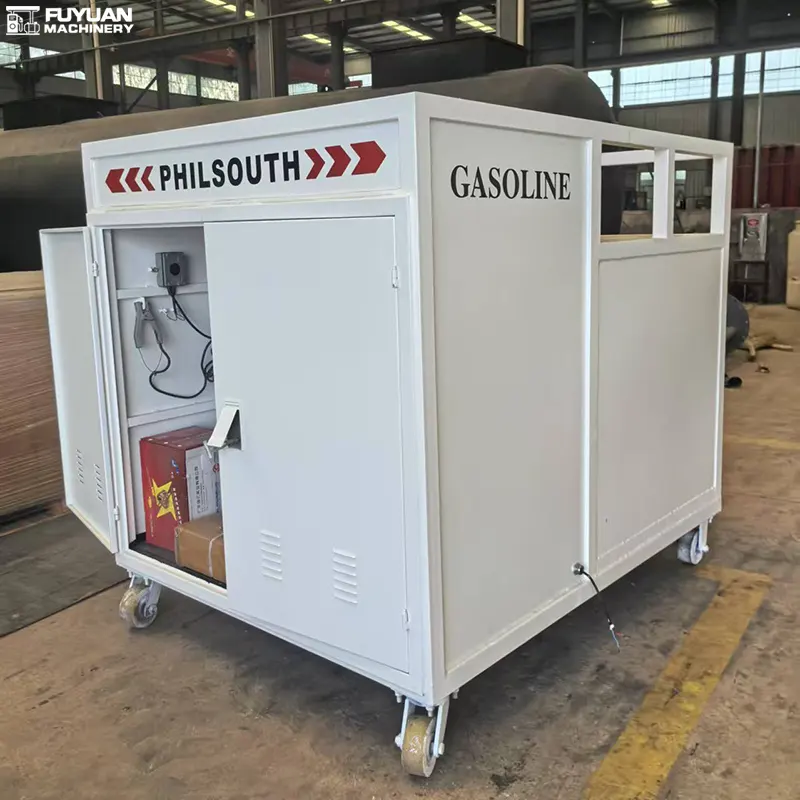
Mobile containerized refueling stations (also known as skid-mounted containerized refueling stations) are ground refueling facilities that integrate a complete refueling system within a standard ISO container (commonly 20ft/40ft). They are easily relocated and rapidly deployed, primarily used by businesses, construction sites/mining areas, and for emergency disaster relief. Unauthorized commercial operation is prohibited.
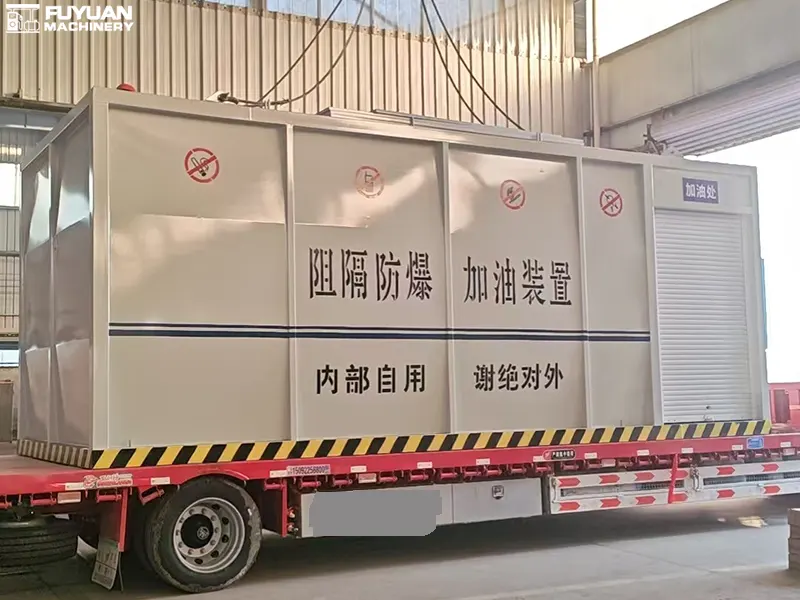
1. Core Structure and Configuration
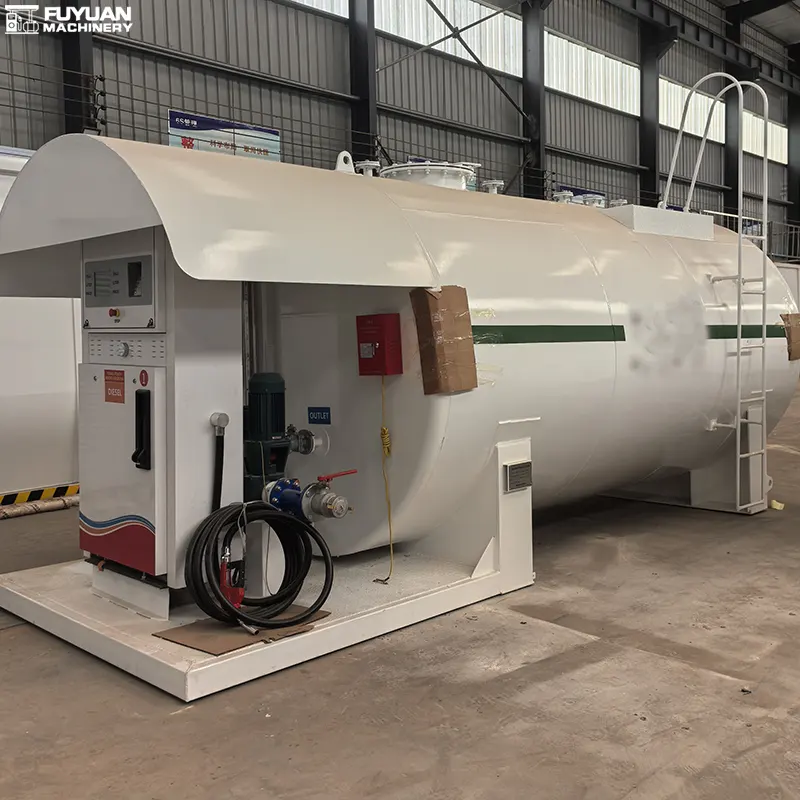
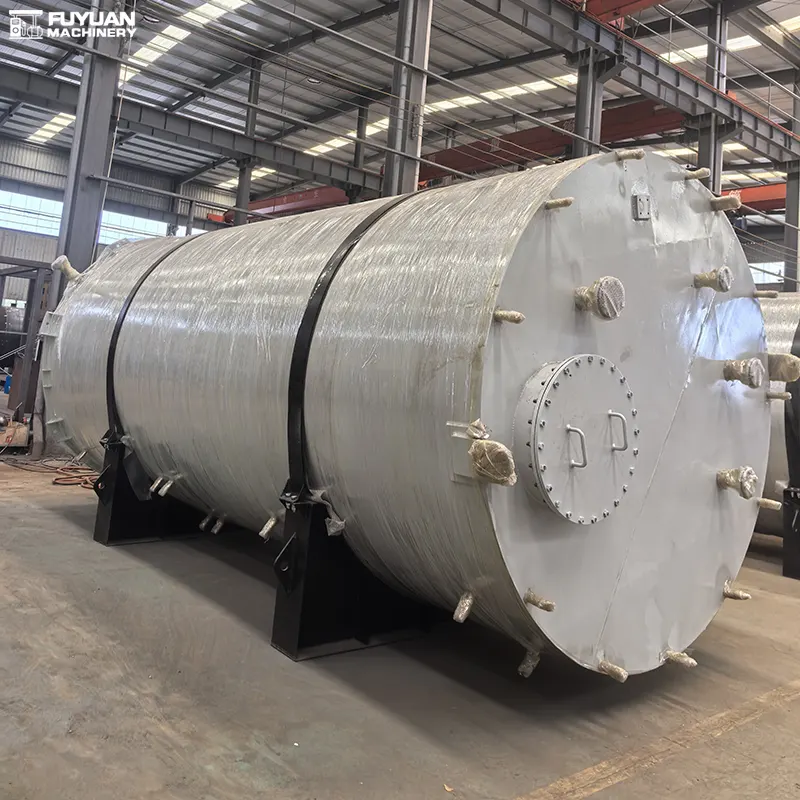
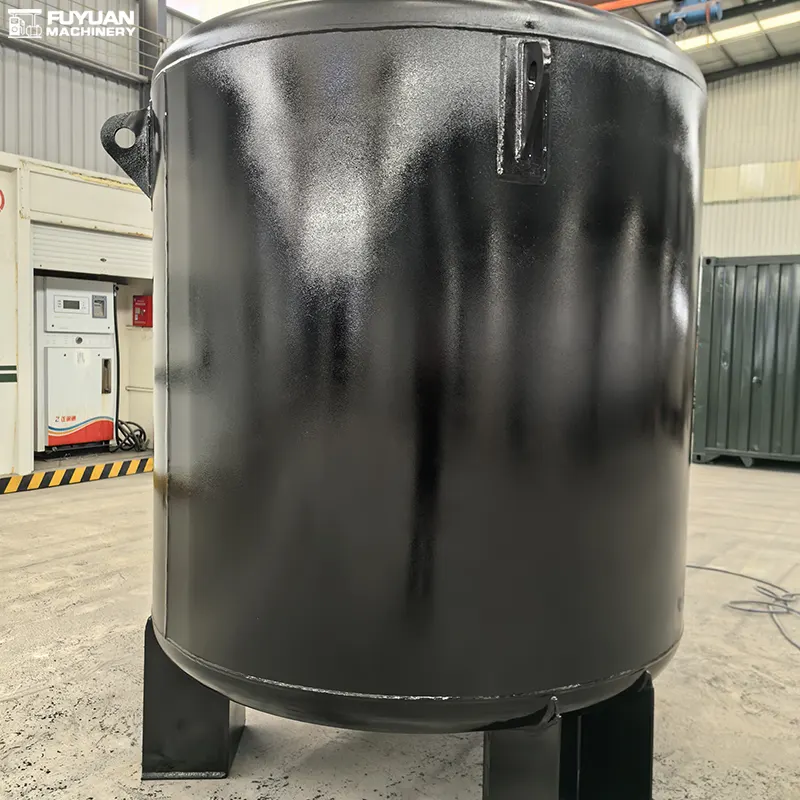
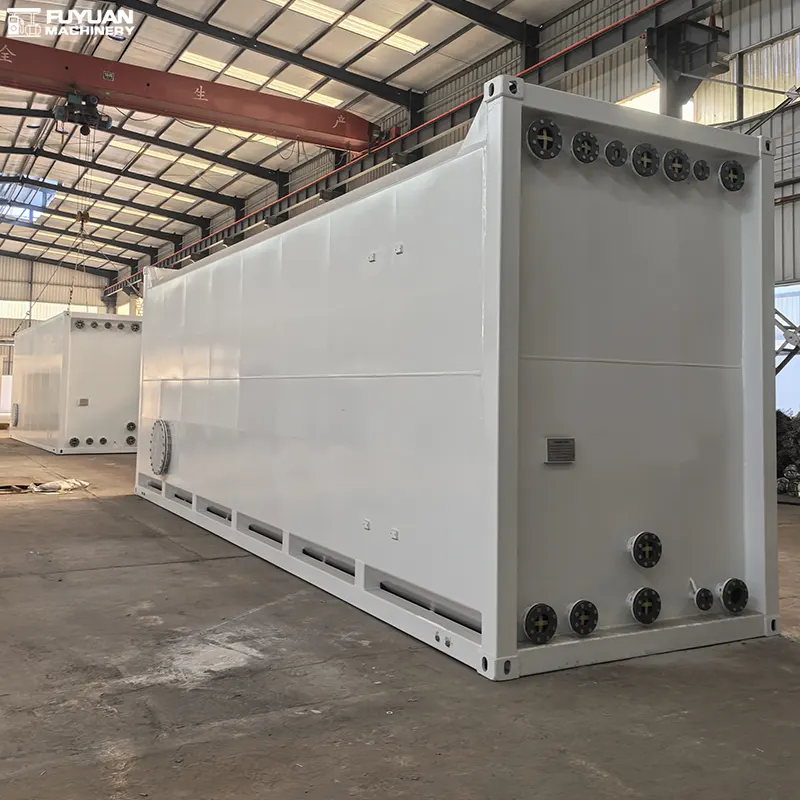
- 1.1. Container and Tank: Standard container steel structure, with built-in double-layer barrier explosion-proof tanks (often divided into multiple compartments, capable of storing gasoline/diesel simultaneously), with a common volume of 10–50 m³; equipped with interlayer leakage monitoring, high-level alarm, and overflow prevention device.
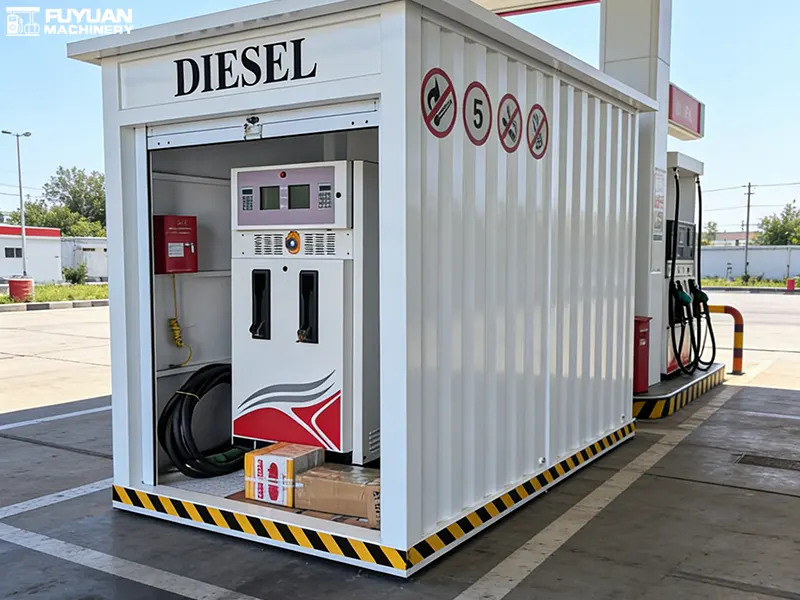
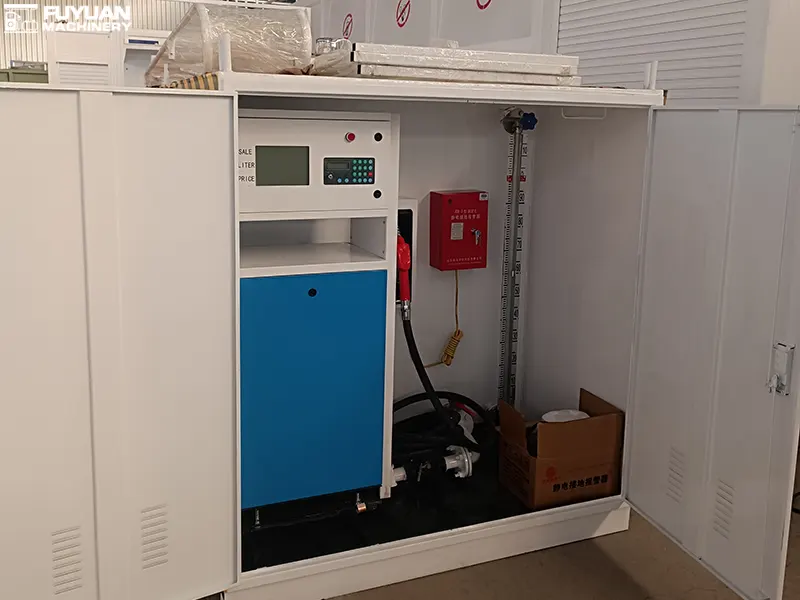
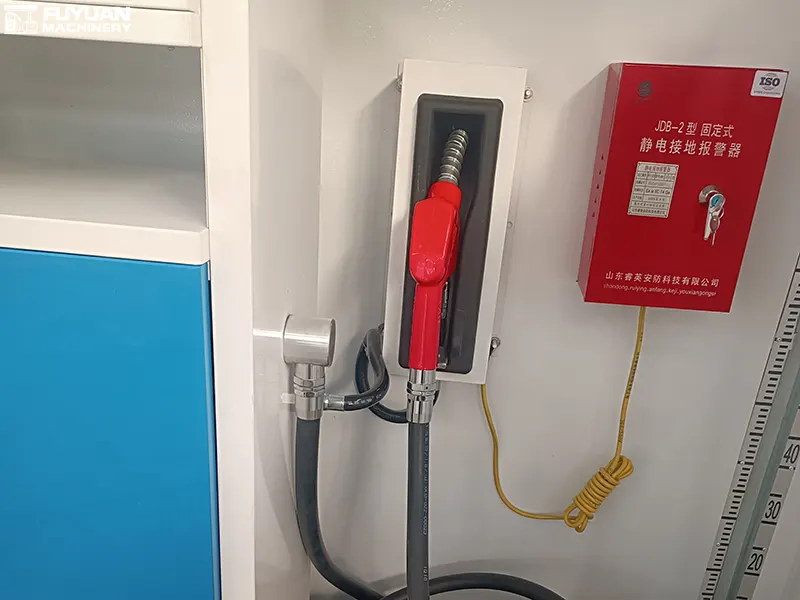
- 1.2. Refueling System: Refueling dispenser (single/dual nozzles), explosion-proof oil pump, vapor recovery device, metering and pricing system.
- 1.3. Safety System: Combustible gas detection + audible and visual alarm, emergency shut-off valve (ESD), automatic dry powder fire extinguishing system, explosion-proof electrical/lighting, anti-static grounding, lightning protection facilities.
- 1.4. Auxiliary System: Can be equipped with a generator for off-grid operation, intelligent monitoring platform (remote level/pressure/leakage management).
2. Mainstream Specifications and Parameters
| Specifications | Common Volumes | Deployment Time | Applicable Scenarios |
| 20ft Container Terminal | 10–20 m³ | 4–8 hours | Small construction sites, logistics fleets, field operation teams |
| 40ft Container Terminal | 30–50 m³ | 8–12 hours | Large mining areas, port terminals, infrastructure projects |
3. Core Advantages
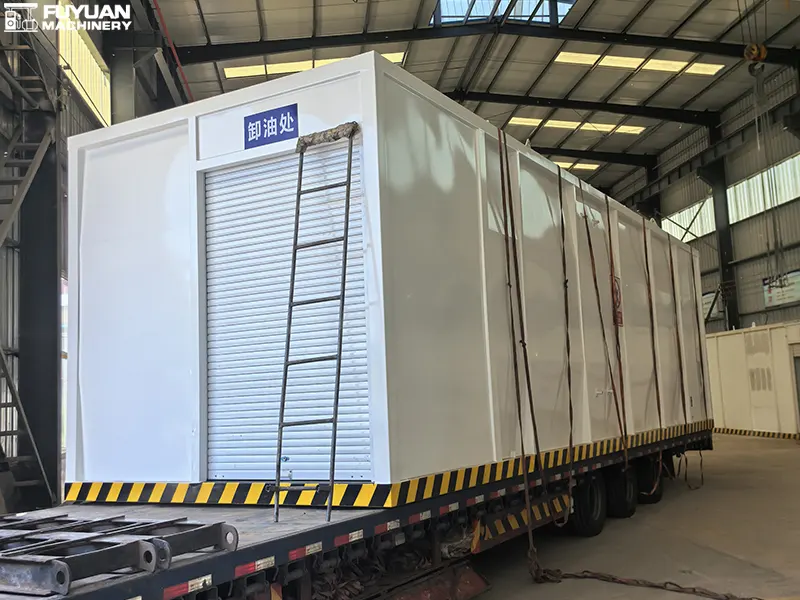
- Rapid Deployment: Factory prefabricated, only requiring foundation leveling, hoisting and positioning, and power/grounding connections on-site; operational within days.
- High Mobility: Can be hoisted as a whole, transported by road/rail/sea, and remains intact after relocation.
- Safety and Compliance: Explosion-proof technology passes national testing, double-walled tanks prevent leakage, and comprehensive environmental protection and fire protection configurations.
- Small Footprint: No traditional terminal building required, only the container body area + operating space.
4. Economic Comparison with Traditional Gas Stations
| Comparison Dimensions | Mobile Container Gas Station | Traditional Gas Station |
| Footprint | Very small, approximately 20-100 square meters | Very large, typically requiring hundreds to thousands of square meters |
| Construction Period | Very short, can be completed in 2-5 days | Very long, involving land approval, construction, etc., often several months |
| Investment Cost | Lower, a single facility costs approximately hundreds of thousands to millions of yuan | Very high, potentially reaching tens of millions of yuan in large cities |
| Mobility | Can be moved entirely, assets can follow the project | Immovable, assets are fixed |
| Core Uses | Internal use by enterprises, temporary or specific location fuel supply | Providing public refueling services to vehicles in the community |
5. Application Scenarios
- Transportation and Logistics Hubs: Bus stations, logistics parks, port terminals, providing centralized refueling services for a large number of vehicles.
- Large-scale projects and mines: Meeting the fuel needs of construction machinery at various construction sites, mining areas, and oil fields.
- Internal use by enterprises: For driving schools, passenger transport companies, and large enterprise fleets with a large number of vehicles, for internal fuel management and cost control.
- Temporary and emergency situations: Such as large-scale sporting events, disaster relief, and temporary fuel supply to remote areas.
6. Selection and Procurement Recommendations
- 1. Determine the tank volume and fuel type (single-compartment/double-compartment) based on the total fuel consumption and vehicle type.
- 2. Prioritize manufacturers with special equipment manufacturing licenses and explosion-proof test reports.
- 3. Clarify whether off-grid operation (generator), oil and gas recovery level, and intelligent monitoring functions are required.
- 4. Contact local authorities (emergency management, fire protection, market supervision) in advance to confirm site selection and approval procedures to avoid compliance risks.
Mobile container refueling stations are formally known in the industry as explosion-proof skid-mounted refueling units. Simply put, it is a fully integrated unit that combines all the functions of a traditional gas station—oil storage tanks, fuel dispensers, automatic fire suppression systems, intelligent monitoring, etc.—within a standard shipping container. Because it resembles a shipping container and can be lifted and moved as a whole like a sled, it is often called a "skid-mounted gas station" or "container gas station."

Leading Chinese Manufacturer & Exporter of mobile fuel stations and skid-mounted fuel stations.