
- Home
- Company
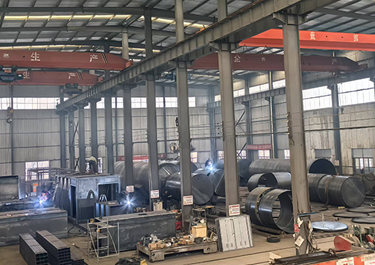 Our FactoryWe have a team of over 30 talented mobile fuel station R&D experts, as well as a 50,000-square-meter advanced modern intelligent manufacturing plant.
 - Mobile Fuel Station
- Storage Tank
- Blog
- Contacts
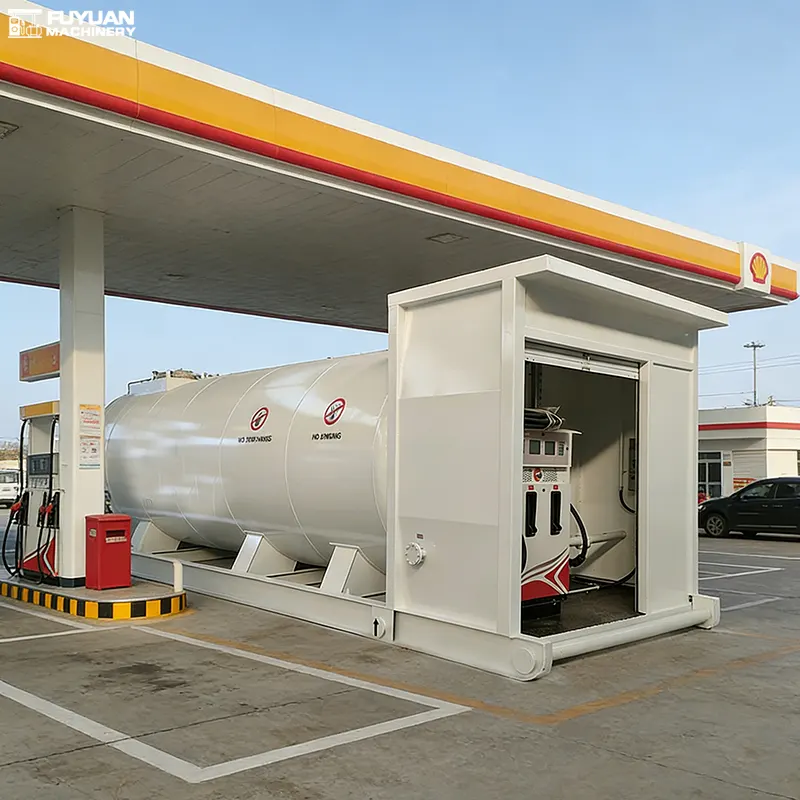
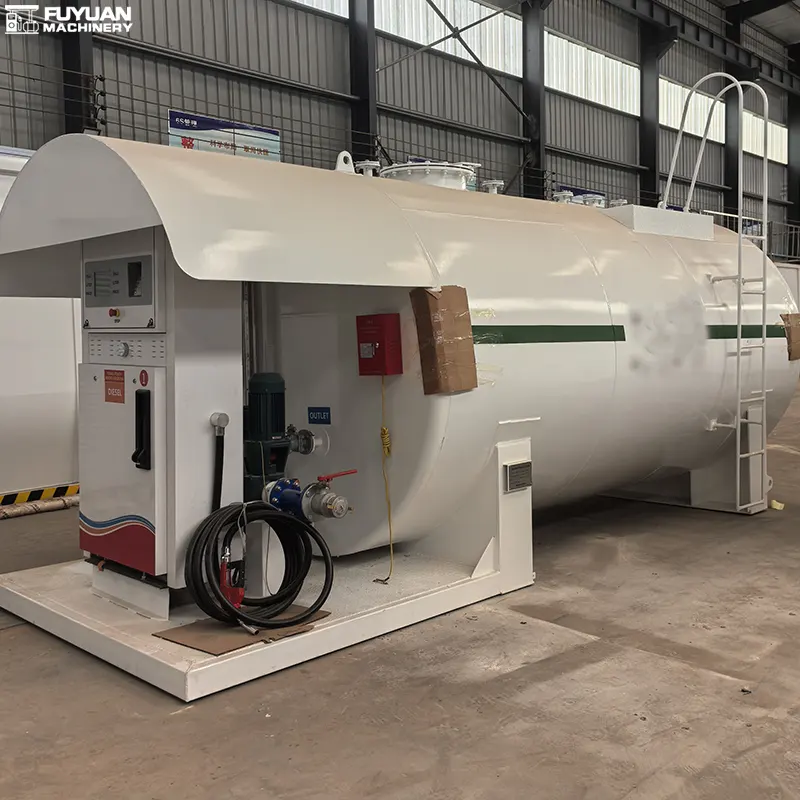
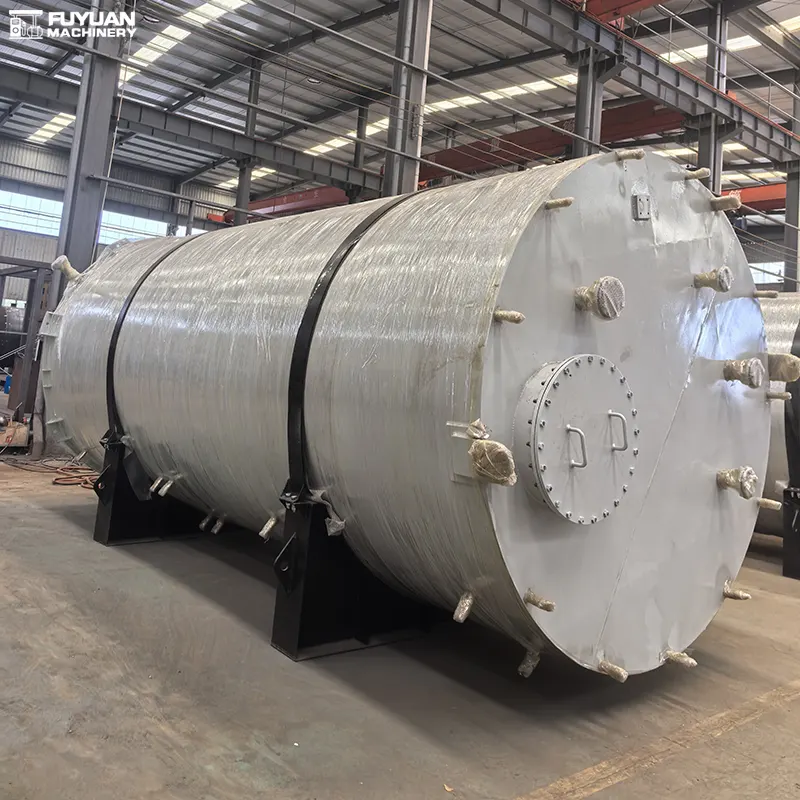
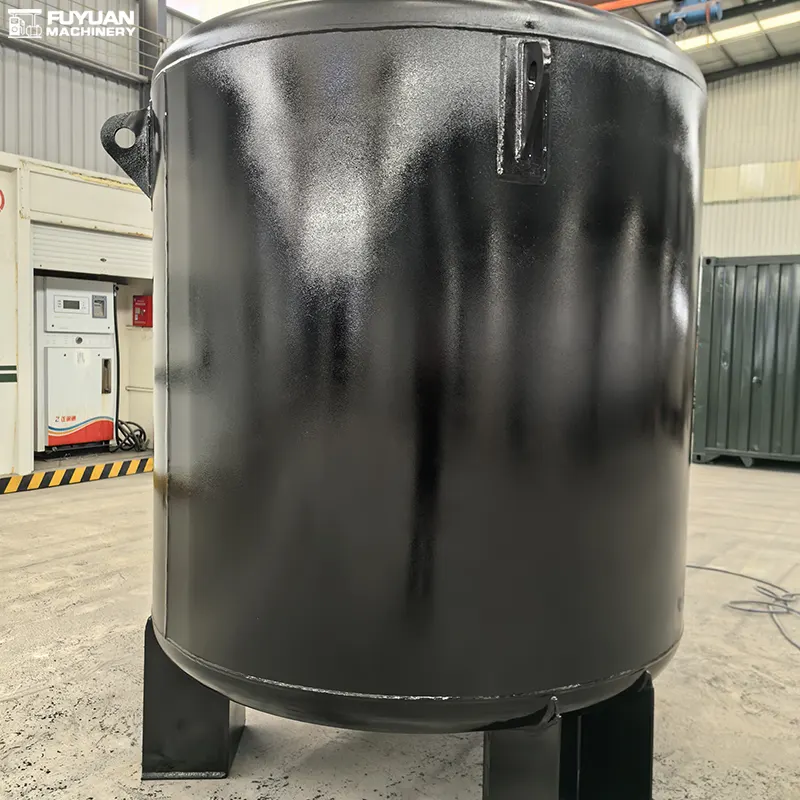
The 9 Key Considerations for Accepting Square Oil Tanks
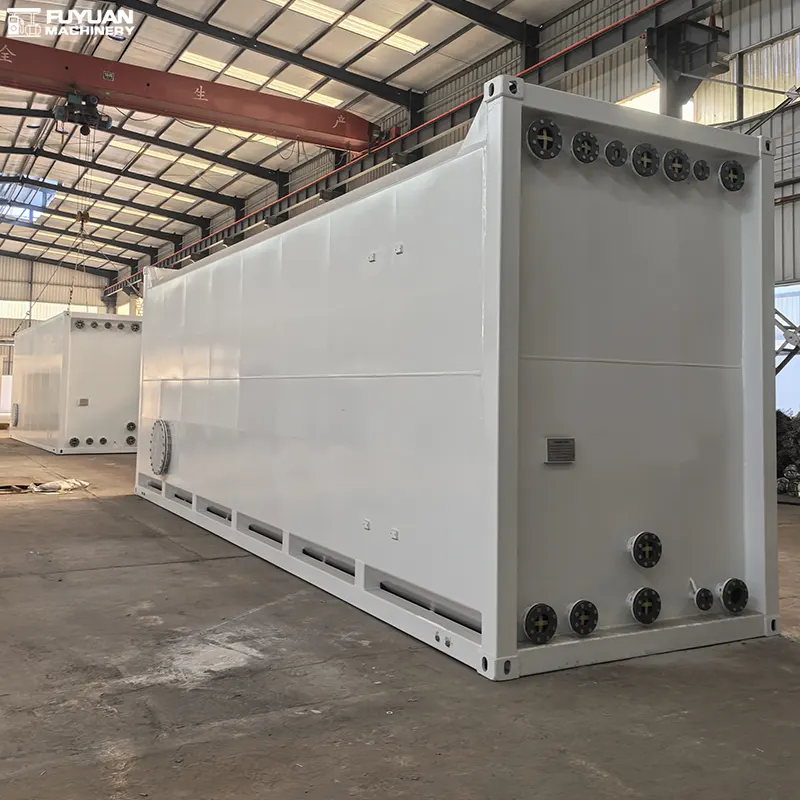
As core equipment for storing various media, the quality and safety performance of Fuyuan square oil tanks directly affect production and operational safety, personnel and property protection, and environmental safety. To standardize the oil tank acceptance process, clarify key acceptance points, prevent safety hazards caused by omissions or inconsistent standards, and ensure that all performance aspects of the oil tank meet design requirements and safe operation standards, guaranteeing long-term stable use, the following nine key considerations for accepting Fuyuan square oil tanks serve as core guidelines for the acceptance work.
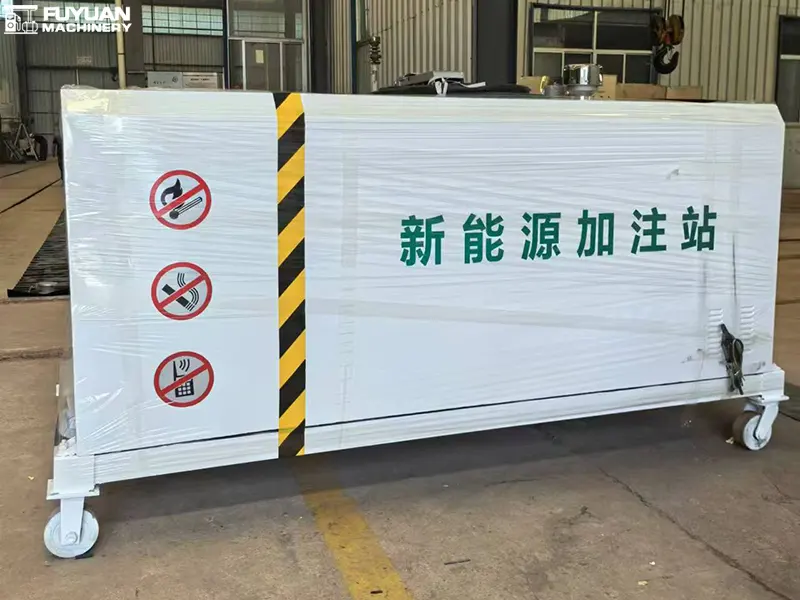
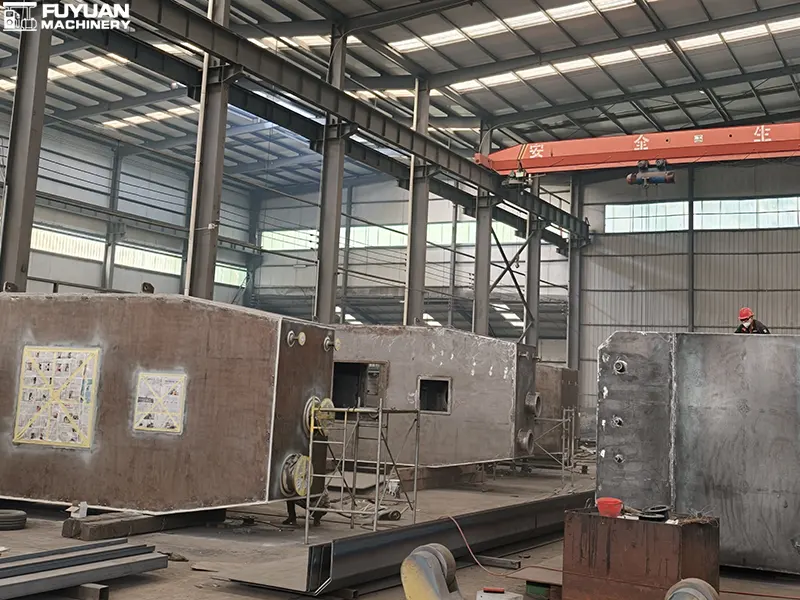
1. Foundation and Geometric Accuracy Acceptance
Fuyuan Square Oil Tank Foundation and Geometric Accuracy Acceptance
1.1. Foundation Appearance Quality
- The foundation surface should be free of cracks, sandblasting, hollow areas, exposed reinforcement, and chipped corners.
- Concrete strength: Not lower than C30, rebound test strength meets standards.
- Foundation perimeter drainage slope: >=3‰, no water accumulation or backslope.
1.2. Planar Dimensional Deviation
- Length and width dimension deviation: within ±10mm
- Foundation diagonal difference: <=8mm
1.3. Elevation and Flatness
- Overall foundation elevation deviation: ±5mm
- Local surface flatness: <=3mm/m
1.4. Levelness/Inclination
- Longitudinal and transverse foundation inclination: <=0.3% (3mm/m)
- Overall leveling after tank placement: Horizontal height difference at four corners <=4mm
1.5. Settlement Control Standards
- Allowable uniform settlement: <=Long side length of tank L/400
- Uneven settlement: <=2mm/m
- Settlement observed before and after water injection test; no sudden changes or uneven settlement.
1.6. Foundation Layer and Embedded Requirements
- Sand foundation layer thickness and density meet design requirements; no loose or voided areas.
- Embedded anchor bolts: Center offset <=5mm, elevation deviation ±3mm, verticality <=1‰.
2. Material and Welding Quality Acceptance
Fuyuan Square Oil Tank: Complete Set of Standard Data for Material and Welding Quality Acceptance
2.1. Steel Plate Material Acceptance
- Material Specifications: Q235B carbon structural steel plate; material certificate, quality assurance certificate, and factory inspection report provided with the vehicle.
- Steel Plate Thickness Deviation: Negative deviation <= 0.3mm; actual measured thickness not less than the design nominal thickness.
- Plate Appearance: No cracks, delamination, heavy lining, rust pits, obvious deformation, or bending damage.
- Incoming Inspection: Mechanical properties and chemical composition re-inspection will be conducted if necessary; indicators must meet national standards.
2.2. Welding Materials and Personnel Qualifications
- Welding Materials: Matching E43 series welding rods/wires; with certificates of conformity and drying records.
- Welders: Holding special equipment welder certificates; welding items consistent with the scope of the certificate.
- Welding Environment: Ambient temperature >= -5oC, air humidity <= 85%, open-air wind protection with wind speed <= 8m/s; windbreaks are required if these limits are exceeded.
2.3. Weld Appearance Acceptance Standards (Data-Driven)
- Weld reinforcement: 0 - 3mm, uniform width.
- Undercut: Depth <= 0.5mm, continuous length not exceeding the standard, no continuous undercut.
- Weld leg dimensions: Conform to design drawings, no undersized or narrow.
- Appearance defects: No porosity, slag inclusions, cracks, lack of fusion, arc craters, burn-through.
- Butt joint misalignment: Butt joint misalignment of tank wall plates <= 1/10 of plate thickness, and <= 3mm.
2.4. Non-Destructive Testing Acceptance Standards
- Tank bottom and tank wall longitudinal and circumferential seams: Perform UT/RT flaw detection according to design and specifications.
- T-joints, fillet welds, and critical load-bearing welds: 100% MT/PT penetrant testing.
- Acceptance Grade: Level II or above, free from cracks, incomplete penetration, and hazardous defects.
- Flaw Detection Report: Official flaw detection film/report provided, with complete signatures and seals.
2.5. Welding Formation and Overall Quality
- The tank wall welds are free from obvious unevenness, bulges, and excessive misalignment.
- All corner, splice, and reinforcing plate welds are fully welded, with no incomplete welds, gaps, or omissions.
- After welding, remove weld slag, spatter, and flux residue; grind smooth to facilitate subsequent anti-corrosion construction.
3. Tank Bottom Tightness Test
Fuyuan Square Oil Tank Tank Bottom Tightness Test Acceptance Standard Data
3.1. Test Method
- The primary method is the tank bottom vacuum leak test; a water-filled settling tightness test may also be used.
3.2. Vacuum Leak Test Standard Parameters
- Vacuum chamber vacuum degree: >= -0.053MPa (53kPa)
- Pressure holding time: Not less than 5min
- Acceptance criteria: No significant pressure drop on the vacuum gauge, no bubbles or leaks in the welds, and full coverage of all splicing welds on the tank bottom plate and edge plates.
3.3. Water Filling Tightness Test
- Water filling height: Fill to 100mm above the tank bottom edge plate
- Pressure holding time: Not less than 24h
- Acceptance criteria: No water seepage or dampness on the tank bottom, no oil seepage or water leakage on the foundation surface, and no dents or abnormal deformation on the bottom plate.
3.4. Edge Plate and Joint Acceptance
- The tank bottom edge plate and the contact surface with the foundation must be free of gaps and voids.
- The fillet welds between the tank bottom and the wall plates must be fully sealed, without cracks, pores, or slag inclusions.
- The anti-corrosion and anti-seepage layer is intact, without damage, cracks, or bulging.
3.5. Test Prerequisites
- All welds at the tank bottom are completed, and weld slag is thoroughly cleaned.
- The weld appearance inspection is qualified, and non-destructive testing of necessary parts is completed.
- The foundation settlement is stable, with no uneven settlement.
4. Tank Wall Strength and Water Filling Test (Structural Safety Verification)
- Test Medium: Clean water, temperature >=5oC; impurities and oil contamination are strictly prohibited.
- Test Pressure/Level: Fill with water to the designed maximum level (300mm below the tank top), and maintain pressure for >=48 hours.
- Acceptance Criteria: No leakage, no abnormal deformation (bulging, dents); no plastic deformation of the tank wall, no cracks in the welds; pressure drop <=0.01MPa/24h.
- Water Level Observation: Record every 2 hours, with complete data; immediately stop the test for any abnormalities and investigate and rectify the issues.
5. Accessory Installation Acceptance (Function and Safety Assurance)
- Manholes (>=600mm): >=2 (1 on top/1 on the side); flange sealing surfaces undamaged, bolts evenly tightened, gaskets oil-resistant PTFE-coated.
- Breather Valve/Flame Arrestor: Ventilation volume >= design value, opening pressure ±0.5kPa; flame arrestor corrugations unblocked, fire resistance qualified.
- Level Gauge/Alarm: Accuracy ±1mm, remote/local transmission consistent; high/low level alarm accurate (upper limit <= limit level -100mm, lower limit >= inlet/outlet pipe top +100mm).
- Drainage/Inlet/Outlet Oil Pipes: Flange gaskets oil-resistant (PTFE), bolt torque meets standards; no leakage, valves operate flexibly and seal reliably.
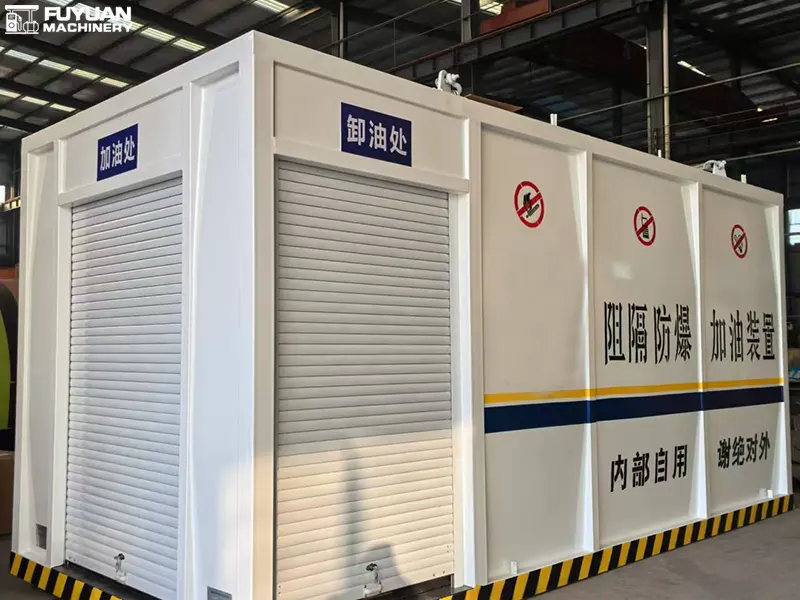
6. Lightning and Static Electricity Protection Acceptance (Key to Explosion-Proof Safety)
- Grounding Arrangement: 1 grounding point every 30m around the tank bottom, >=2 grounding points per tank; grounding electrode burial depth >=0.8m, spacing >=5m.
- Grounding resistance: <=10Ω (retested before the rainy season); connecting conductor >=50mm² soft copper wire, reliable bridging (tank top flange, manhole, accessories, etc.).
- Floating roof/internal floating roof: Floating vessel connected to tank wall with two >=50mm² soft copper wires; combustible gas concentration at secondary seals <=25%LEL.
7. Leakage and corrosion prevention acceptance (long-term protection)
- Internal wall corrosion prevention: Rust removal grade Sa2.5 (near white), roughness 40 - 75μm; dry film thickness of coating >=200μm, no pinholes, missed coating, or bulges.
- External wall corrosion prevention: Rust removal grade Sa2, dry film thickness of coating >=150μm; no missed coating at welds and corners, adhesion >=5MPa.
- Impermeable Layer (Underground/Semi-underground): HDPE membrane >=1.5mm, welds 100% vacuum leak test (-0.08MPa, no leakage for 30 minutes); protective layer intact, no damage, no voids.
8. Fire Protection and Safety Facilities Acceptance (Emergency Support)
- Foam Extinguishing System: Low-expansion foam generator quantity/specification conforms to design; foam liquid within its shelf life, mixing ratio 3% - 6%; spray test normal, covering tank top >=90%.
- Fire Cooling Water: Spray intensity >=2L/min·m², water supply pressure >=0.3MPa; nozzles unblocked, uniform coverage, no blind spots.
- Emergency Shutdown: Inlet and outlet oil pipes equipped with emergency shut-off valves, flexible manual/remote operation; shut-off time <=3s, reliable sealing.
9. Documentation and Trial Operation Acceptance (Closed-Loop Delivery)
- Completion Documentation: Complete and signed design drawings, material certificates, welding records, non-destructive testing reports, test records, concealed works acceptance records, as-built drawings, etc.
- Trial Operation: Accurate remote transmission of liquid level/temperature/pressure; reliable alarm/interlock action; flexible valve operation without jamming or leakage; normal linkage of fire protection, lightning protection, and anti-static systems.
- Acceptance Conclusion: 100% pass rate for each item, no outstanding issues; signed acceptance certificate, clearly defining the warranty period (>=12 months).
The acceptance of Fuyuan square oil tanks is a crucial step in ensuring safe commissioning and mitigating operational risks. The nine key considerations cover all aspects of acceptance, including equipment body, installation, safety, and protection. Acceptance work must strictly adhere to these considerations, verifying each item and recording accurately to ensure that every indicator meets design requirements and industry standards. Any non-conformities discovered during acceptance must be rectified and re-inspected promptly until all standards are met. Only after passing the acceptance inspection can the tank be officially put into use. At the same time, follow-up maintenance and regular re-inspection should be carried out to ensure the long-term safe, stable and efficient operation of the oil tank and build a solid safety line for production and operation.
Written by
TAI'AN FUYUAN MACHINERY EQUIPMENT CO., LTD.
Editor Yuan
www.mobile-fuel-stations.com
WhatsApp:+86 182 6667 0999
Email:yuanyuzhu6@gmail.com

Leading Chinese Manufacturer & Exporter of mobile fuel stations and skid-mounted fuel stations.