- Home
- Company
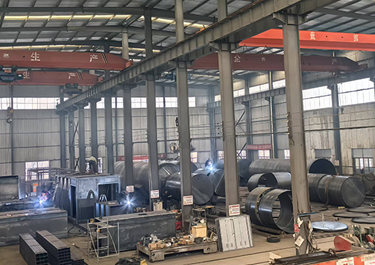 Our FactoryWe have a team of over 30 talented mobile fuel station R&D experts, as well as a 50,000-square-meter advanced modern intelligent manufacturing plant.
 - Mobile Fuel Station
- Storage Tank
- Blog
- Contacts
The 7 Critical Factors for Choosing a Mobile Fuel Station in 2026
You have a construction site in a remote area, a mining operation miles from the nearest town, or a logistics fleet that wastes hours every week sending drivers to retail pumps. Permanent fueling infrastructure would take months and cost a fortune. A mobile fuel station seems like the obvious answer—but which one?
The mobile container fuel stations market was valued at USD 2.74 billion in 2025 and is projected to reach USD 6.84 billion by 2032, growing at a CAGR of 13.94%. The movable fuel stations market alone is expected to hit USD 1.85 billion by 2032. This explosive growth reflects a fundamental shift: mobile fuel stations have matured from niche, temporary assets into strategic components of modern energy logistics.
But not all mobile fuel stations are created equal. Choosing the wrong one means higher costs, compliance headaches, security problems, or costly downtime.
Here are the 7 critical factors you must evaluate before making a decision in 2026.
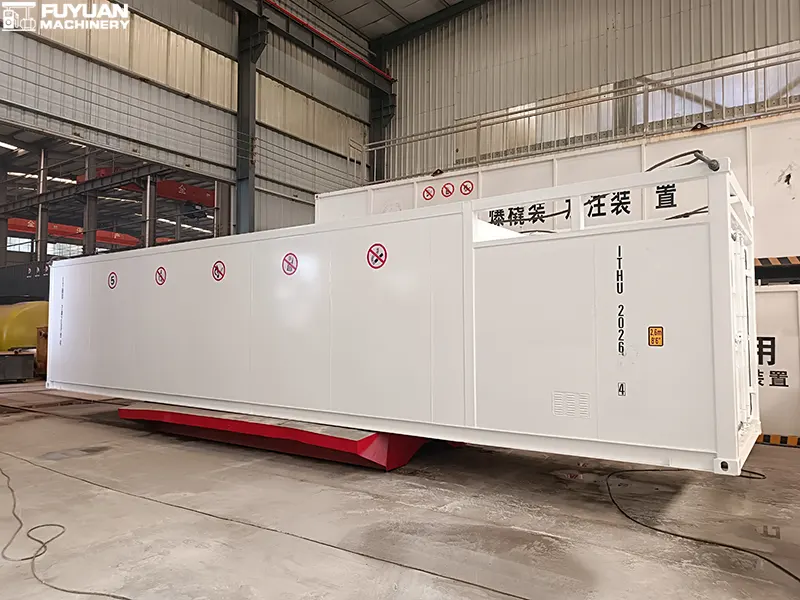
Factor 1: Station Type – Containerized vs. Skid Mounted
This is the most fundamental decision you will make. The two dominant deployment formats are containerized units and skid-mounted units.
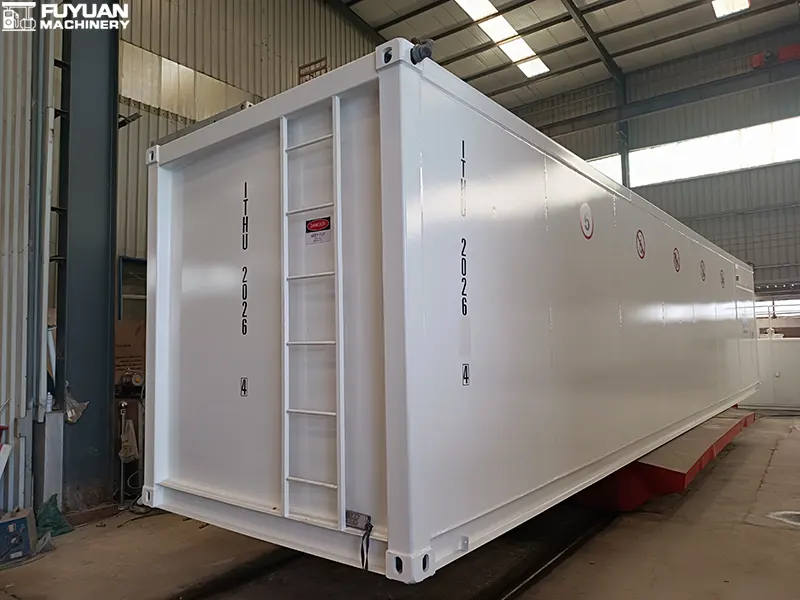
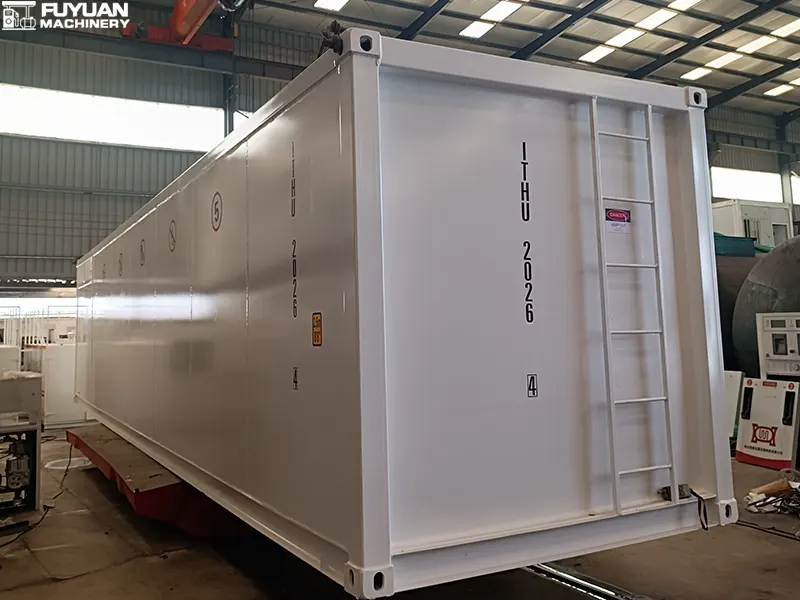
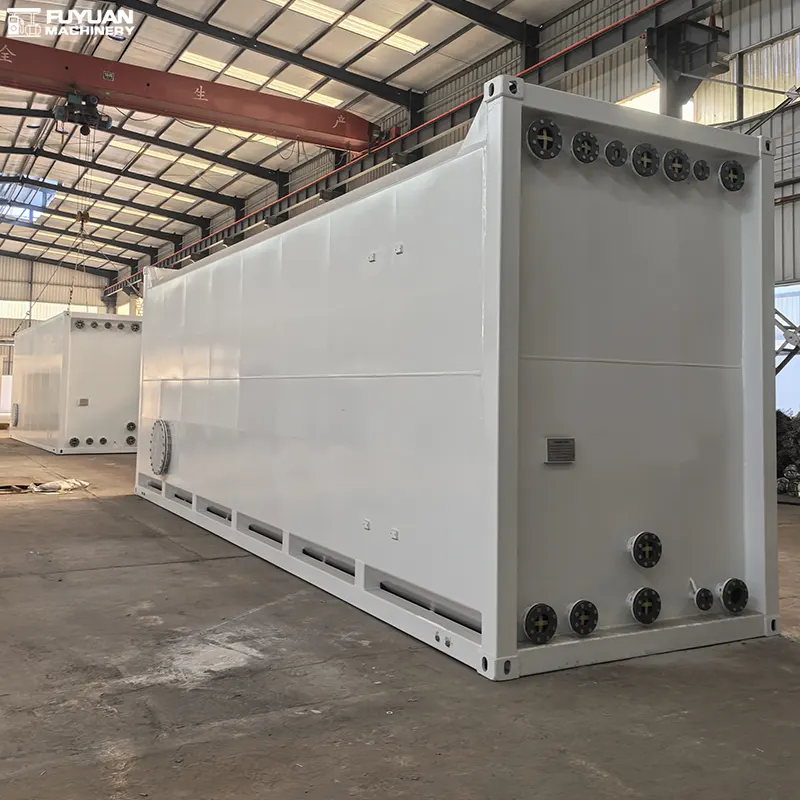
Containerized Fuel Stations are built inside modified ISO shipping containers (typically 10ft, 20ft, or 40ft). The container walls themselves provide secondary containment and weather protection. Lockable doors, integrated ventilation, lighting, leak detection, and fire suppression come built-in. Because the outer shell is a standard shipping container with a CSC plate, these units can be shipped via standard container vessels. Typical capacities range from 5,000L to 60,000L.
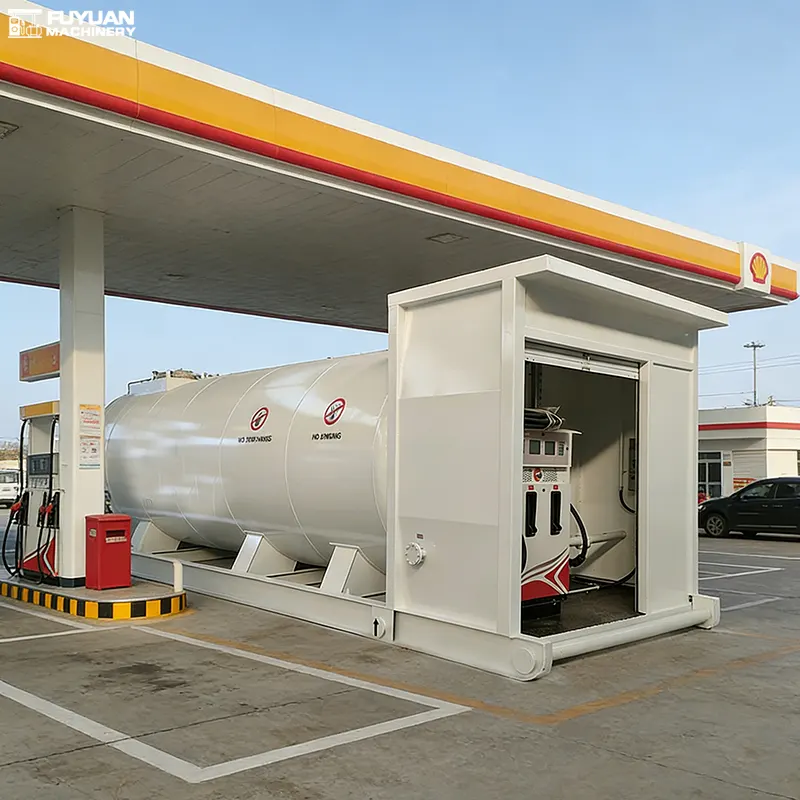
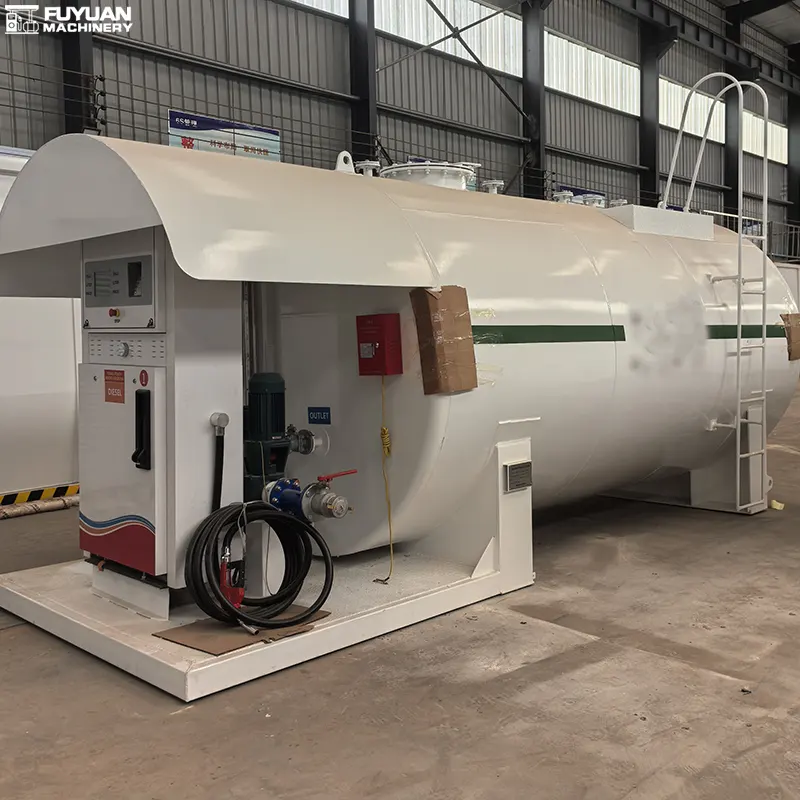
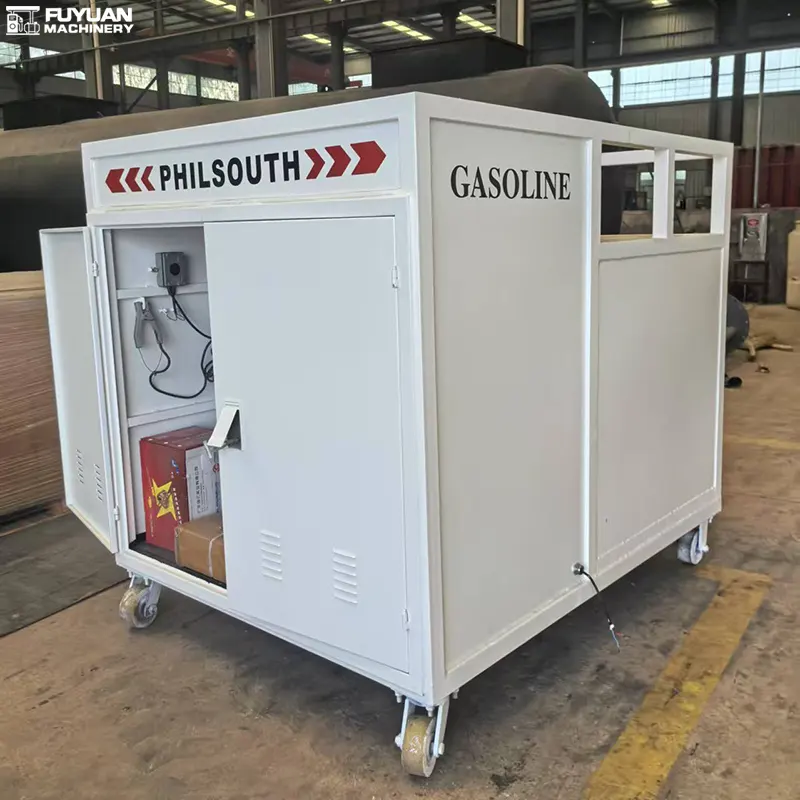
Skid Mounted Fuel Stations are assembled on a structural steel skid or frame. They do not come with a built-in enclosure unless one is added—many are open-frame, making every component visible and accessible. Capacities are highly flexible, starting around 1,000L and exceeding 60,000L for large operations. The frame can be custom-built to optimize tank shape and equipment layout for your specific project.
Which to choose?
- Choose containerized if you need international shipping via standard vessels, built-in security and weather protection, or a long-duration project in a harsh environment.
- Choose skid mounted if you need frequent relocation, a constrained footprint, maximum maintenance accessibility, or highly customized capacity.
Containerized units add the benefit of weather protection and built-in security, making them the preferred choice for remote mining sites and long-duration construction projects. Skid-mounted units offer more capacity flexibility and faster deployment than traditional stations.
Pro Tip: Both formats can be operational in under two hours with no civil works required—just a flat surface and utility connections. Deployment speed is a defining advantage over permanent infrastructure, which requires excavation, permitting, and weeks of construction.
Factor 2: Capacity Planning – Right-Sizing Your Tank
Getting the capacity wrong is one of the most common—and costly—mistakes.
Undersize your tank, and you risk running out of fuel mid-operation. Oversize it, and you tie up capital in unused storage and increase your regulatory burden.
The right way to calculate capacity:
- Calculate daily consumption – Add up the fuel usage of every vehicle, machine, and generator on site.
- Multiply by the number of days between deliveries – Factor in your supply chain and delivery frequency.
- Add a 20% peak buffer – Projects with tight schedules cannot afford a fuel-out event on a Monday morning because the weekend delivery window was missed.
The industry rule of thumb: Match your tank capacity to at least three days of peak consumption, not average consumption.
Capacity ranges by type:
- Compact skids: 1,000L – 5,000L (ideal for small operations or tight footprints)
- Mid-range units: 10,000L – 30,000L (most common for construction and logistics)
- Large units: 40,000L – 60,000L+ (mining, depot, high-volume operations)
Important: Tank configurations include single-product, dual-product, or multi-compartment designs. If you need to store diesel, gasoline, and DEF on the same site, choose a multi-compartment unit.
Factor 3: Compliance, Certifications & Safety Standards
In 2026, regulatory compliance is non-negotiable. Temporary fueling stations are regulated environments, not informal workarounds. Treating them as anything less creates liability exposure and project risk.
Key standards to verify:
| Standard | What It Covers |
| NFPA 30A | Motor fuel dispensing facilities in the US |
| NFPA 30 | Flammable and Combustible Liquids Code |
| UL 142 | Steel aboveground tanks for flammable liquids |
| ATEX / IECEx | Equipment for explosive atmospheres (EU and international) |
| CE Marking | EU conformity for health, safety, and environmental protection |
| ASME | Boiler and pressure vessel code (US) |
| CSC Plate | Maritime transport certification for containerized units |
Critical compliance areas for 2026:
- Secondary containment – Local permitting drives containment design, including berm sizing calculated to hold the volume of the largest tank plus precipitation allowance. A 5,000-gallon tank near a waterway requires a larger containment footprint than the same tank in an arid inland location.
- Environmental controls – Spill kits, fire extinguishers, grounding cables for static discharge, and automatic shut-off valves.
- Vapor recovery and emissions – Modern units feature real-time vapor recovery systems and comply with evolving safety and emissions regulations.
Red flag: If a supplier cannot provide documented certification for every applicable standard, walk away. Compliance is mandatory regardless of how long the station remains on site.
Pro Tip: New ISO standards for LNG fueling stations (ISO 16923:2026 and ISO 16924:2026) were published in January 2026. If you are considering alternative fuels, ensure your supplier is up to date with the latest standards.
Factor 4: Shipping, Logistics & Deployment
How your mobile fuel station gets to your site can make or break your budget and timeline. Shipping costs and logistics vary dramatically between formats.
Containerized Units:
- Ship as standard ISO containers (Shipper Owned Container / SOC)
- Move via standard container vessels at ordinary container rates
- Require only a crane for offloading at destination
- Advantage: Lowest shipping cost, simplest logistics
Skid Mounted Units:
- Ship via flat-rack, break-bulk, or RO-RO (roll-on/roll-off)
- May incur out-of-gauge shipping surcharges for oversized loads
- Require flatbed trucking for final delivery
- Disadvantage: Higher shipping costs, more complex logistics
Deployment timeline:
- Skid mounted: 2-4 weeks from order to operation
- Containerized: 3-6 weeks from order to operation
- Traditional fixed station: 3-6 months
What to ask your supplier:
- What are the shipping dimensions and weight?
- Is the unit CSC-certified for container shipping?
- What is the lead time from order to delivery?
- Does the unit arrive fully assembled, or does it require on-site assembly?
Pro Tip: The global on-demand fuel delivery market was valued at $6.2 billion in early 2026. This growth reflects increasing demand for rapid deployment solutions—your supplier should be able to deliver within your project timeline.
Factor 5: Safety Features & Technology Integration
In 2026, safety and technology are inseparable. The most advanced mobile fuel stations are no longer just tanks and pumps—they are connected, intelligent systems.
Must-have safety features:
- Double-wall or self-bunded tanks – Secondary containment built into the tank design
- Leak detection systems – Sensors that detect leaks before they become incidents
- Automatic shut-off valves – Prevent overfilling and spills
- Fire suppression systems – Integrated into the unit
- Emergency shut-off – Manual and automatic triggers
- Grounding and static discharge protection – Critical for flammable liquids
Technology features that set top-tier units apart:
- Remote telemetry – Monitor fuel levels, dispensing activity, and system status from anywhere
- Predictive maintenance algorithms – Flag potential issues before they cause downtime
- Secure transaction logging – Auditable usage history for compliance and cost tracking
- RFID or PIN-based access control – Prevent unauthorized fueling and theft
- Real-time vapor recovery systems – Reduce emissions and comply with environmental regulations
Why this matters: Remote telemetry, predictive maintenance, and secure transaction logging are increasingly embedded into units to reduce downtime and provide auditable usage histories. These capabilities enable new commercial models such as pay-per-use and subscription-based access.
Pro Tip: Digitalization and connectivity have moved from optional enhancements to core differentiators in 2026. Choose a supplier that offers integrated monitoring as standard, not as an expensive add-on.
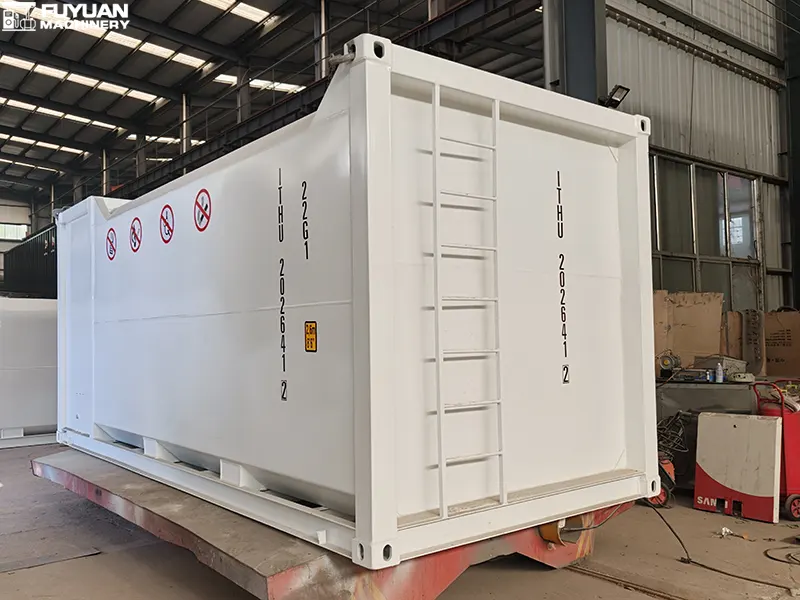
Factor 6: Supplier Evaluation – Who You Buy From Matters
Not all manufacturers are equal. In a growing market with increasing global demand, supplier quality varies widely.
What to verify before placing an order:
| Evaluation Area | What to Check |
| Certifications | Does the supplier hold UL, ATEX, IECEx, CE, ASME, NFPA certifications? |
| Production capability | Can they deliver within your timeline? What is their manufacturing capacity? |
| Product quality | Request samples, inspect weld quality, verify materials (e.g., Q345R carbon steel frames with 470-630 MPa tensile strength) |
| Documentation | Do they provide full technical documentation, test reports, and compliance certificates? |
| After-sales support | What is their warranty? Do they offer spare parts and technical support? |
| Business legitimacy | Verify company registration, trade references, and export history |
Red flags to end the conversation:
- Cannot provide documented certifications
- Unwilling to share test reports or technical specifications
- Vague about delivery timelines
- No after-sales support or warranty
- No verifiable export track record
Pro Tip: The mobile container fuel stations market is seeing a shift in how procurement and life-cycle management are approached, with greater emphasis on total cost of ownership, regulatory compliance, and integration with digital asset management systems. Choose a partner, not just a supplier.
Factor 7: Total Cost of Ownership – Beyond the Purchase Price
The cheapest quote is rarely the cheapest solution. Total cost of ownership (TCO) includes purchase price, shipping, installation, operation, maintenance, compliance, and eventual decommissioning.
TCO breakdown:
| Cost Category | What to Consider |
| Purchase price | Equipment cost (varies by type, capacity, and features) |
| Shipping & logistics | Container shipping vs. break-bulk; insurance; customs duties |
| Installation | Site preparation, concrete pad, utility connections |
| Operations | Fuel management system, staff training, daily oversight |
| Maintenance | Spare parts, service visits, repairs, predictive maintenance |
| Compliance | Permitting, inspections, certification renewals |
| Fuel savings | Wholesale pricing vs. retail; eliminated detours and labor |
The ROI case for mobile fuel stations:
Mobile fueling eliminates costly detours—drivers no longer spend time traveling to and from retail stations. Companies that switch report significant reductions in:
- Labor costs – No more drivers wasting hours at retail pumps
- Fuel costs – Wholesale pricing vs. retail premiums (which can exceed $1 per gallon)
- Vehicle wear and tear – Fewer miles driven to find fuel
- Theft and waste – Automated tracking prevents unauthorized use
Industry context: In 2026, with labor scarce and fuel prices volatile, operational efficiency is more critical than ever. The Energy Information Administration reported national averages near $4.49 for gasoline and $5.60 for diesel in mid-2026. Every gallon saved through efficient fueling directly improves your bottom line.
Pro Tip: Rental, leasing, and managed services are gaining traction as end-users seek to convert capital expenditure into operating expenditure while accessing up-to-date equipment and compliance support. If upfront capital is a constraint, explore these options with your supplier.
Making Your Decision – A Practical Checklist
Before you sign any contract, run through this checklist:
- Station type – Containerized or skid mounted? Which fits your site, shipping needs, and project duration?
- Capacity – Calculated based on peak consumption + 20% buffer + 3-day minimum?
- Certifications – Verified UL, ATEX, IECEx, CE, NFPA, and any local requirements?
- Shipping – Confirmed shipping method, cost, and timeline?
- Safety features – Double-wall tank, leak detection, fire suppression, emergency shut-off included?
- Technology – Remote monitoring, access control, transaction logging integrated?
- Supplier – Verified certifications, production capability, references, and after-sales support?
- TCO – Calculated total cost of ownership beyond the purchase price?
Final Thoughts
The mobile fuel station market is growing at nearly 14% CAGR through 2032. But growth also means more suppliers, more options, and more complexity for buyers.
Mobile container fuel stations have matured from niche, temporary assets into strategic components of modern energy logistics. They combine modular containerization, integrated dispensing hardware, and increasingly sophisticated monitoring and safety systems to deliver fuel where traditional infrastructure is impractical or uneconomical.
The right mobile fuel station is not the cheapest one—it is the one that fits your project duration, site conditions, shipping requirements, operational needs, and regulatory environment.
Take the time to evaluate each of these seven factors carefully. Your project timeline, your budget, and your peace of mind depend on getting this decision right.
Looking for a reliable mobile fuel station for your project? Fuyuan Machinery manufactures high-quality containerized and skid-mounted fuel stations certified to UL, ATEX, IECEx, CE, ASME, and NFPA standards. Contact us today for a customized solution tailored to your specific requirements.
Written by
TAI'AN FUYUAN MACHINERY EQUIPMENT CO., LTD.
Editor Yuan
www.mobile-fuel-stations.com
WhatsApp:+86 182 6667 0999
Email:yuanyuzhu6@gmail.com

Leading Chinese Manufacturer & Exporter of mobile fuel stations and skid-mounted fuel stations.