
- Home
- Company
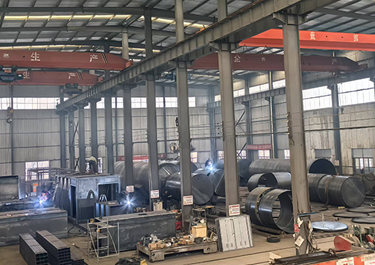 Our FactoryWe have a team of over 30 talented mobile fuel station R&D experts, as well as a 50,000-square-meter advanced modern intelligent manufacturing plant.
 - Mobile Fuel Station
- Storage Tank
- Blog
- Contacts
Container Gas Stations: Top 8 Remote Area Applications for Mining, Construction & More
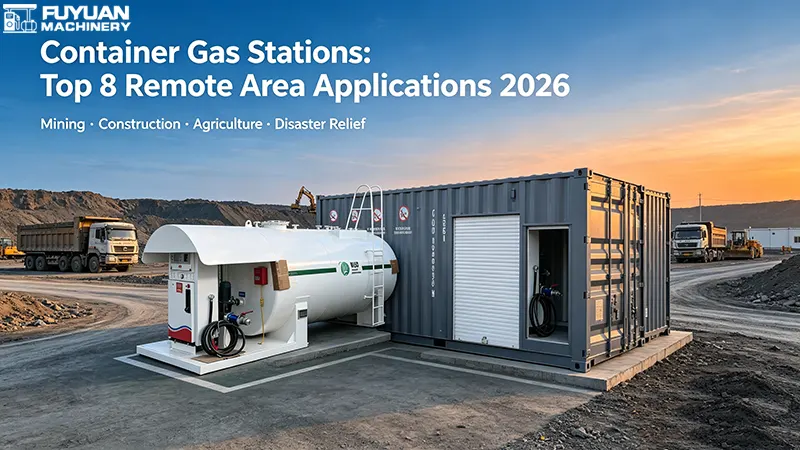
The global Mobile Container Fuel Stations market was valued at USD 2.74 billion in 2025 and is projected to reach USD 6.84 billion by 2032, growing at a CAGR of 13.94%. This rapid growth reflects a fundamental shift: containerized fuel stations have evolved from niche temporary assets into strategic infrastructure for remote operations worldwide.
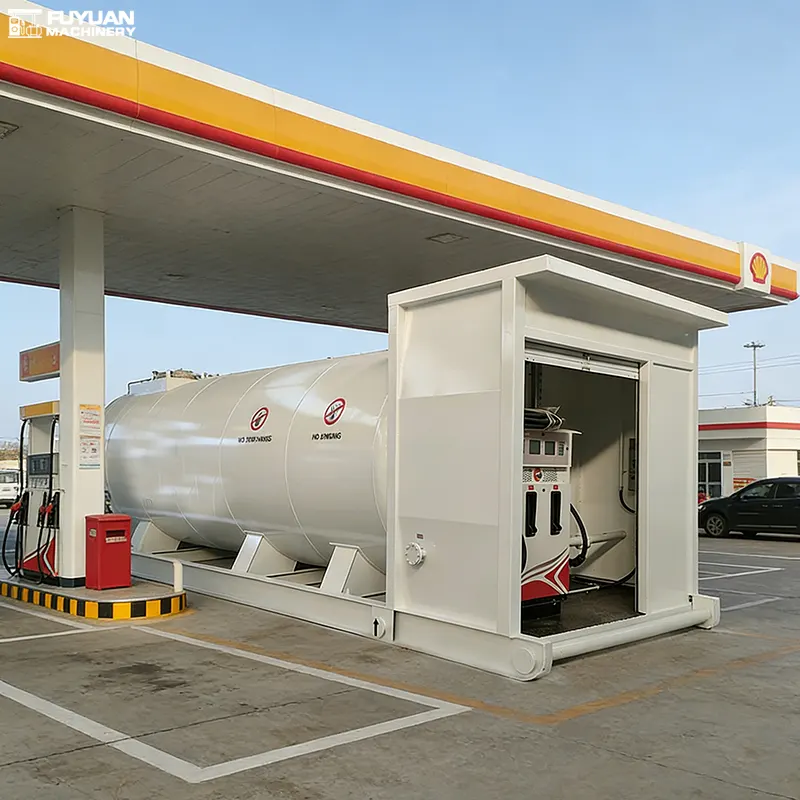
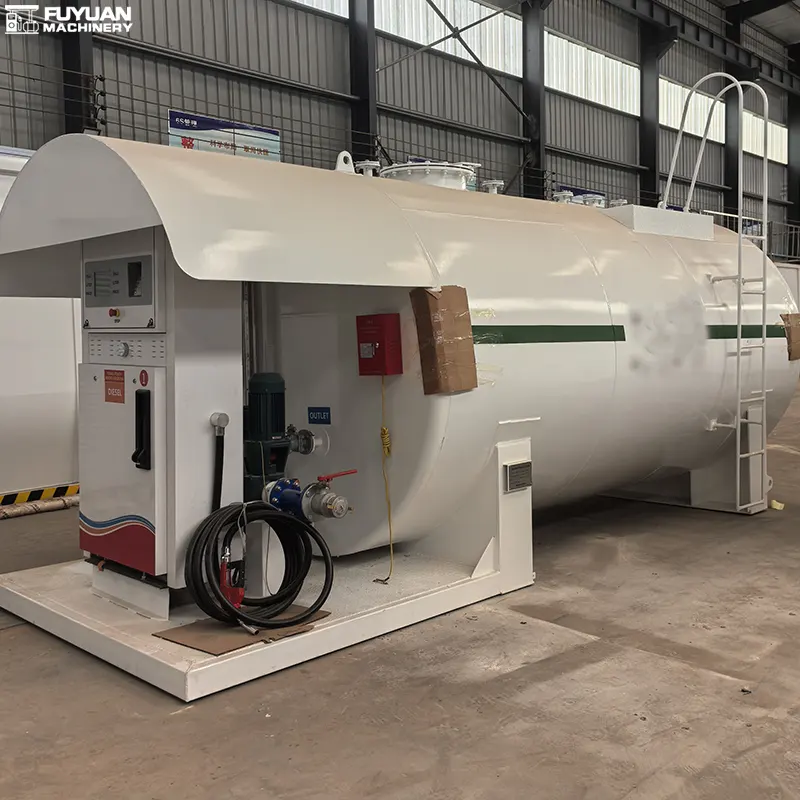
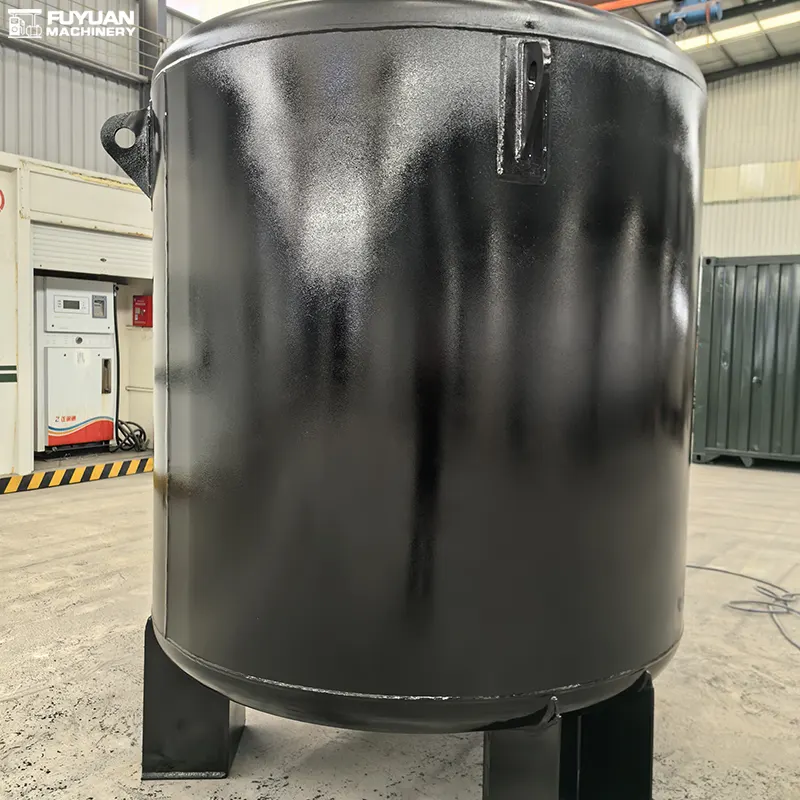
Built inside standard 20ft or 40ft shipping containers, these self-contained units combine fuel storage, pumping, metering, and safety systems into a compact, transportable package. They can be deployed in as little as 1 to 3 days, require no civil works or permanent foundations, and can be relocated when projects end.
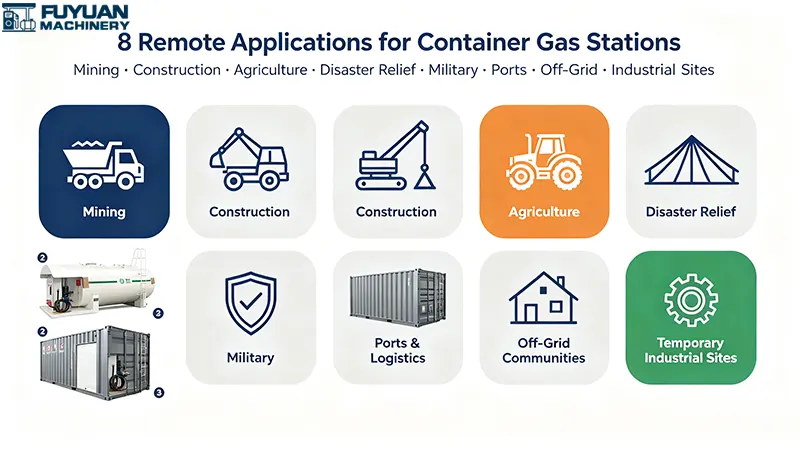
Here are the top 8 remote area applications for container gas stations in 2026.
1. Remote Mining Operations
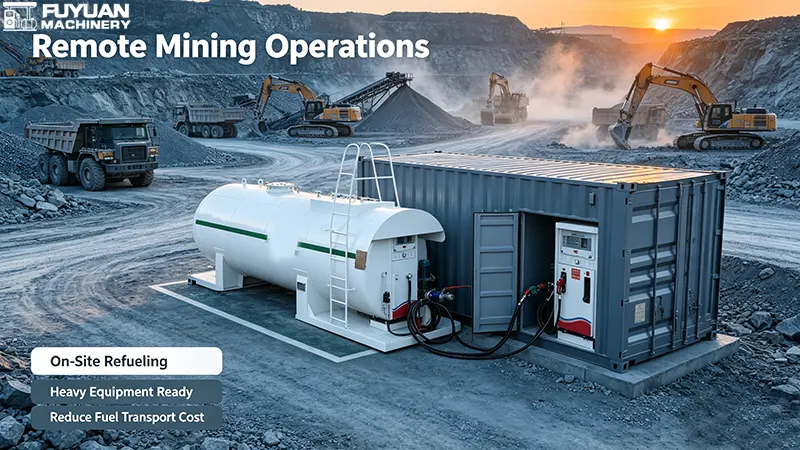
Mining operations are typically located far from the nearest fuel station. Transporting heavy equipment to retail pumps is not just inconvenient—it is prohibitively expensive and operationally disruptive.
Containerized fuel stations provide on-site refueling for heavy machinery, reducing vehicle downtime and transportation costs to distant fuel stations. In June 2026, four new containerized fuel stations were commissioned at remote production sites of LenZoloto in Russia's Irkutsk region, demonstrating how containerized solutions can rapidly deploy a fully functional refueling point directly at mining work sites.
For gold mines in Sudan, operators have deployed 3-unit skid fleets with diesel and lubricant dual compartments. In West Africa, mining companies routinely use mobile fuel stations to eliminate the logistical nightmare of fuel transport over unpaved roads.
Key benefits: Eliminates costly fuel transport, reduces downtime, withstands harsh mining environments, and provides explosion-proof safety in hazardous zones.
2. Construction Sites and Infrastructure Projects
Construction sites are temporary by nature. Building a permanent fuel station for a project that lasts 12–24 months makes no financial sense. Yet construction equipment—excavators, bulldozers, cranes, generators—consumes vast quantities of diesel.
Containerized stations provide a mobile fuel supply solution for construction sites, arriving pre-assembled and ready to operate. They are widely used in temporary construction sites, offering reliable fuel for machinery and generators in remote locations.
Road construction projects in Central Asia and island reclamation projects in the Philippines have successfully deployed containerized fuel stations to secure fuel continuity before permanent infrastructure is built.
Key benefits: No civil works required, relocatable from project to project, deploys in hours not months, and eliminates equipment downtime for off-site fueling.
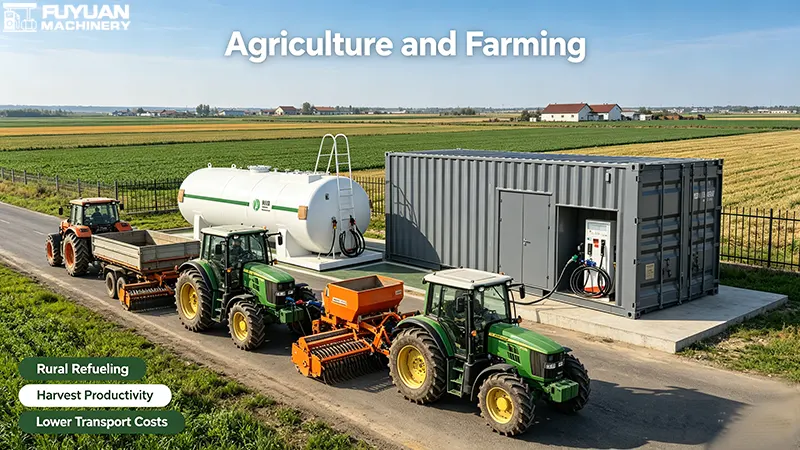
3. Agriculture and Farming
Farms and agricultural operations are often spread across vast rural areas, far from fuel suppliers. Harvest season is time-critical—every hour of downtime means lost crops and reduced revenue.
Containerized and portable service stations in rural and remote areas enhance the profitability of agricultural machinery and help stimulate local economic development. In Zimbabwe, the government has adopted a national standard for establishing containerized fuel retail stations in rural and remote areas to address the disparity in fuel access.
Farmers who previously had to travel long distances to access fuel can now refuel on-site, reducing transportation costs and increasing productivity. These stations improve access to fuel for agricultural machinery and cottage industries, helping unlock economic potential in marginalized communities.
Key benefits: On-field fueling during harvest, bulk purchasing at wholesale prices, reliable fuel supply during peak seasons, and reduced input costs for farmers.
4. Disaster Relief and Emergency Response
When natural disasters strike—hurricanes, earthquakes, floods—fuel is often the first thing to run out. Emergency generators, rescue vehicles, and relief supplies all depend on reliable fuel. But permanent infrastructure is often damaged or inaccessible.
Containerized fuel stations are ideal for disaster relief operations, rapidly establishing fuel refueling points during emergencies. The entire fueling system is integrated within standard ISO containers and can be operational immediately upon arrival.
With storage capacities ranging from 10 to 50 m³ for skid-mounted configurations, these stations operate independently of the local grid. Pre-filled or resupplied by certified hazardous chemical tankers, they resolve critical fuel shortages in disaster zones and remote mountainous terrain.
Provincial emergency bureaus in China have deployed mobile fuel points for disaster response. These stations sustain power generators, excavators, drainage pumps, and heavy engineering vehicles during emergency operations.
Key benefits: Instant deployment, off-grid independence, explosion-proof safety, and zero environmental liabilities upon removal.
5. Military and Defense Operations
Military operations require fuel in some of the most challenging environments on earth—often in regions with no existing infrastructure, active conflict zones, or extreme climates.
Containerized fuel stations provide a secure, rapidly deployable fueling capability for forward operating bases, training exercises, and humanitarian missions. They are built for on-ground or vehicle-mounted use, allowing flexible deployment in military, emergency, or remote industrial operations.
These systems are compatible with diesel (EN 590), gasoline (EN 228), and jet fuels (JET A-1, AVGAS 100LL) in line with NATO STANAG 7090 and international standards. Optional solar power and integrated generators enable off-grid operation.
Key benefits: Self-sufficiency with off-grid capability, compatibility with multiple fuel types including jet fuel, robust construction for hostile environments, and CSC approval for transport in any civilian supply chain.
6. Ports, Airports, and Logistics Hubs
Ports, airports, and logistics hubs operate in environments where space is at a premium and fuel demand is constant. Containerized fuel stations provide a compact, relocatable fueling solution for these high-traffic areas.
Container oil stations are frequently used in ports to supply fuel to cargo ships, fishing boats, and other vessels. Their mobility allows them to be positioned exactly where needed. They are also used at remote airport aprons and freight hubs requiring mobile refueling.
For logistics operations, containerized stations serve industrial facilities, factories, and logistics centers. They provide a reliable fuel supply for fleets without the capital expenditure of permanent infrastructure.
Key benefits: Compact footprint fits space-constrained locations, relocatable as operations evolve, and serves multiple fuel types for diverse vehicle and vessel needs.
7. Off-Grid Communities and Rural Development
Many rural and remote communities have little to no presence of conventional fuel stations. The prohibitive construction costs of traditional fuel infrastructure have left these areas overlooked by mainstream investors.
Containerized stations, which are significantly cheaper and quicker to deploy, present a more economically viable solution. Their presence encourages the growth of complementary small businesses, creating mini-economic hubs and enhancing social services in rural communities.
The formalization of fuel retail in these areas also reduces the prevalence of unsafe black-market fuel sales, improving safety standards and regulatory compliance.
Key benefits: Low capital expenditure, rapid deployment, stimulates local economic development, and provides safe, regulated fuel access to underserved communities.
8. Temporary Industrial and Exploration Sites
Oil and gas exploration, geological surveys, and temporary industrial projects require fuel in locations where even basic infrastructure does not exist.
Containerized LNG refueling stations integrate storage tanks, cryogenic pumps, compressor units, dispensers, and control systems within standard container dimensions. They are particularly suitable for mobile clean fuel supply in temporary work sites, remote mining areas, and extreme winter conditions.
These stations serve oil and gas field exploration and provide a new model for supplying clean transportation energy in remote gas fields, mining areas, and regions without pipeline networks.
Key benefits: Multi-fuel capability including LNG, rapid commissioning, suitable for extreme climates, and adaptable to exploration timelines.
Summary: The 8 Applications at a Glance
| Application | Primary Benefit | Key Industries |
| Remote Mining | Eliminates costly fuel transport | Gold, iron ore, coal mining |
| Construction Sites | No civil works, relocatable | Road, building, infrastructure projects |
| Agriculture | On-field fueling during harvest | Farming, irrigation, cottage industries |
| Disaster Relief | Instant deployment, off-grid | Emergency response, humanitarian aid |
| Military & Defense | Secure, multi-fuel capability | Forward bases, tactical operations |
| Ports & Logistics | Compact footprint, relocatable | Shipping, aviation, freight hubs |
| Off-Grid Communities | Low cost, economic development | Rural areas, underserved regions |
| Temporary Industrial Sites | Rapid commissioning, extreme climates | Oil & gas exploration, surveys |
Conclusion
Containerized fuel stations have moved beyond niche applications to become essential infrastructure across eight major remote-area use cases. The common thread? Mobility, speed, and cost control.
In an era where traditional fixed fuel stations require months of construction and millions in capital, containerized solutions deploy in days at a fraction of the cost. They bring fuel to where it is needed—whether that is a gold mine in Sudan, a road construction camp in Central Asia, a farm in rural Zimbabwe, or a disaster zone after an earthquake.
The market is growing at nearly 14% annually through 2032. Businesses and governments that adopt containerized fueling now are not just solving today's fuel logistics challenges—they are building resilient, cost-effective energy infrastructure for the future.
Written by
TAI'AN FUYUAN MACHINERY EQUIPMENT CO., LTD.
Editor Yuan
www.mobile-fuel-stations.com
WhatsApp:+86 182 6667 0999
Email:yuanyuzhu6@gmail.com

Leading Chinese Manufacturer & Exporter of mobile fuel stations and skid-mounted fuel stations.